
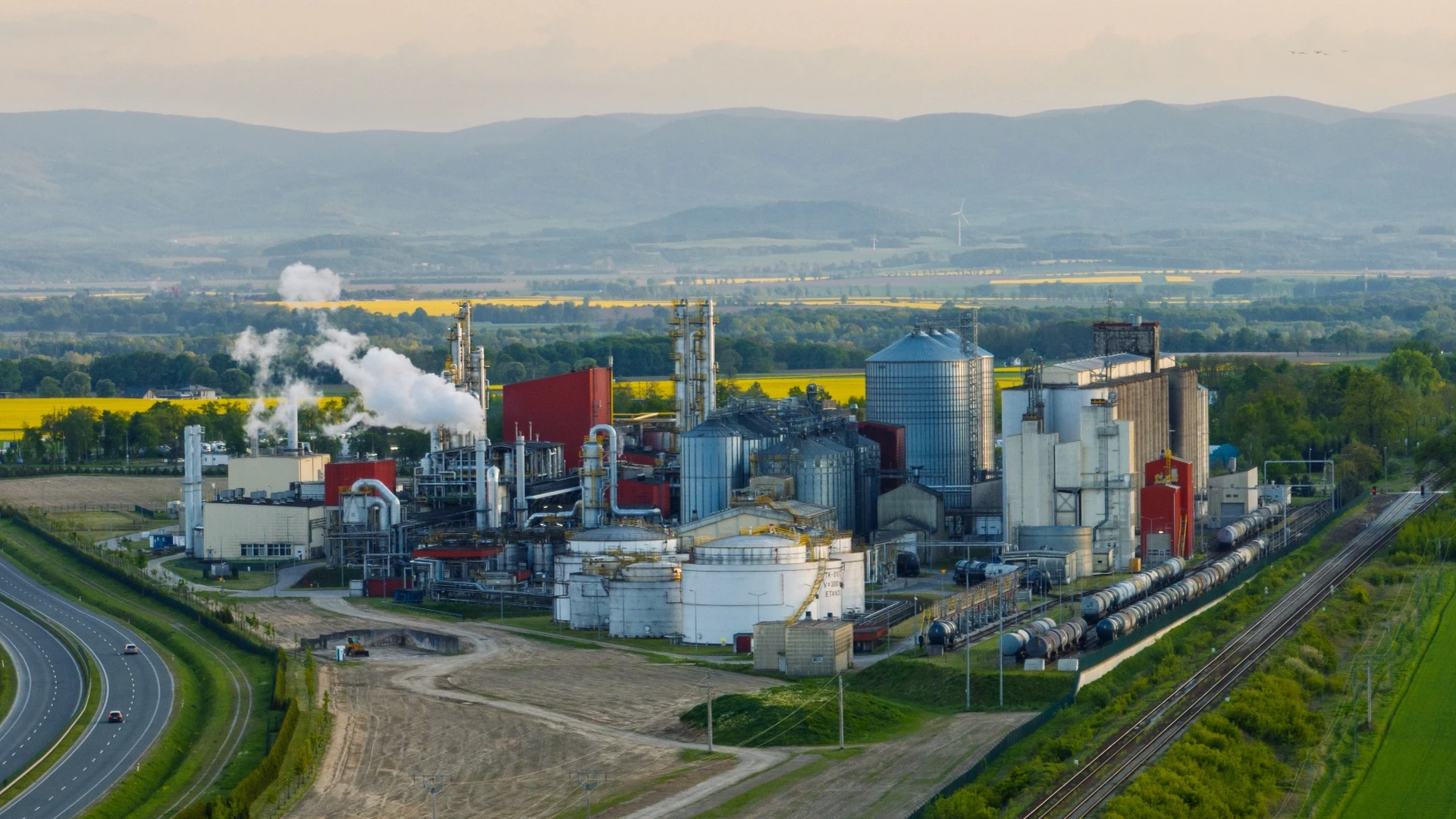
Almost 200 SAF projects are chasing scale. The winners will be those that match feedstock, technology, geography and finance before the refinery is built.
Sustainable aviation fuel has a pipeline paradox. IATA’s June 2026 review identified almost 200 projects representing up to 30 million tonnes of announced annual capacity by 2030. Yet only around 60% of that capacity may materialise, and as little as 35% is currently operational or under construction. IATA’s adjusted estimate is therefore closer to 20 million tonnes than the headline 30 million tonnes.
The operating market remains much smaller. Global SAF production is expected to reach approximately 2.4 million tonnes in 2026, only 0.8% of annual jet-fuel consumption. Despite that limited volume, IATA estimates that SAF will add around USD 4.3 billion to airline fuel costs during the year.
The problem is no longer a lack of ambition, project announcements or potential conversion technologies. The decisive question is more practical:
That question will determine what the next generation of SAF is actually made from.
The first SAF era was built on waste oils
HEFA has been indispensable in establishing the first commercial market. It is the most mature conversion pathway and will remain central to near-term supply. But today’s feedstock base is highly concentrated.
In EASA’s first ReFuelEU Aviation annual report, covering 2024 baseline data, reporting suppliers provided 192,700 tonnes of SAF – approximately 0.6% of the aviation fuel they reported. Used cooking oil accounted for 81.1% of SAF feedstock, 69% of feedstock originated outside the EU and five Member States represented 99% of reported supply. The reported average SAF reference price was EUR 2,085 per tonne, compared with EUR 734 per tonne for conventional aviation fuel.
This is not evidence that HEFA failed. It is evidence that HEFA succeeded first – and now faces the consequences of success: stronger competition for limited lipids, competition with renewable diesel and other uses, more complex international supply chains and greater scrutiny of origin and traceability.
Waste oils will remain valuable. But they cannot be treated as an infinitely expandable foundation for global aviation. As BEC previously argued in SAF Will Not Scale Without Reliable Feedstock, refinery nameplate capacity is not the same as operational production. The constraint often sits outside the plant fence.
Follow the feedstock funnel
At first sight, the world appears to have more than enough biomass. The funnel tells a different story.
- More than 12,000 million tonnes of unconstrained biomass potential in 2050.
- Approximately 4,200 million tonnes potentially available to bioenergy and biofuels after existing uses.
- Approximately 1,580 million tonnes potentially accessible to SAF after competition from other bioenergy and biofuel applications.
- Enough, if fully converted through the modelled pathways, to support just over 300 million tonnes of bio-SAF.
Aviation may require approximately 500 million tonnes of SAF in 2050. IATA’s core feedstock and technology forecast reaches slightly above 400 million tonnes when bio-SAF and e-SAF are combined, leaving a gap of around 100 million tonnes. More importantly, even the 400-million-tonne case assumes rapid technology deployment and major industrial mobilisation across regions.
The future resource mix also differs radically from today’s supply. IATA estimates that agricultural residues represent 58% of the biomass potentially accessible to SAF in 2050, forestry residues and wood waste 16%, municipal solid waste 15%, and crop-based feedstocks plus waste oils 11%. These are scenario estimates rather than contracted volumes, but they reveal the direction of travel.
BEC SAF MARKET ARCHITECTURE SERIES | RELEASE 1
Read the full BEC technical report
This 18-page report expands the article into a structured assessment of feedstock portfolios, conversion pathways, regional positioning and the sequence required to scale sustainable aviation fuel. Use the reader controls to move through the report, zoom or enter full-screen mode.
Open the report reader in a new tabThe complete 18-page report remains available inside the BEC reader.
Four pathways – and four different supply-chain problems
1. HEFA: the near-term workhorse
HEFA will continue to lead near-term volume because it is commercially mature and compatible with existing lipid-processing infrastructure. Its challenge is securing additional eligible oils and fats without merely redirecting the same limited pool between markets. Origin verification, competing-use analysis, traceability and destination-market eligibility are becoming commercially decisive. A cheap oil that cannot pass an audit is not cheap feedstock.
2. Alcohol-to-Jet: a bridge from existing alcohol economies
Alcohol-to-Jet can connect aviation to established ethanol, sugar and agricultural systems. In November 2025, LanzaJet announced full operations and on-spec jet-fuel production at its Freedom Pines plant in Georgia. In June 2026, Technip Energies, Airbus, Safran and Tereos announced Rebound, a proposed 160,000-tonne-per-year ATJ project in Dunkirk. The partners are funding development work required to consider FID; it is not yet operating supply.
The alcohol molecule alone does not determine SAF value. Agricultural inputs, fermentation, process energy, coproduct allocation, land-use treatment and transport produce very different cost and carbon outcomes.
3. Gasification-Fischer-Tropsch: access to the largest residue pools
Gasification-FT can unlock agricultural residues, forestry residues, wood waste and selected municipal-waste fractions. Its advantage is feedstock breadth. Its challenge is full-system complexity. Moisture, ash, contaminants, particle size, preprocessing and gas cleaning all affect yield and catalyst performance. Large plants improve conversion economics while expanding the sourcing radius, storage requirement and number of suppliers that must perform consistently.
This pathway will scale where developers solve aggregation and preprocessing alongside the refinery. A technically available residue is not necessarily a specification-compliant, sustainably recoverable or financeable supply.
4. Power-to-Liquid: less biomass, far more electricity
Power-to-Liquid changes the feedstock problem rather than eliminating it. The key inputs become renewable electricity, hydrogen, eligible CO2, water, infrastructure and capital. IATA reported in February 2026 that no commercial-scale e-SAF facility was operating and that only one project globally had reached FID and entered construction. Electricity can represent up to two-thirds of production cost.
The IEA expects e-kerosene to provide only around 5% of SAF production in 2030. Long-term potential is much larger, but PtL will be most competitive where low-cost renewable power, suitable carbon, infrastructure and credible offtake converge – not simply where mandates are strongest.
The resources deliberately missing from the core forecast
One of the most important details in IATA’s assessment is what it excludes: energy crops and cover crops. They were left outside the core forecast to avoid building the central scenario around future supply systems that do not yet exist at scale. That is not a verdict against them. It means their contribution must be created.
Intermediate oilseeds such as camelina and carinata can enter suitable rotations or fallow periods. Perennial grasses and short-rotation woody crops can support cellulosic alcohol, gasification and thermochemical intermediates. Other adapted crops can provide oils, sugars, lignocellulosic biomass or coproducts.
Corporate activity is already moving in this direction. Bayer and bp announced a strategic alliance in May 2026 to expand camelina, initially in North America. Honeywell announced that its modular technology would support Acelen Renewables’ planned macauba-based project in Bahia. These announcements show strategic direction. They do not by themselves prove future yields, farmer adoption, delivered cost or certified production.
- genotype and location matching;
- multi-season commercial yield evidence;
- land, soil and water assessment;
- grower economics and contract design;
- seed multiplication and agronomic support;
- harvesting, aggregation, storage and processing;
- field-level traceability and conservative ramp-up assumptions.
BEC has examined this opportunity through camelina and carinata, pongamia and the emerging macauba value chain in Brazil. In every case, the critical transition is from an attractive crop concept to a controlled commercial supply system.
Algae: strategic optionality, not yet a base case
Algae offers attractive theoretical characteristics, including potential productivity, use of non-conventional water in suitable systems and integration with industrial CO2 and coproducts. Current economics remain challenging. A 2024 NREL study modelled minimum fuel selling prices of USD 8.70-10.08 per gasoline-gallon equivalent under target assumptions and more than USD 20/GGE at lipid performance closer to recent trials. Algae deserves continued development, but most projects should treat it as strategic optionality rather than near-term base-case supply.
SAF is becoming a regional optimisation problem
The next generation of SAF will not have one global feedstock map. IATA identifies the United States, Brazil, Europe and India as major resource centres, together representing more than half of potential biomass availability for SAF in its assessment.
The Middle East and sub-Saharan Africa could together have around 220 million tonnes of biomass potentially accessible to SAF by 2050, yet their announced near-term project pipeline remains very small. The years and units are not directly comparable, but the contrast reveals a strategic mismatch: some regions have resources without conversion infrastructure, while others have mandated demand without enough local feedstock.
- A waste-lipid and refining hub may favour HEFA.
- A low-carbon ethanol region may favour ATJ.
- A residue-rich agricultural or forestry basin may support gasification, cellulosic alcohol or a transportable intermediate.
- A low-cost renewable-power hub with eligible CO2 may support PtL.
- An agricultural frontier may justify new crops – but only after agronomic, land, water and sustainability screening.
Technology should follow the resource system. Capacity should follow the recoverable resource.
The bankable unit is not the feedstock or the refinery
The bankable unit is feedstock + pathway + region + supply chain + carbon evidence.
Before selecting final plant capacity, developers and investors should be able to answer:
- How many specification-compliant tonnes remain after competing uses, sustainability constraints, losses and seasonality?
- What proportion is controlled or contractable – and for how long?
- What happens during a poor harvest, wet season, fire event or competing-market price spike?
- Who finances aggregation, storage, preprocessing and working capital?
- Does the feedstock remain eligible under the intended certification and destination-market rules?
- Can every tonne be traced from field, forest, facility or waste generator to the refinery gate?
- Does the feedstock ramp-up match commissioning and the plant’s operating curve?
- Can the complete case survive lender, offtaker and independent technical due diligence?
If these questions remain unanswered, the project is not ready for final capacity selection – however attractive the headline resource may appear. This is the biomass bankability gap: the distance between theoretical availability and a financeable long-term supply system.
So, what will the next generation of SAF be made from?
Not one thing.
- waste oils and fats where eligibility and traceability remain robust;
- low-carbon alcohols where agricultural and industrial systems align;
- agricultural and forestry residues where aggregation and preprocessing are solved;
- selected municipal and industrial wastes with consistent specifications;
- intermediate and dedicated crops supported by credible agronomy;
- biogenic gases and carbon streams integrated into new conversion systems;
- renewable electricity and CO2 where PtL economics can be financed.
The winners will not necessarily be the projects with the most fashionable feedstock or the largest announced capacity. They will understand what is locally available, what is genuinely recoverable, what can be certified and what can be delivered at bankable cost for the life of the asset.
Bioenergy Crops supports developers, industrial companies, EPC partners, investors and offtakers with feedstock-resource assessment, crop and land evaluation, supply-chain design, delivered-cost analysis, sustainability and traceability requirements, feasibility screening and due diligence.
Turn feedstock potential into a financeable supply system
Bioenergy Crops supports developers, industrial companies, investors, EPC partners and offtakers with resource assessment, agronomy, supply-chain design, sustainability, traceability and due diligence.
Feedstock Resources & Supply Chains · Land, Crops & Agronomy · Feasibility & Due Diligence
Primary sources
- International Air Transport Association (IATA), 'SAF Production Volumes Still Disappointing,' 6 June 2026. Source
- IATA, 'A Third of Announced SAF Capacity May Never Take Off,' 26 June 2026. Source
- European Union Aviation Safety Agency (EASA), ReFuelEU Aviation Annual Technical Report 2025 and dashboard, covering 2024 baseline data. Source
- IATA and Worley Consulting, Global Feedstock Assessment for SAF Production: Outlook to 2050, September 2025. Source
- International Energy Agency (IEA), Renewables 2025: Renewable Transport. Source
- International Civil Aviation Organization (ICAO), SAF Conversion Processes. Source
- ICAO, SAF Production Facilities Tracker. Source
- European Commission, ReFuelEU Aviation. Source
- UK Department for Transport, The SAF Mandate: An Essential Guide. Source
- IATA, 'Are e-SAF Projects Emerging in Cost-Competitive Locations?', 20 February 2026. Source
- LanzaJet, 'LanzaJet Makes History,' 13 November 2025. Company announcement. Source
- Safran / Technip Energies / Airbus / Tereos, Rebound project announcement, 9 June 2026. Source
- Bayer and bp, camelina strategic-alliance announcement, 6 May 2026. Source
- Honeywell, Acelen Renewables macauba project technology announcement, 17 June 2026. Source
- Atnoorkar, S. et al., 'Algae to HEFA: Economics and Potential Deployment in the United States,' Biofuels, Bioproducts and Biorefining 18 (2024), 1121-1136. Source
- Shell, 'Shell will not restart construction of Rotterdam biofuels plant,' 3 September 2025. Source
- ICAO, SAF Rules of Thumb. Comparative screening assumptions, not project estimates. Source
- U.S. Department of Energy, Sustainable Aviation Fuel: Review of Technical Pathways, 2020. Source
- NREL, Sustainable Aviation Fuel Blending and Logistics, NREL/TP-5400-90979, September 2024. Source