
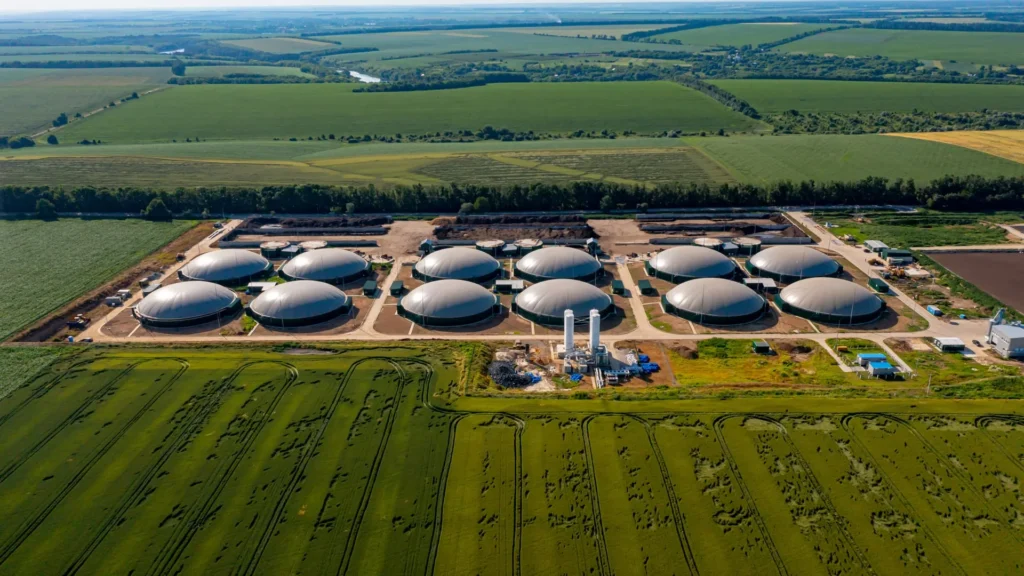
Circularity Fuels reported in June 2026 a six-month California pilot converting raw dairy biogas into Fischer-Tropsch jet fuel meeting ASTM D7566 Annex A1 requirements. The claim is notable because the company describes a process using raw biogas containing methane and carbon dioxide rather than first upgrading the gas into pipeline-quality renewable natural gas.
Dairy biogas sits at the intersection of methane mitigation, manure management and low-carbon fuel policy. Capturing methane from manure lagoons can produce high carbon value because avoided methane emissions are powerful in lifecycle accounting. Most commercial projects clean the gas, remove contaminants and use it as renewable natural gas. Converting it directly into jet fuel would add a more complex but potentially higher-value pathway.
Raw biogas is a difficult feedstock for catalysts
The attraction of using raw biogas is carbon utilisation. A mixture of methane and carbon dioxide contains both reduced and oxidised carbon. If reforming and Fischer-Tropsch synthesis can use that stream effectively, the project may avoid some conventional upgrading steps and retain more of the carbon in a liquid-fuel pathway. That is technically interesting for distributed farms that lack easy pipeline access.
The difficulty is gas quality. Dairy biogas can contain hydrogen sulphide, moisture, siloxanes, ammonia and trace compounds that damage catalysts or create operational instability. A pilot can manage those conditions under close supervision. A commercial modular system must tolerate variable manure management, seasonal temperature changes, maintenance constraints and farm-level operating realities.
Distributed SAF economics need more than a successful pilot
Small gas-to-liquid systems are attractive because dairy methane is dispersed. Moving manure is impractical, and moving raw biogas over long distances is expensive. Modular conversion could place the first processing step close to farms, turning a local emissions problem into a liquid intermediate or finished product. That model would reduce dependence on pipelines and central upgrading hubs.
Commercial finance will ask different questions from a pilot announcement. How many farms can support one module? What uptime is realistic under farm conditions? How are contaminants removed and monitored? Who operates the equipment? How is fuel collected, tested and certified? How does the project allocate carbon value between methane abatement, renewable fuel production and any remaining digestate or nutrient management benefits?
The pathway could connect manure management with aviation fuel, but evidence is still early
ASTM D7566 Annex A1 is the Fischer-Tropsch synthetic paraffinic kerosene pathway, a recognised route into aviation fuel blending. Meeting that specification in a pilot is meaningful, yet the commercial hurdle is repeatability. Aviation fuel markets require strict quality control, batch testing, traceability and reliable logistics. A distributed platform must meet those standards without losing the carbon and cost advantages that make dairy biogas attractive.
The next useful evidence would include independently described mass balance, contaminant-removal performance, operating hours, conversion efficiency, fuel yield, carbon-intensity assessment and a credible scale-up plan. Until then, the pilot should be treated as a promising technical signal rather than a bankable deployment model. If those data become available, dairy biogas could move from renewable-gas niche to one of the more distinctive SAF feedstock platforms in North America.
Sources and further reading
- Circularity Fuels, SAF project information
- Biomass Magazine, “Circularity Fuels converts raw dairy biogas to jet fuel in world first end-to-end pilot,” June 2026
- ASTM information on D7566 synthetic aviation-fuel pathways