
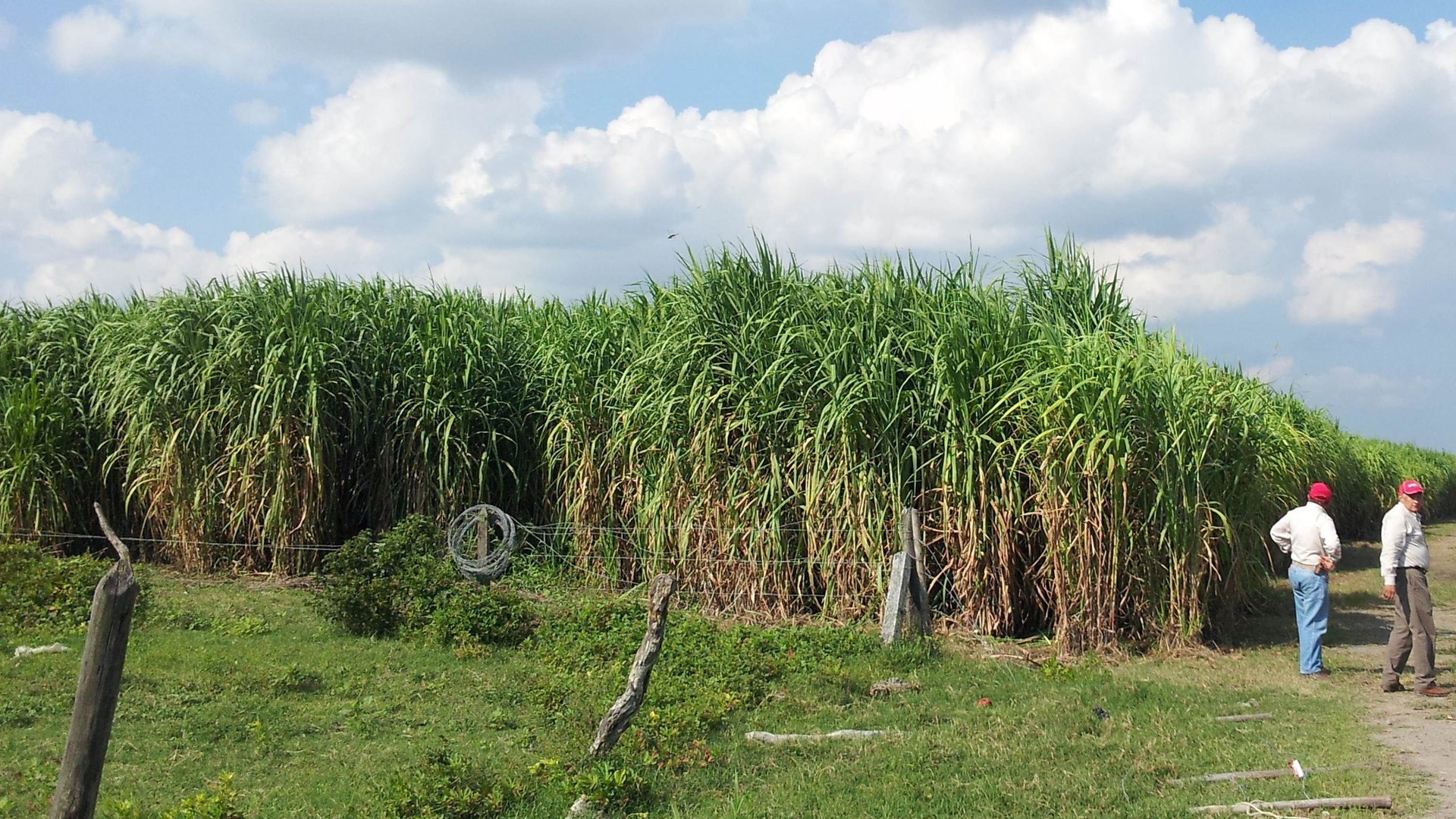
A 5 TPD CBG plant is not just a gas plant. It is a 100-tonnes-per-day agricultural logistics machine.
Compressed biogas plants are usually financed as industrial infrastructure. The project model begins with civil works, digesters, gas upgrading, compression, grid or cascade evacuation, utility systems and EPC delivery. Those assets matter. Yet the operating risk that most often decides whether a plant performs is upstream of the fence line. A CBG plant needs biomass every day with the right moisture, dry matter, volatile solids, biochemical methane potential, delivered cost and contractual reliability.
Napier grass, also known as elephant grass or hybrid Napier, deserves serious attention in this context. It can be a powerful tropical feedstock where climate, soil, water, farmer adoption, harvest interval, silage, transport and digestate return are designed as one system. The risk begins when developers finance plants using headline biomass yields instead of constrained basin yields. For investors, the useful metric is delivered cost per Nm3 of methane, rather than green tonnes per hectare.
Napier deserves attention from CBG developers
Napier is one of the most interesting tropical and subtropical biomass crops for biomethane because it combines high regrowth capacity, perennial C4 physiology and a long history as a forage crop across India, Southeast Asia and Africa. Under good management it can provide multiple harvests, respond to nutrients and water, and create links between gas production, dairy systems, fodder markets, digestate use and rural income.
The agronomic case is real. ICAR-NDRI’s 2026 Hybrid Napier Grass bulletin describes hybrid Napier as a climate-resilient and sustainable fodder crop with high biomass potential and multiple harvests. The same bulletin also points to India’s structural fodder deficits and the heavy burden of feed and fodder costs in milk production, which can represent more than 70% of milk production costs. That matters for CBG. Napier grown for gas cannot be separated from the livestock and fodder economy around the same land, water, labour and biomass.
In the right basin, Napier can justify substantial plant CAPEX. A dense perennial supply base reduces annual establishment, offers repeated cutting windows and can support local mechanisation. It also gives developers a crop that farmers may already recognise. That familiarity is valuable, especially where the alternative is to build a supply chain around an unfamiliar energy crop with weak local contractors and uncertain farmer confidence.
The dangerous yield exists only in the spreadsheet
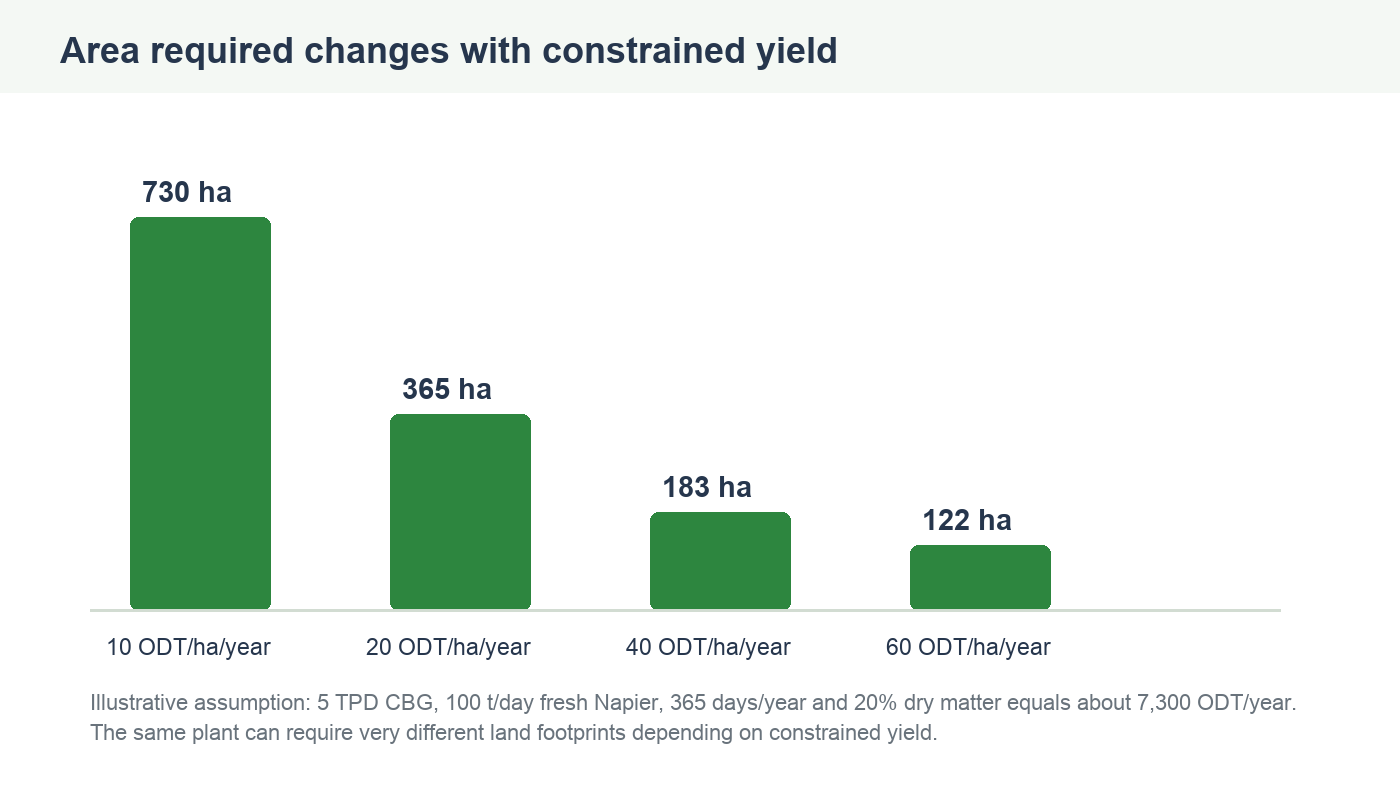
The most dangerous Napier yield is the one that exists in the spreadsheet but not in the basin. Many CBG models begin with potential yields, while the actual catchment is constrained by salinity, low rainfall, poor irrigation water, shallow soils, compaction, acidity, low fertility, weak drainage, road distance, limited mechanisation, competing crops and farmer adoption barriers. The difference is not academic. It changes the land footprint, working capital, harvest fleet, silage plan, delivered cost and debt service capacity.
A Napier plantation producing 50-60 ODT/ha/year is a different asset from one producing 10-15 ODT/ha/year. The crop name is the same. The feedstock economics are not. High-yielding Napier under reliable water and fertility can look like an industrial feedstock. A stressed stand on marginal land may still be biologically alive while failing the methane-cost test.
Establishment also has to be financed. Napier is commonly vegetatively propagated, which means planting material, transport, land preparation, labour, establishment irrigation, gap filling and a period before stable productivity. Literature on Bana and Napier grass in sub-Saharan Africa shows why management changes the asset: good systems may reach high dry-matter yields, while poor fertilisation and watering can reduce performance sharply. The early months matter because missed establishment becomes a multi-year cost, not a single failed drilling pass.
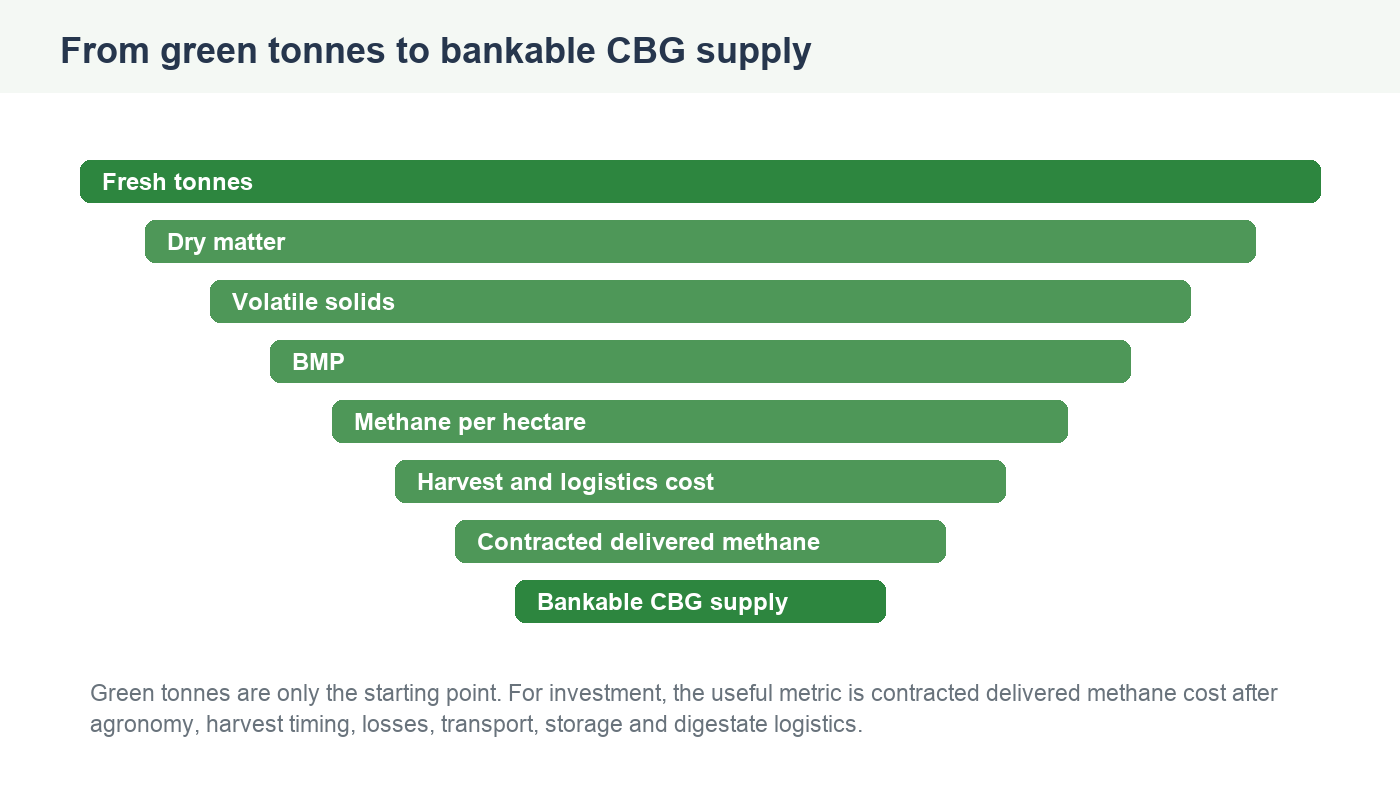
For CBG, green tonnes are not enough
The investment chain should run from fresh biomass to dry matter, volatile solids, biochemical methane potential, methane per hectare, harvest cost, transport cost, storage losses, digestate logistics, contracted supply and finally delivered cost per Nm3 of methane. Each conversion step can improve or weaken the project. Fresh tonnes are visible and easy to sell in a pitch deck. Methane delivered to the upgrader is what pays the plant.
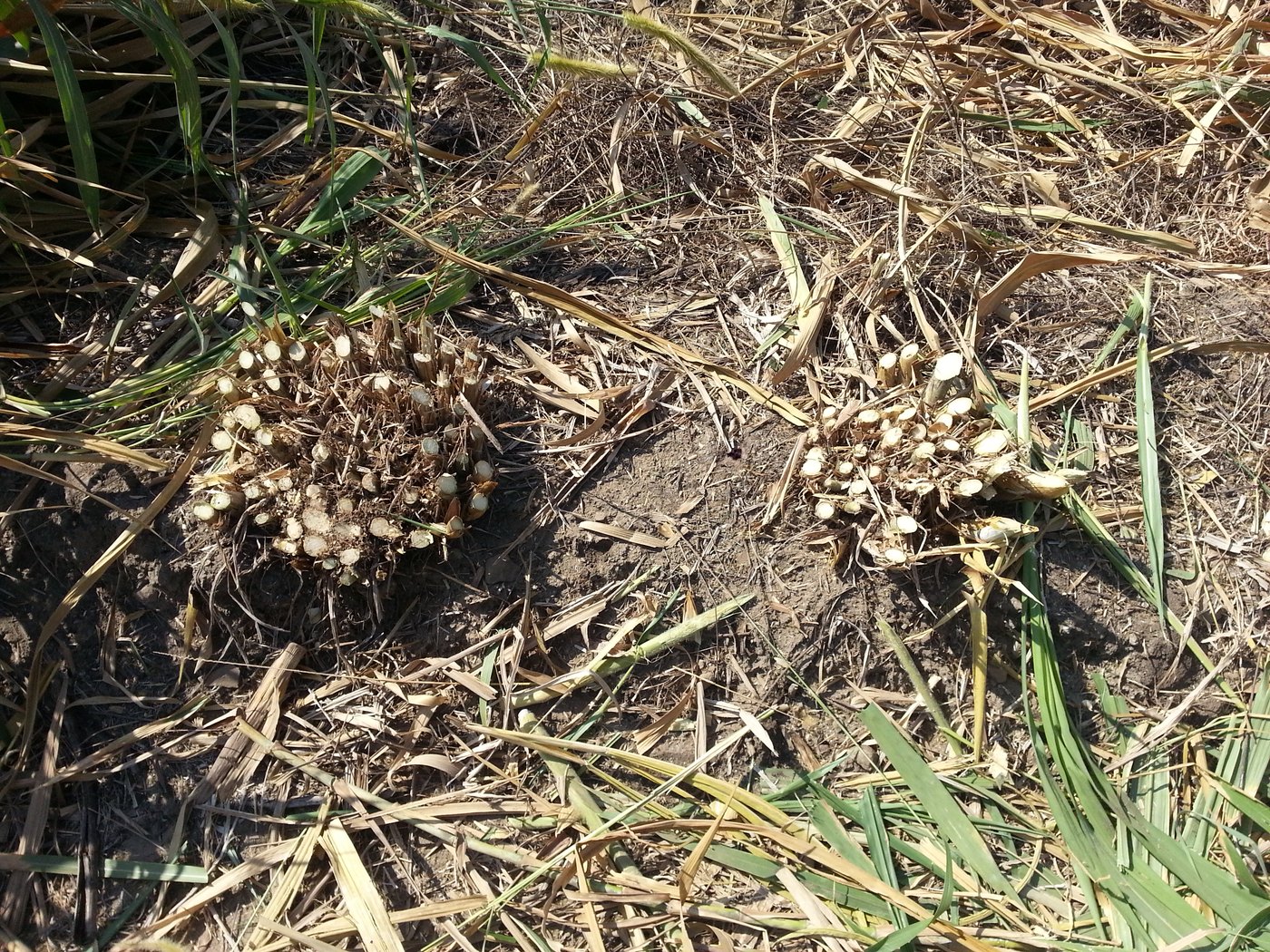
A 2026 Energy Nexus study on Napier evaluated the crop for both combustion and anaerobic digestion. Its result is useful because it separates generic biomass production from CBG feedstock design. Longer 120-day cutting intervals improved combustion-related energy characteristics, while shorter 60-day intervals improved biogas and methane yields. Dwarf Napier at 60 days reached the highest specific methane yield reported in the study, at 299 m3 CH4/t VS. Fertilisation increased biomass, yet its effect on specific methane yield was marginal compared with species and harvest interval.
That distinction is critical. A plant buying biomass for anaerobic digestion is not necessarily looking for the same material as a boiler or pellet plant. Cutting interval changes dry matter, fibre, acid detergent fibre, neutral detergent fibre and lignin, while crude protein and ash tend to decline as the crop matures. More standing biomass at a longer interval may reduce digestibility, increase harvest difficulty and add preprocessing cost. CBG agronomy is feedstock quality management, not only yield management.
India’s CBG ambition makes due diligence unavoidable
India’s SATAT programme has made CBG a national infrastructure opportunity, with a stated ambition of 5,000 CBG plants and 15 million metric tonnes per year. IndianOil’s SATAT materials describe policy support including central financial assistance linked to CBG capacity and priority-sector lending. This policy context is powerful, but it does not remove the need to underwrite the biomass basin.
Reported figures from CSE and Down To Earth suggest roughly 18-20 tonnes of fresh Napier per tonne of CBG, or indicative bio-CNG yields in the range often cited by developers. These figures should be treated as reported or indicative, not universal constants. Dry matter, volatile solids, methane potential, harvest interval, contamination, storage and moisture all change the final number.
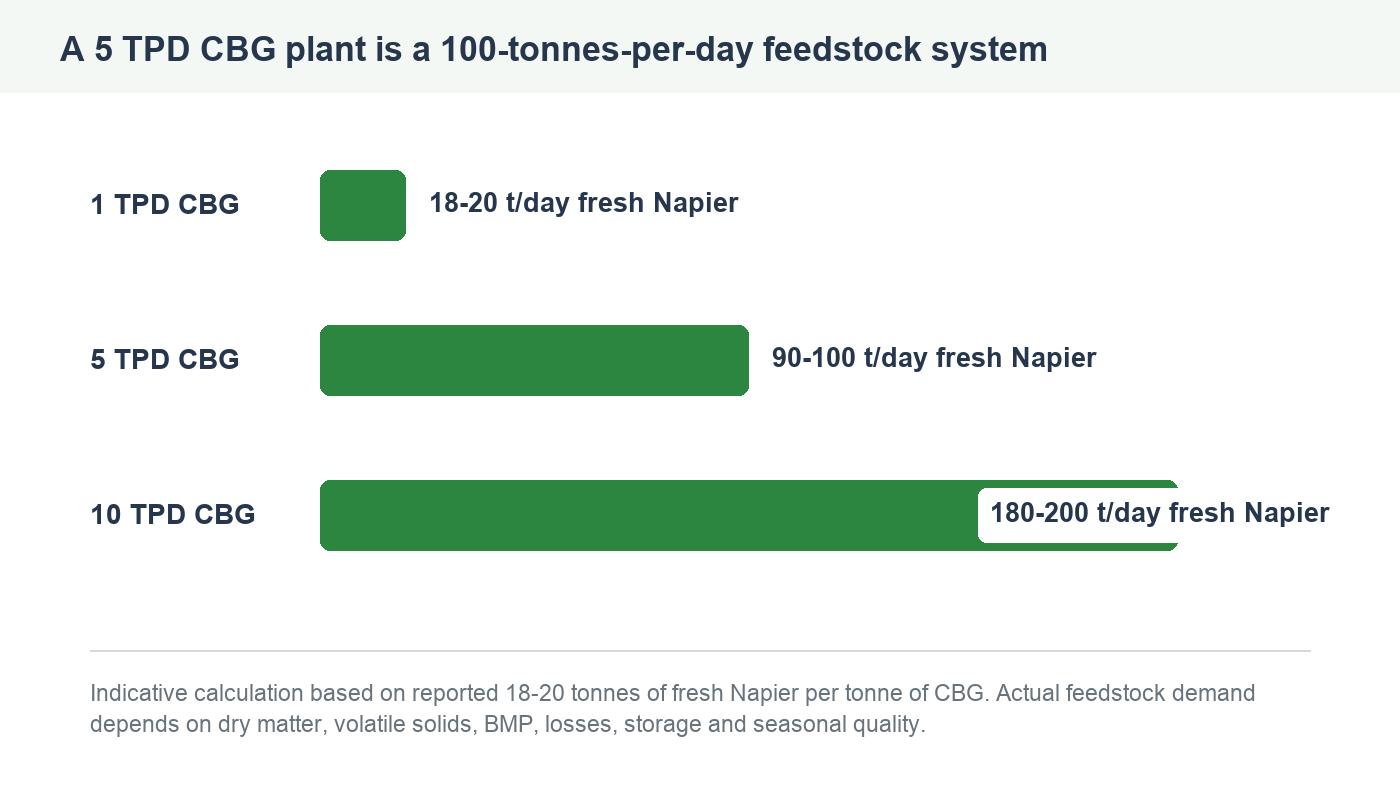
If one tonne of CBG requires approximately 18-20 tonnes of fresh Napier, a 5 TPD CBG plant may require roughly 90-100 tonnes per day of fresh biomass before losses, storage buffers, seasonality and quality variation. That is why the sentence at the start matters. A medium-size CBG plant is also a daily agricultural procurement, harvesting and transport operation.
Salinity and marginal land need economic interpretation
Napier can work across a range of tropical environments and may perform well in acidic, leached, high-rainfall soils where fertility, organic matter and water are managed. The Meghalaya study cited in the brief reported hybrid Napier with the highest three-year average dry fodder yield among tested grasses at 28.1 Mg/ha, and found that organic amendments improved yield, soil organic carbon and nutrient availability. That is a positive case: marginal or degraded land can become more productive when crop choice, amendments and management are designed together.
Salt-tolerant does not mean cheap methane under salinity. A crop may survive salinity, drought or acidity and still fail the CBG economic test if its dry-matter yield, volatile-solids yield and delivered methane cost are poor. Marginal land deserves careful agronomy and financial modelling, not optimistic translation from survival to bankable supply.
In constrained basins, developers should compare Napier with seeded perennial grasses, forage sorghum, grass-legume mixtures, intermediate crops, residues, manure, press mud and hybrid systems. The answer may be a dedicated Napier base load supported by residues and manure. It may be a seasonal forage sorghum and residue blend. It may be a smaller plant. The winner may be Napier. In many basins it will be. But the answer should come from agronomic and financial modelling, not from a yield claim.
Feedstock basins beat crop recipes
The strongest CBG projects will be designed at basin level. That means GIS mapping, soil and water characterisation, salinity and rainfall assessment, current crop mapping, livestock forage demand, farmer interviews, adoption barriers, harvesting windows, machinery access, transport radius, silage and storage, digestate return, BMP testing and contract structures. Bioenergy Crops discussed the same principle in our article on feedstock basins and biomass hubs: project bankability emerges when resource mapping becomes contracted, deliverable supply.
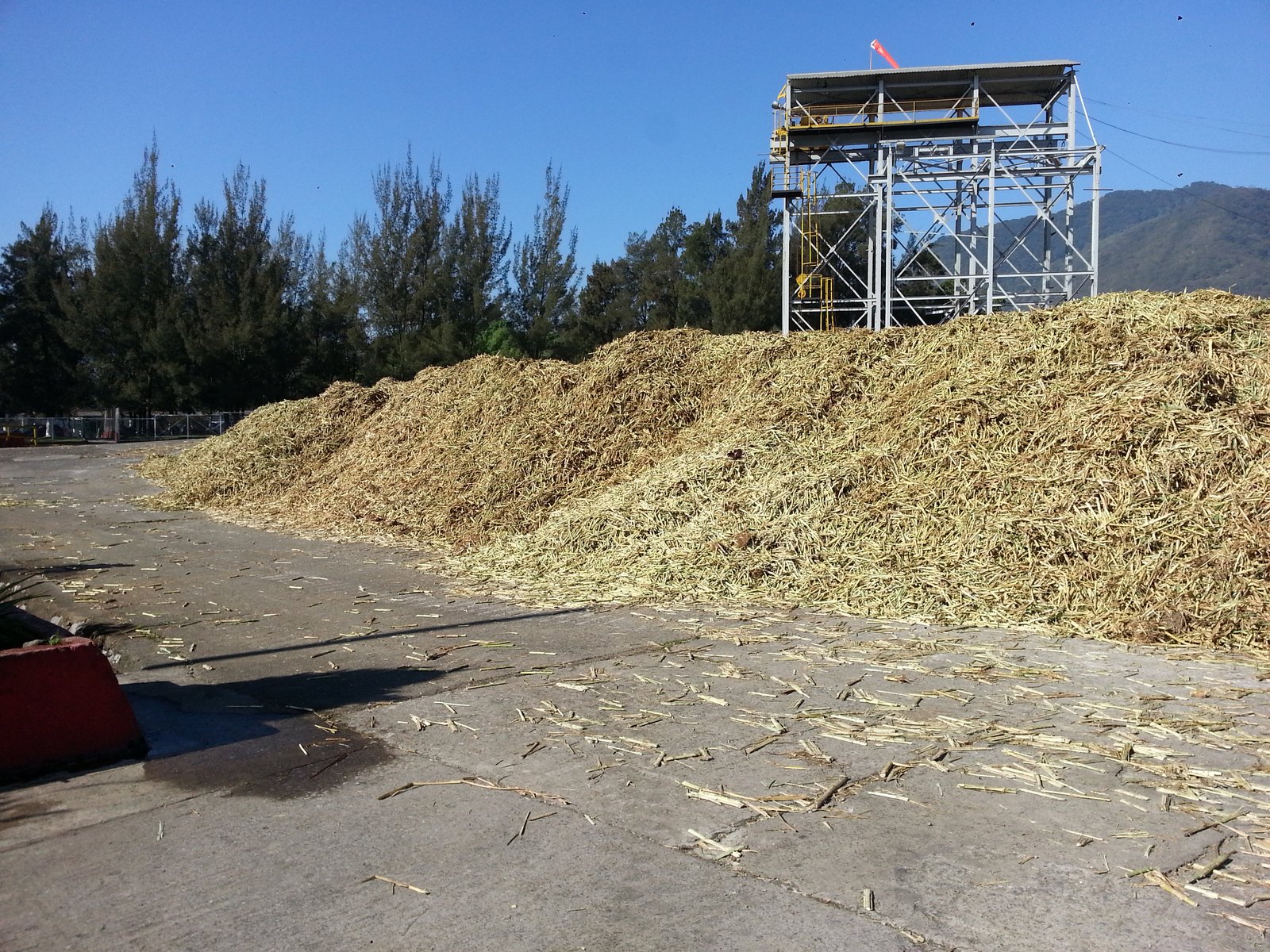
For Napier, basin design also includes the practical logistics of a bulky, wet feedstock. A high-yielding crop can still become expensive if harvest crews, roads, choppers, trailers and storage cannot move the material at the right interval. Our earlier field note on Napiergrass harvest logistics remains relevant: machinery choice and field organisation shape delivered cost as much as yield does.
Comparing feedstock options before locking the plant size
| Feedstock option | Strength | Risk | When it may fit |
|---|---|---|---|
| Napier / elephant grass | High regrowth, perennial supply and strong forage familiarity in many tropical regions. | Vegetative establishment cost, water sensitivity, bulky logistics and variable methane economics under stress. | Basins with reliable water, suitable soils, farmer acceptance, harvest machinery and digestate return. |
| Seeded perennial grasses | Lower planting-material logistics and potentially easier scaling from seed. | May have lower or less proven methane yield in the specific basin. | Areas where vegetative propagation is too costly or where rapid expansion is required. |
| Forage sorghum | Seeded crop, flexible seasonal production and familiar agronomy in many regions. | Annual or seasonal crop risk, competition with feed uses and narrower harvest windows. | Rotational systems, monsoon windows or basins needing seasonal biomass rather than permanent stands. |
| Grass-legume systems | Potential improvement in protein, soil cover and nitrogen dynamics. | More complex establishment, harvest timing and ensiling behaviour. | Farms where soil improvement and fodder value are part of the commercial case. |
| Residues and manure | Existing biomass streams, circular-economy value and lower land competition. | Collection cost, contamination, seasonality, variable BMP and competing uses. | Hybrid CBG projects where residues support or stabilise a dedicated crop base. |
This comparison is why plant sizing should come after supply-chain design. A developer may be tempted to size the digester around a theoretical Napier area. A stronger method is to size the plant around the contracted methane that can be delivered under weather, farmer, logistics and storage constraints. The same reasoning applies to energy crops on marginal lands, SAF feedstock supply chains and other bioenergy projects where the industrial asset depends on biological performance.
What investors should underwrite
| Due diligence item | Why it matters for CBG finance |
|---|---|
| Constrained yield | Defines realistic land area, harvest fleet size, storage capacity and methane supply. |
| Establishment cost | Vegetative planting material, labour and irrigation affect working capital before stable productivity. |
| Productive life | Determines replanting cycles, farmer commitment and long-term feedstock security. |
| Cost per tonne VS | Connects agronomy with methane value more directly than fresh tonnes. |
| BMP at planned harvest interval | Confirms whether the crop is being managed for anaerobic digestion rather than generic biomass. |
| Local fodder market value | Shows the opportunity cost and competition from livestock demand. |
| Digestate use | Can reduce fertiliser cost and improve soils, but only if transport, timing and farmer acceptance work. |
| Lower-CAPEX alternatives | Tests whether the same gas target can be met with a better feedstock blend or smaller plant. |
| Farmer adoption | Determines contractable supply beyond developer-owned land. |
| Drought and salinity resilience | Survival is useful, but methane cost under stress decides project quality. |
This is agricultural underwriting. It includes agronomy, water, contracts, machinery, storage, land tenure and farmer economics. It also includes payment timing: farmers compare Napier contracts with dairy fodder, sugarcane, rice, maize, vegetables, lease options and labour availability. A technically attractive crop may fail adoption if the cash-flow profile, cutting obligations or residue and digestate handling do not fit farm reality.
Conclusion: finance the basin, not the crop name
Napier can support large CBG CAPEX when the basin is right. It can provide high regrowth, multiple harvests and a local rural-development story that fits biomethane, digestate and livestock systems. It is also a crop with establishment cost, water sensitivity, management demands and bulky logistics. The disciplined project model uses constrained yield, delivered methane cost, contractable supply, soil and water limits, farmer adoption, digestate strategy and alternatives testing before it fixes plant capacity.
CBG is industrial infrastructure, but its strongest projects will be financed with agricultural evidence. Developers should be able to explain how fresh biomass becomes dry matter, volatile solids, methane, contracted supply and delivered Nm3 at the upgrader. They should know which harvest interval optimises anaerobic digestion, which farmers will supply, which roads and machines can move the crop, how silage buffers seasonality, and how digestate returns value to the basin.
At Bioenergy Crops, we work at this interface between land, crops, biomass logistics and industrial bioenergy projects: mapping feedstock basins, assessing crop options, characterising marginal lands, evaluating agronomic constraints and helping developers design supply systems that can operate beyond the spreadsheet. More at @bioenergycrops and BioenergyCrops.com.
Selected sources
ICAR-NDRI, Hybrid Napier Grass bulletin, 2026; Ministry of Petroleum and Natural Gas and IndianOil SATAT programme materials; Centre for Science and Environment / Down To Earth reporting on Napier-to-CBG feedstock requirements; Energy Nexus, 2026 Napier grass study on combustion and anaerobic digestion; King Napier cutting-interval research; Meghalaya hybrid Napier and organic-amendment study; published Bana/Napier grass literature on management, vegetative propagation and dry-matter yield ranges.