
Honeywell’s June 2026 announcement that Acelen Renewables had selected modular Ecofining technology, specialised rotating equipment and integrated automation for a renewable-fuels project in Bahia places a familiar industrial technology beside a more demanding agricultural question. A hydroprocessed esters and fatty acids platform can be engineered, permitted and commissioned through an industrial schedule. A macaúba supply base has to grow through nurseries, land agreements, farmer contracts, field establishment, fruiting, harvest, oil extraction and traceability.
The distinction is central to the investment case. Bahia offers refinery skills, logistics, tanks, utilities, port access and an industrial workforce. Macaúba offers a more distinctive long-term feedstock thesis, but it is a perennial crop. Its commercial maturity cannot be accelerated in the same way as a process unit. Acelen’s proposition is strongest if the refinery timetable and the agricultural timetable are aligned rather than allowed to drift apart.
Project facts should be separated from project scenarios
The confirmed public story is that Acelen is pursuing a large renewable-fuels platform in Bahia and that Honeywell technology is part of the industrial package. Any article about the project should distinguish confirmed project facts from feedstock scenarios. If a start-up mix of soybean oil, used cooking oil (UCO), tallow or other traded lipids is not publicly confirmed, it should not be written as fact. Macaúba can be analysed as the strategic crop platform while the commissioning feedstock mix remains an open diligence item.
| Question | What is useful to disclose | Why it affects bankability |
|---|---|---|
| Technology | Honeywell Ecofining scope, pretreatment assumptions and product slate | Defines conversion risk and product flexibility |
| Capacity | Company-reported output capacity and timing | Determines annual feedstock demand |
| Feedstock | Confirmed oils for start-up and dedicated crop volumes by year | Controls utilisation and carbon intensity |
| Finance | Debt, equity, incentives and conditions precedent | Shows whether the project is announced or financed |
| Offtake | Fuel buyers, tenor, price formula and carbon-attribute treatment | Determines revenue quality |
HEFA gives flexibility, but flexibility is not a supply strategy
HEFA technology converts oils and fats into renewable diesel, sustainable aviation fuel (SAF) and other products through pretreatment, hydrogenation, isomerisation and fractionation. The technology family is commercially established, but the economics remain sensitive to feedstock price, hydrogen cost, product yield, certification and offtake. Refinery integration can help with utilities, tanks and operating discipline, yet it cannot remove the need for secure oils.
Feedstock flexibility is valuable because it allows an operator to adapt to market availability. It is also a source of competition. Soybean oil, canola oil, UCO, animal fats and other lipid streams are pulled by food, feed, biodiesel, renewable diesel, oleochemicals and export markets. A refinery that relies on traded oils can operate before a dedicated crop base is mature, but it may face higher price exposure and weaker differentiation.
Carbon intensity is equally sensitive. A tonne of oil delivered to a HEFA unit carries the history of land use, fertiliser, harvest, extraction, transport and storage. Hydrogen production, process heat and product allocation then shape the refinery result. For aviation markets, the certificate attached to the fuel can be as important as the molecule. A SAF cargo with weak origin data or uncertain land-use history may struggle to command the premium that justified the project.
Macaúba changes the clock from construction to biology
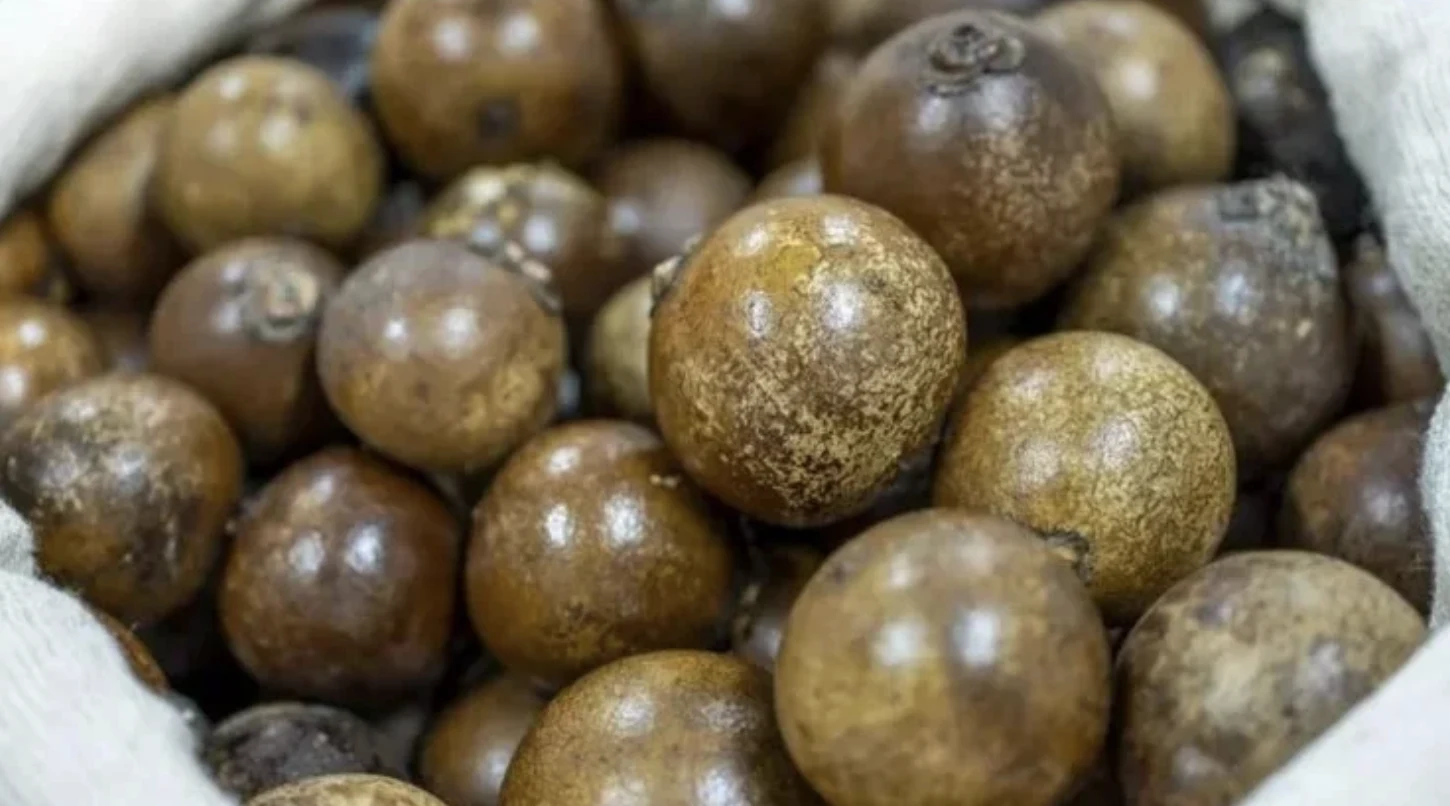
Macaúba, Acrocomia aculeata, is attractive because it is a perennial oil-bearing palm associated with Brazilian landscapes and often discussed in relation to degraded pasture, silvopasture and mixed farming systems. Its fruit can contain oil in pulp and kernel fractions, with residues that may have energy, soil or animal-feed relevance depending on processing. None of those attributes removes the practical development questions: seed germination, genetic variability, nursery capacity, seedling quality, establishment survival, age to first production, mature-yield uncertainty, harvest method, fruit storage and oil extraction.
A perennial crop also changes farmer finance. Growers face establishment costs and immature years before meaningful revenue. They need technical assistance, planting material, crop insurance where available, floor prices or indexed purchase formulas, replacement protocols and confidence that the buyer will still be there when the crop reaches production. Without that structure, a refinery may have a compelling feedstock narrative but insufficient contracted oil.
Nursery scale is a particularly early constraint. A large refinery can require feedstock volumes that imply many thousands of hectares of planted crop if macaúba becomes a core supply stream. Seed source, germination, seedling uniformity and field survival therefore become industrial variables. Weak planting material can reduce oil supply for the life of the plantation, while poorly financed growers may delay maintenance exactly when the crop is establishing its productive base.
Land-use claims need a baseline, not an adjective
Brazil has large areas described in public debate as degraded pasture, but «degraded» should not be accepted as an unverified label. A credible macaúba programme should document previous land use, vegetation, soil condition, tenure, biodiversity constraints, water availability, livestock displacement and indirect land-use risk. Planting on low-productivity cattle land can be attractive if it adds income and soil cover without moving livestock pressure into sensitive ecosystems. The same crop can be problematic if it displaces food production, high-value grazing or native vegetation.
Different models carry different risks. Estate planting improves control and traceability, but concentrates capital and land exposure. Outgrower systems can spread benefits and scale participation, but require aggregation, extension, consistent harvest standards and fair risk sharing. Agroforestry and silvopasture may improve resilience, but they need machinery access, harvest planning and realistic yield expectations.
Livestock displacement should be analysed explicitly. If macaúba enters existing cattle landscapes, the project should show whether stocking rates are maintained, reduced or moved elsewhere. A project that improves low-productivity pasture while keeping rural income can have a stronger case than one that simply shifts grazing pressure. Soil carbon, erosion control and biodiversity benefits also need measured baselines rather than general claims about restoration.
Circularity can improve the system only when residues have a job
Macaúba fruit processing may generate pulp residues, press cake, shells and wastewater streams. These can support compost, biogas, process heat, pyrolysis, biochar or nutrient recycling, but each pathway requires evidence. A residue becomes circular only when logistics, moisture, energy demand, soil need, emissions accounting and economics work together. Compost or biochar can support soil improvement and erosion control where field trials justify application rates; biogas or process heat may support extraction hubs where residue concentration is sufficient.
Precision farming and digital traceability should be built in from the start. Plot boundaries, planting material, establishment dates, fertiliser, irrigation, harvest volumes and transport distances all feed lifecycle carbon calculations. A crop planted as a future SAF feedstock cannot wait until first oil to organise its data.
Processing hubs will determine whether fruit becomes refinery-grade oil at acceptable cost. Macaúba fruit quality can deteriorate if collection, storage and depulping are poorly managed. The project therefore needs local aggregation, quality testing, oil extraction, kernel handling and residue management before large planted areas reach maturity. This is where an agricultural programme becomes industrial infrastructure rather than a plantation map.
The decisive evidence is synchronisation
Acelen’s challenge is not only to build a refinery. It is to demonstrate that refinery operations, hydrogen supply, product certification, feedstock contracts, nurseries, growers and extraction hubs can mature together. If the refinery is ready before dedicated macaúba oil is available, utilisation depends on traded oils and their carbon profile. If plantings mature without extraction capacity and offtake, growers carry the risk. If carbon documentation starts late, the crop story may not translate into SAF value.
The most useful investor questions are practical: what feedstock is contracted for start-up, how much macaúba has been planted, who owns the nurseries, how growers are financed, how long the immature period is assumed to last, where fruit will be processed, what oil-recovery data exist, how land-use baselines are audited, whether hydrogen supply supports target carbon intensity and which offtake contracts are binding. Acelen can become a leading Brazilian SAF platform if the agricultural base and the industrial asset are developed as one system rather than as parallel announcements.
That is the commercial standard BEC would apply to any dedicated SAF feedstock project. Announced capacity is useful, but contracted oil, audited land baselines, grower economics and refinery integration decide whether the capacity becomes bankable supply. Macaúba may be one of Brazil’s more interesting perennial oil-crop opportunities; it still has to prove that biology, logistics and finance can move at the same pace as the refinery.
Related BEC analysis: SAF feedstock supply chains and reliable supply development.
Sources and further reading
- Honeywell, June 2026 company announcement on Ecofining technology, rotating equipment and automation for Acelen Renewables in Bahia.
- Acelen Renewables public project materials on the Bahia renewable-fuels platform and macaúba feedstock strategy.
- ICAO, CORSIA eligible fuels and lifecycle-emissions framework.