
BEC RADAR INTELLIGENCE
12 October 2026
Who controls the biomass supply behind new investment?
France adds a new route for gas produced from solid biomass to its certificate scheme. Its extension to 2044 links process eligibility with the commercial value of measured biomethane output.
New ownership of biomass power plants in the United States, native-tree planting rules in Brazil and investment in Italian biomethane connect capital with different kinds of resource control. Indonesia adds two supply routes: gas recovered from palm-mill wastewater and woody fuel delivered to power stations.
BEC examines the commitments that turn these announcements into a workable supply business: recorded plantation origin, local contractors, accepted fuel specifications, nutrient outlets and customer delivery.
France
France opens renewable gas certificates to new routes from solid biomass
The decree published on 9 October extends supplier obligations to 2044 and admits gasification and pyrolysis, subject to the scheme’s conditions.
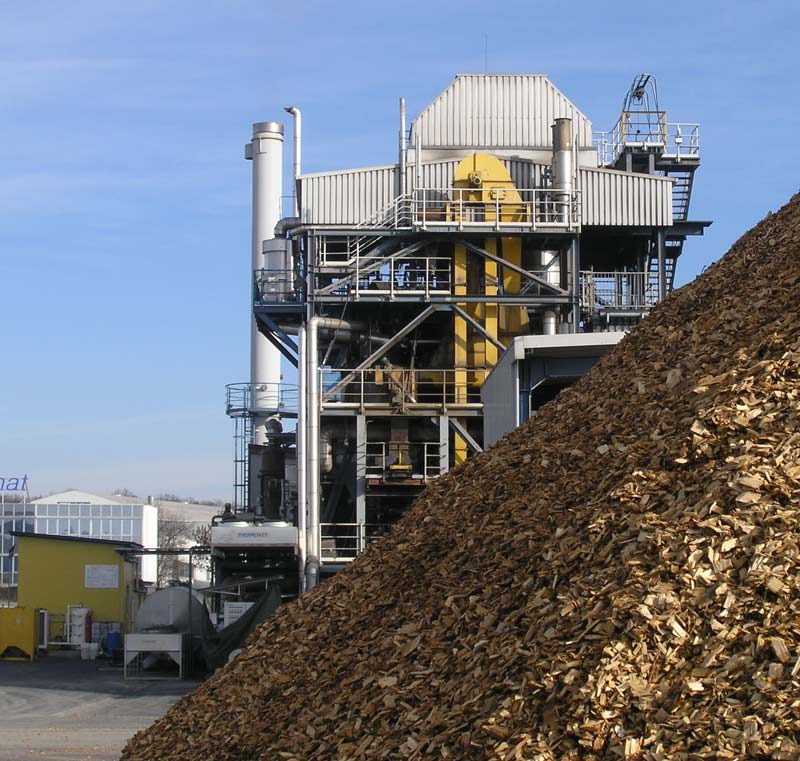
France has extended its biogas production certificate scheme to 2044 and widened the eligible production routes to include gasification and pyrolysis. Decree 2026-933 was published on 9 October and took effect the following day. These thermal processes can turn solid biomass into a gas that requires further processing to become biomethane suitable for sale.
For a developer considering wood or agricultural biomass, the change creates a regulatory route to investigate alongside the price of the gas itself. Certificate eligibility, actual biomethane output and the terms offered by a certificate buyer determine how much value reaches the project.
BEC’s conclusion is that developers should test the complete conversion pathway against the certificate rules before pricing a long-term biomass supply contract. The permitted treatment of hydrogen makes the process design commercially material.
Our analysis
The decree allows a methanation step needed to obtain biomethane, provided it uses no external hydrogen. Methanation converts suitable components of the process gas into methane. Consequently, a project designed around purchased hydrogen needs a specific eligibility review. A technology label or a supplier’s endorsement gives a less precise answer than the actual process flow and its input streams.
The obligation is measured in certificates per megawatt-hour of gas supplied, on a higher-heating-value basis. For 2027 and 2028, the decree lowers the earlier coefficients from 0.0182 to 0.0162 and from 0.0415 to 0.0355 respectively. Those figures measure a certificate obligation; interpreting them as physical gas-blending percentages would misstate the rule. The longer horizon therefore comes with a softer obligation in those two early years.
The energy regulator CRE reviewed an earlier proposal on 17 September, providing context on certificate supply and market functioning. Its appraisal and Haffner Energy’s welcome for the final decree carry different perspectives: CRE assesses the regulatory mechanism, while the technology supplier has a commercial interest in thermal conversion. Neither establishes the future performance of an individual installation.
BEC would assess the feedstock contract against accepted, metered biomethane output. Moisture, ash and conversion losses affect the gas produced from a purchased tonne; process availability affects annual sales. Assigning certificate revenue to all incoming biomass would overstate the volume exposed to that revenue stream. Buyers and developers can instead specify the measurement point, ownership of certificates and treatment of off-specification production.
The next commercial evidence is a project-specific eligibility assessment and a certificate purchase agreement with volume, price and delivery terms. These would allow the regulatory opportunity to be translated into a defensible revenue case. Individual plants still require their own permits, technical performance evidence and investment decisions.
Sources
United States; Georgia; Franklin County; Madison County
Pacolet announces the acquisition of two biomass power plants in the United States
The Georgia facilities add 116 MW to the announced portfolio; fuel costs remain tied to each plant’s local suppliers.
Pacolet Milliken announced on 7 October that it had acquired Georgia Renewable Power’s two biomass electricity plants in Franklin and Madison counties, Georgia, United States. Their combined capacity is 116 MW, with long-term electricity sales to Georgia Power and financing support attributed to Manulife.
The transaction adviser’s 8 October account describes definitive acquisition agreements. A separate closing confirmation would clarify the difference between that wording and Pacolet’s announcement. The assets themselves are existing plants, so the transaction’s relevance to growers depends on future procurement and operating changes.
Pacolet already owns Piedmont Green Power in Barnesville, Georgia. Bringing the three facilities under one owner creates a larger biomass portfolio, while the delivered fuel balance still depends on the suppliers and transport network serving each plant.
BEC sees the acquisition’s supply-side value in contractor capacity, fuel specifications and contract indexation at each plant. Portfolio size alone leaves those local costs unresolved.
Our analysis
A larger purchasing organisation can compare delivered fuel costs, standardise acceptance tests and coordinate contractors. Its strongest opportunity may be better execution at individual plants. Physical savings depend on supplier locations, haul distances and whether contractors can serve more than one facility economically.
University of Georgia Extension’s 2026 timber outlook draws attention to timber-market and logging conditions. This is useful context for an investor: standing wood and dependable deliveries are different measurements. A supply assessment needs the contractor network and accessible harvest schedule alongside the forest inventory.
Historical Georgia Public Service Commission records also show why the electricity contract belongs in the fuel analysis. The relationship between fuel-cost escalation and power revenue determines the margin that an owner can protect. Current contract prices and acquisition financing terms remain undisclosed.
For a landowner considering energy crops, the practical opportunity would be a named plant willing to purchase a specified material on terms that cover establishment, harvesting and delivery. The ownership change can prompt that discussion, while its commercial case still rests on the particular supply basin.
A useful procurement comparison would hold moisture basis, acceptance specification and delivery period constant. Otherwise, a lower price per received tonne can reflect wetter material or different handling requirements, giving the owner a misleading impression of the saving achieved through joint purchasing.
Sources
Primary announcement · Supporting source 1 · Supporting source 2 · Supporting source 3 · Supporting source 4 · Supporting source 5
Brazil
Brazil opens consultation on rules for planting and harvesting native trees
Ibama’s proposed registration system links planted areas, forest inventories and the release of timber transport records.
Ibama, Brazil’s environmental agency, opened a consultation on proposed rules for registering and harvesting planted native forests. Announced on 5 October, the consultation runs from 6 October to 6 November 2026. The proposal concerns native species established in planted forests.
The draft links georeferenced planting areas, species, establishment dates and forest inventories with harvest declarations and timber-origin records. It remains a proposal; the final regulation and implementation timetable are still ahead. The system would connect those records through the national forest-product traceability framework.
Article 12 proposes advance harvest notification of 120 days. Article 17 provides for a declaration within 30 days after each harvesting stage, before transport credits are released. These are proposed administrative steps whose final wording remains subject to consultation.
BEC’s conclusion is that planting records, mapped stands and forest inventories should form one continuous commercial record. The proposed harvest timetable makes that record relevant to delivery planning and working capital.
Our analysis
For a plantation developer, the commercial value begins with the stand record. Using the same identifiers in field surveys, mapping and harvest planning makes it easier to connect a future delivery with the area that produced it. That is particularly relevant when an industrial buyer expects supply from several properties.
The draft also introduces a scheduling issue. Its proposed 120-day advance harvest notice and post-harvest declaration process would need to be incorporated into contractor and delivery plans. Material awaiting the records needed for transport can create storage and working-capital costs. The final procedure will determine how that timing operates in practice.
Protected areas, threatened species and relevant Atlantic Forest cases retain additional conditions. A plantation map therefore needs to distinguish commercial production areas from other land obligations. Species-site fit and expected growth remain essential to the investment decision, alongside the proposed documentation route.
The implication for productive restoration is specific: a planting design becomes more useful to a future buyer when its location, history and inventory can be followed consistently. The consultation may improve that administrative continuity; individual projects still need buyers, suitable products and credible delivered costs.
The field record can also identify where a plantation’s commercial role changes. A stand intended for timber, ecological restoration or mixed production may require different harvest assumptions and environmental treatment. Carrying that purpose into the mapped inventory makes later investment assumptions easier to audit.
Sources
Primary announcement · Supporting source 1 · Supporting source 2
Italy
Copenhagen Infrastructure Partners announces investment in planned biogas plants in Italy
Via Verde’s pipeline spans three regions, with a stated ambition to produce 1 TWh a year when developed.
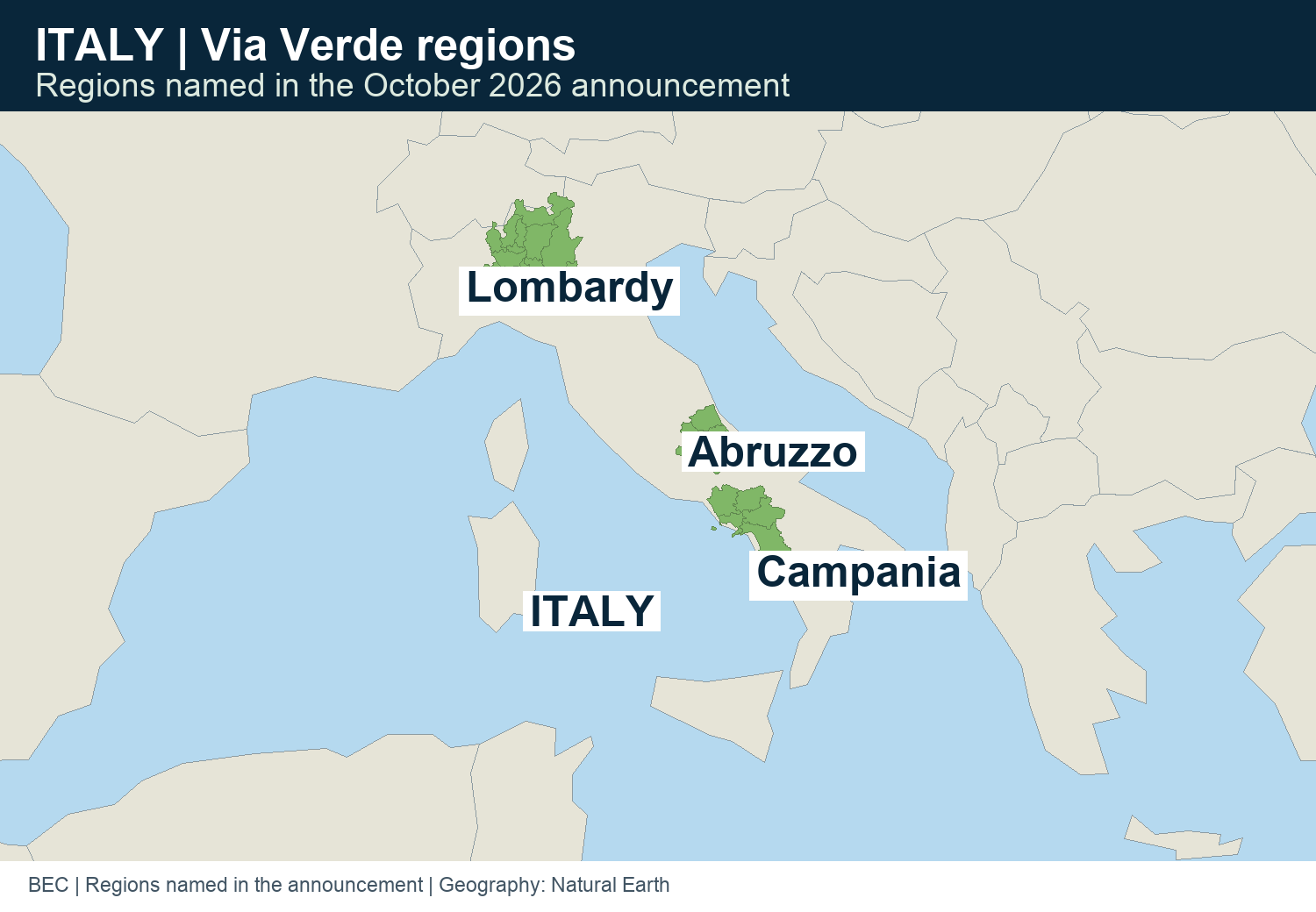
Copenhagen Infrastructure Partners announced a final investment decision on Via Verde on 7 October. The Italian biomethane platform has twenty projects in development across Lombardy, Abruzzo and Campania, with a stated ambition of 1 TWh of annual production when built.
The investor envisages 60,000–100,000 tonnes of annual feedstock at each plant. Individual project permits, construction dates and contracted input mixes remain to be established separately from the platform investment. Those quantities are development assumptions attributed to the investor.
The announcement establishes a platform investment decision covering a development pipeline. Each plant will have its own material requirements and operating timetable. The investor’s national programme therefore leaves local feedstock composition, contracting and digestate arrangements as separate questions for the individual projects.
BEC sees two local supply questions inside the national platform: what each plant can collect economically, and where its digestion residues can return nutrients to land.
Our analysis
The three-region portfolio brings several agricultural supply markets into one investment platform. Each plant still needs an economic collection radius based on the material it can actually digest, its moisture, seasonal availability and transport cost.
The same geography matters after digestion. Farms receiving digestate need suitable nutrient demand, application periods and storage arrangements. A project with an attractive feedstock catchment can still carry an expensive outward transport obligation for its residual material.
BEC sees plant-by-plant nutrient balances as a useful test of replicability. A repeatable investment model requires evidence that both inbound supply and outbound material management work at successive locations. Shared ownership can standardise the assessment; local farming conditions determine its result.
The next meaningful supply opportunity is a specific plant connecting its input specification and seasonal purchasing schedule to a funded development timetable. The announced platform scale creates a reason to assess that opportunity without implying that twenty operating plants or twenty binding crop contracts already exist.
Seasonal storage provides a further test of the development programme. Harvest periods and continuous gas demand rarely follow the same calendar. Each site therefore needs an input schedule and storage design that preserve usable material while keeping working capital within the expected operating margin.
Sources
Primary announcement · Supporting source 1 · Supporting source 2
Indonesia
Toyota Tsusho announces plans for factory fuel from palm-mill wastewater in Indonesia
The company announces a venture targeting 2027 production in South Sumatra and industrial supply to West Java.
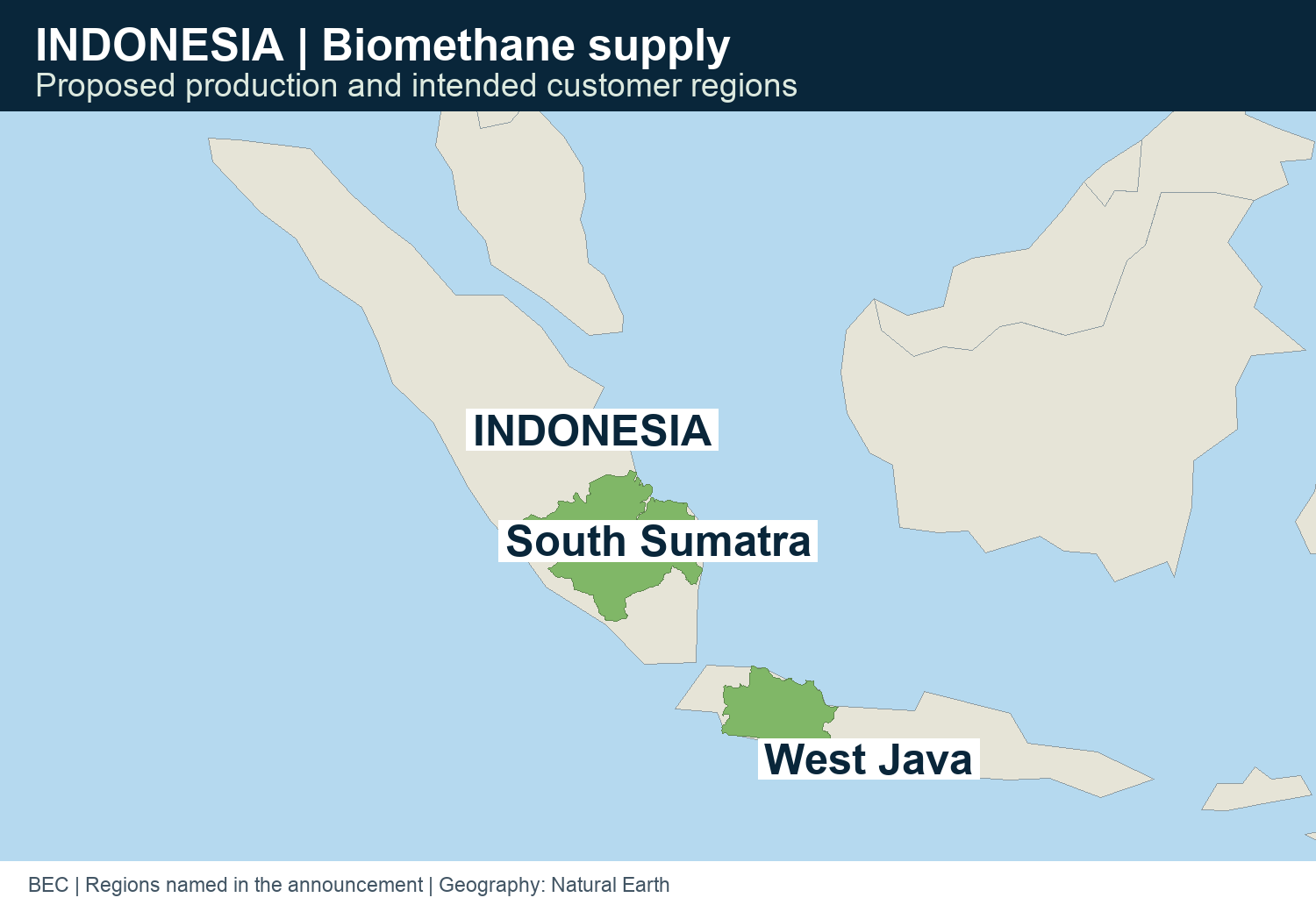
Toyota Tsusho disclosed an Indonesian joint venture on 6 October to produce biomethane from palm-oil mill wastewater in South Sumatra. It targets 150,000 million British thermal units of annual output and operation in 2027, with industrial supply intended for West Java.
PGN’s account identifies its planned purchasing and transport role and Toyota Motor Manufacturing Indonesia as a customer. These are development statements from the parties involved; operating results and final supply terms remain ahead. Certification is also described prospectively by Toyota Tsusho.
The venture was established in September with PT KIS Biofuels Indonesia, a subsidiary of the KIS Group. Toyota Tsusho holds 51% and its partner 49%. The Japanese announcement distinguishes that ownership arrangement from the production and delivery planned for 2027.
BEC sees the delivery interface as decisive: the value of captured mill gas depends on how much reaches the factory at the agreed quality and cost.
Our analysis
The wastewater stream ties gas production to the palm mill’s activity. Seasonal processing volumes and the characteristics of the effluent affect the gas available, while an industrial customer needs dependable energy deliveries. That difference creates a role for storage, backup fuel and clear short-delivery terms.
Capturing gas at the mill is the first part of the value chain. Upgrading recovery, methane leakage and transport costs determine the quantity and environmental attributes delivered to the factory. A customer purchasing lower-carbon fuel needs both the energy specification and a credible account of the gas across those steps.
BEC’s conclusion is that replication depends on the contract joining the mill, gas processor and industrial buyer. A comparable mill can assess its resource and treatment system against that arrangement. The 2027 start-up target gives the parties a concrete sequence of construction, commissioning and accepted deliveries against which to demonstrate the model.
The stated 150,000 MMBtu annual output is approximately 44 GWh on an energy-equivalent basis. That conversion helps an industrial buyer compare the proposal with its annual gas consumption. Actual replacement of purchased fuel would depend on delivered quantities, quality and the customer’s operating schedule.
Contract allocation also matters where the mill, upgrading operator, transporter and factory have separate responsibilities. A delivery failure needs a defined measurement point and responsibility for remedy. This determines which party carries the working-capital cost of backup fuel and how reliable supply is rewarded.
Sources
Primary announcement · Toyota Tsusho: Japanese announcement · PGN: gas infrastructure and delivery · Supporting source 2 · Supporting source 3
Indonesia
PLN EPI opens talks with biomass suppliers for power stations in Indonesia
A Bekasi meeting links a national demand estimate with the practical work of collecting and delivering local fuel.
PLN EPI met regional business representatives in Bekasi, Indonesia, on 7 October to discuss biomass supply for power stations using biomass alongside coal. It cites an annual requirement of approximately nine million tonnes across 52 stations.
The company separately reports 4.77 million tonnes delivered over 2023–2026. That cumulative record and the annual requirement have different time bases. The meeting provides a procurement signal, with specific regional contracts still to be identified.
PLN says woody material accounted for more than 77% of the reported deliveries. Its stated 18,154 MW figure describes the receiving coal-plant fleet. The share of generation actually supplied by biomass depends on each station’s fuel use and operating conditions.
BEC sees regional supply agreements as the link between national demand and investable local production. Quality limits, delivery points and payment terms determine which resource can become a viable fuel.
Our analysis
A regional supplier needs to know which station will receive the material and what that station will accept. Moisture, particle size and contaminants affect the usable energy, handling cost and rejection risk of each delivery.
A collection hub can bring resource owners and contractors together, but its working-capital requirement depends on the timing of purchases, storage and customer payment. The buyer’s terms therefore influence how much material the hub can reliably assemble.
For cultivated feedstocks, land suitability and measured agronomic performance would need to meet the same delivered-price test. A long purchasing horizon can support establishment expenditure when a named buyer accepts the crop and its specification. PLN EPI’s national demand statement is a starting point for that assessment; regional supply agreements would provide the commercial detail needed for planting decisions.
A regional fuel balance should identify who already purchases the same material. Competing industrial users and seasonal harvesting can change the quantity obtainable at a given price. A collection hub’s design should therefore follow a costed purchasing schedule around the receiving plants.
Payment timing affects whether a small supplier can sustain deliveries. The supplier may fund harvesting, drying and haulage before a load is accepted. Aligning quality tests, rejection rules and invoice settlement makes the working-capital requirement visible alongside the nominal purchase price.
Sources
BEC Perspective
For cultivated biomass, these developments suggest a selective approach to industrial demand. A new buyer can justify examining suitable land and crop systems when its specification and purchasing horizon match the production cycle. Planting before those interfaces are defined exposes the grower to a market assumption that may change during establishment. Conversely, a buyer that provides credible quantity, quality and payment commitments can support field trials, nursery planning and the gradual expansion of a supply basin. This is where agronomy and contracting become part of the same investment assessment.
For acquisition-related assignments, separate the standing forest resource, accessible harvest schedule and available contractor capacity. The Georgia case supports a plant-by-plant procurement screen before treating common ownership as a source of physical supply savings.
Persistent Developments
New Zealand’s 2026 support for forestry fuel collection
New Zealand’s Energy Efficiency and Conservation Authority describes support for collecting forestry material and developing industrial fuel supply. Its 1 October 2026 announcement belongs to the preceding week and provides continuing context for industrial biomass procurement.
Five proposed aggregation facilities have a stated combined capacity of 200,000 tonnes a year and NZ$3.7 million of support. Separate repayable investment-case grants address manufacturing proposals. These are different funding stages: planning a manufacturing investment and financing physical collection infrastructure create different evidence of future supply.
BEC’s interest is the ownership and utilisation of the hub. Seasonal throughput, storage losses and the receiving customer’s purchasing schedule determine whether collection equipment can produce economical deliveries. A national resource estimate remains distinct from accessible material around an individual facility.
Commissioned aggregation capacity, actual seasonal throughput and customer deliveries would show how the supported infrastructure performs. Manufacturing investment decisions would provide a separate development milestone.
Argentina’s 2026 cover-crop observations and the value of establishment time
An AAPRESID Chacra report provides Argentine field observations on establishing vetch earlier within an irrigated rotation. It offers agronomic context for the 2026 assessment of crop timing and soil cover, with transferability dependent on the production setting.
The reported comparison combines different establishment methods, seed rates and growth periods: 113 days for drone-established vetch and 85 days for ground sowing. Reported biomass was 4,619 and 2,345 kg of dry matter per hectare respectively. Those simultaneous differences limit attribution of the result to the sowing method alone.
BEC’s interest is how an earlier start changes the amount of biomass available for soil protection and the following crop. Any proposed energy harvest would require a separate balance of retained cover, water use, nutrient removal and revenue. The cover crop’s measured biomass is distinct from a committed industrial feedstock volume.
Replicated comparisons that isolate establishment timing, seed rate and irrigation would help quantify the transferable benefit. Harvest decisions would also need evidence of the succeeding crop’s response and the amount of cover retained.
United States: farm records and fuel-credit accounting in 2026
US Internal Revenue Service Notice 2026-53 addresses agricultural-practice evidence and emissions modelling for the clean fuel production credit. It appears in the 5 October 2026 bulletin and carries an 8 September effective date. The two dates serve different purposes; the guidance is treated here as continuing regulatory context.
The notice sets conditions around agricultural records, modelling and chain of custody. It distinguishes production years and feedstock origins. Listing a crop or fuel pathway provides a starting point for assessment, while actual credit treatment depends on the applicable conditions and measured or documented inputs.
BEC is tracking the connection between field information and the value claimed by a fuel producer. Establishment records, nutrient management and the movement of material through the supply chain need to support a consistent claim. An agronomic improvement and a creditable emissions reduction require their respective evidence.
Implementation records and qualified interpretation of the applicable production-year rules will clarify how growers and fuel producers divide verification tasks and costs. Project-specific eligibility remains a matter for the responsible tax and certification specialists.
Outlook
BEC’s central conclusion is that replicability should be tested through the local interfaces that determine accepted deliveries. A standard plant design or common investment platform can support consistent methods, while land, resource timing, contractor availability and customer terms determine the result at each site. The most useful next evidence across this week’s cases is therefore operationally specific: a final native-forestry procedure, a clarified acquisition closing, a plant-level supply agreement, or measured gas recovery and customer acceptance. Each would move a different part of the chain from an announced proposition towards a dependable commercial relationship.
Planning a dependable biomass supply?
BEC evaluates land, crop systems and industrial supply basins, connecting field evidence with delivered cost and purchasing requirements.
Image credits and licences
Harvesting woody biomass in England, United Kingdom, February 2013. David P Howard / CC BY-SA 2.0 · Licence and reuse terms · Cropped within the BEC cover design; photographic content unchanged.

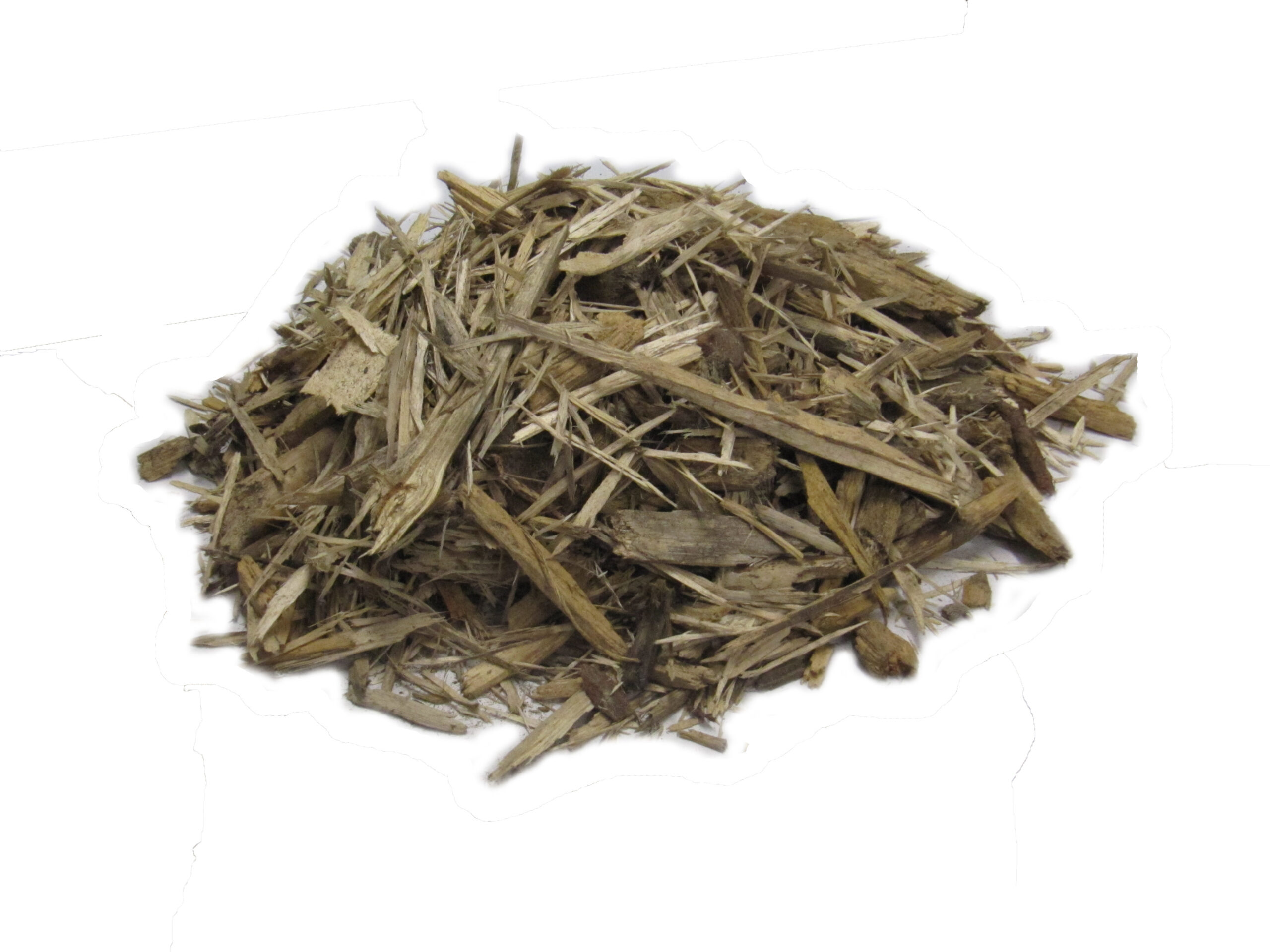
Shredded woody fuel photographed by Azwood Energy in 2013. Particle size and moisture are purchase specifications that shape handling and delivered energy cost at wood-fired plants. Azwood Energy / CC BY-SA 4.0 · Licence and reuse terms

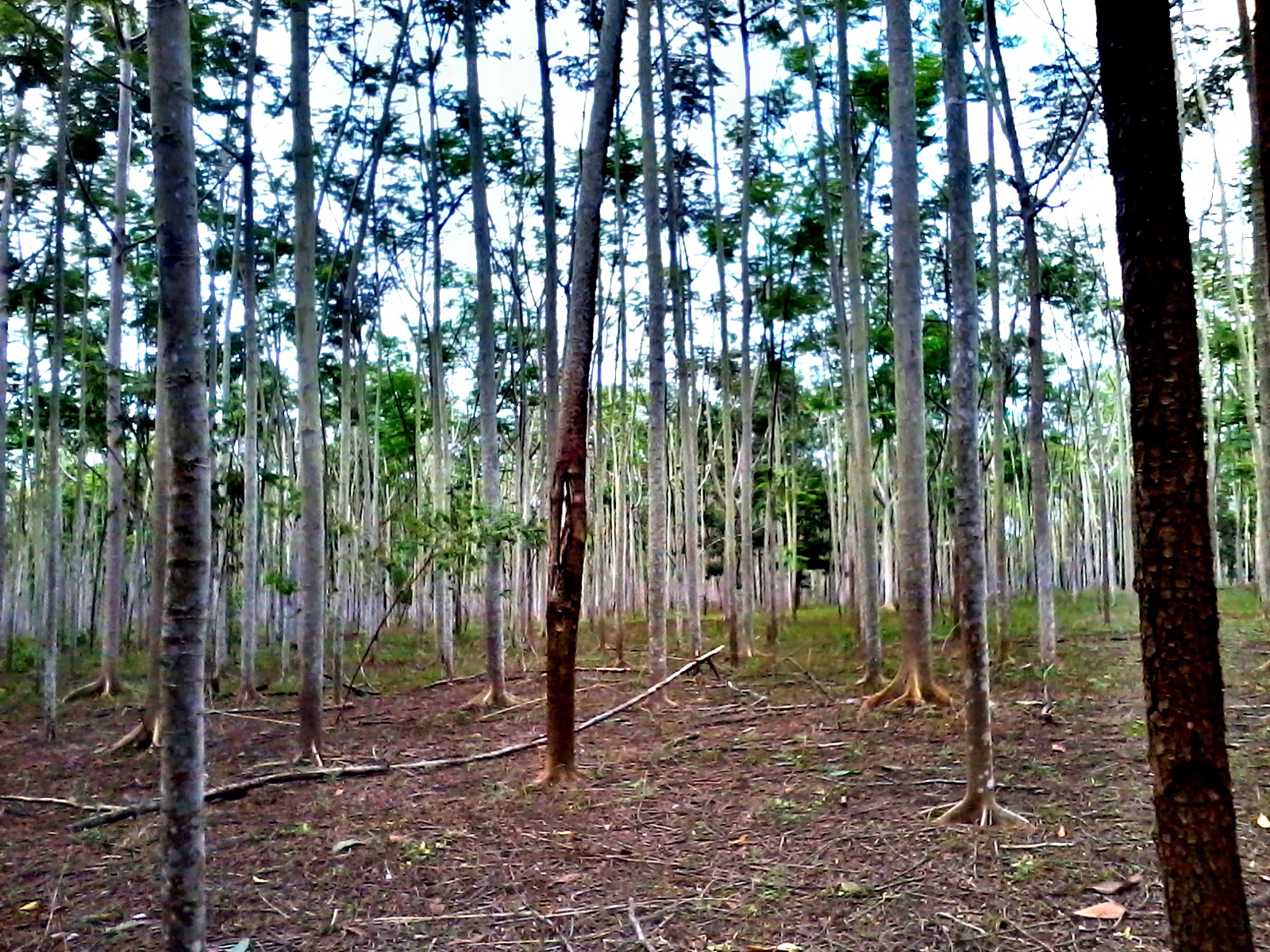
Paricá trees planted in rows, photographed in 2013. Brazil’s proposed rules would link native-tree planting records with harvest declarations and authorised timber transport. Bruna7Oliveira / CC BY-SA 3.0 · Licence and reuse terms

Lombardy, Abruzzo and Campania, Italy: regions named in the Via Verde development programme. The separation of these regions calls for local feedstock and digestate balances around each proposed plant. BEC cartography; Natural Earth / Public domain geographic data · Licence and reuse terms
South Sumatra and West Java, Indonesia. Toyota Tsusho’s proposal connects gas production from palm-mill wastewater in South Sumatra with industrial consumption in West Java. BEC cartography; Natural Earth / Public domain geographic data · Licence and reuse terms
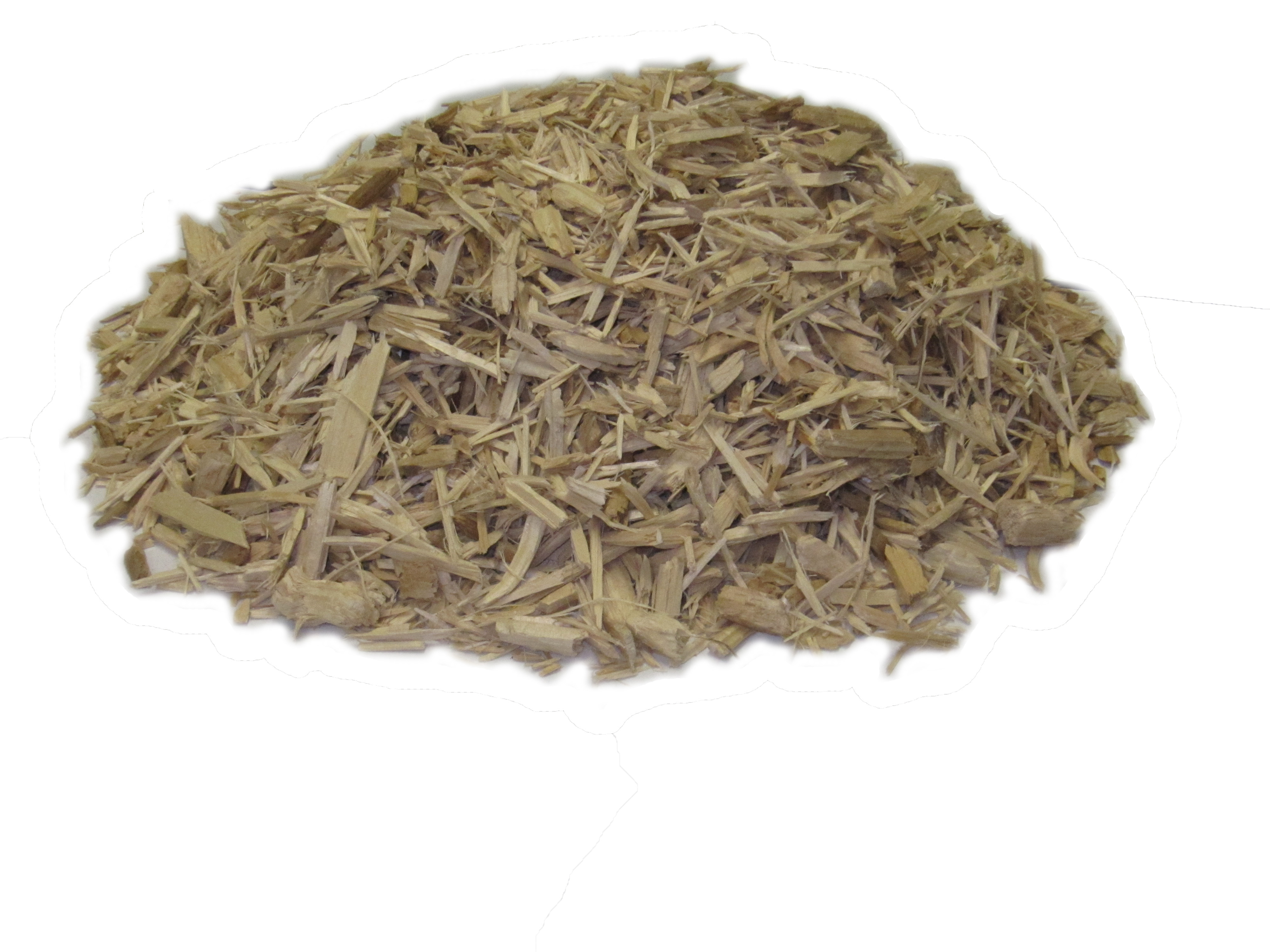
Wood chips supplied as an energy product, photographed by Azwood Energy in 2013. PLN’s Indonesian programme requires fuel specifications and delivery schedules suited to each receiving boiler. Azwood Energy / CC BY-SA 4.0 · Licence and reuse terms

Wood chips beside the gasification plant in Güssing, Austria, photographed in 2006. Gasification is one of the routes admitted by France’s new rules for producing eligible biomethane. Gerfriedc / Wikimedia Commons, CC BY 2.5 · Licence and reuse terms
