

26 October 2026
BEC Radar Intelligence
Biomass contracts meet the realities of production
From Finnish manure and Brazilian eucalyptus to Kenyan biochar and Singapore’s import market, this week’s developments show how resource systems connect with industrial buyers. Seven news stories examine the technology, territory and economics behind the announcements.
Finland and Sweden: Wasaline signs a two-year biogas supply agreement
A maritime customer connects to a farm-based fuel and nutrient system in South Ostrobothnia.
Wasaline and St1 Biokraft announced on 22 October a contract for 42 GWh of liquefied biogas a year from January 2028, lasting two years. Aurora Botnia operates between Vaasa, Finland, and Umeå, Sweden. The partners intend to obtain most of the fuel from Nurmo, approximately 80 kilometres from Vaasa. Deliveries will use tanker trucks from production facilities and terminals to the port.
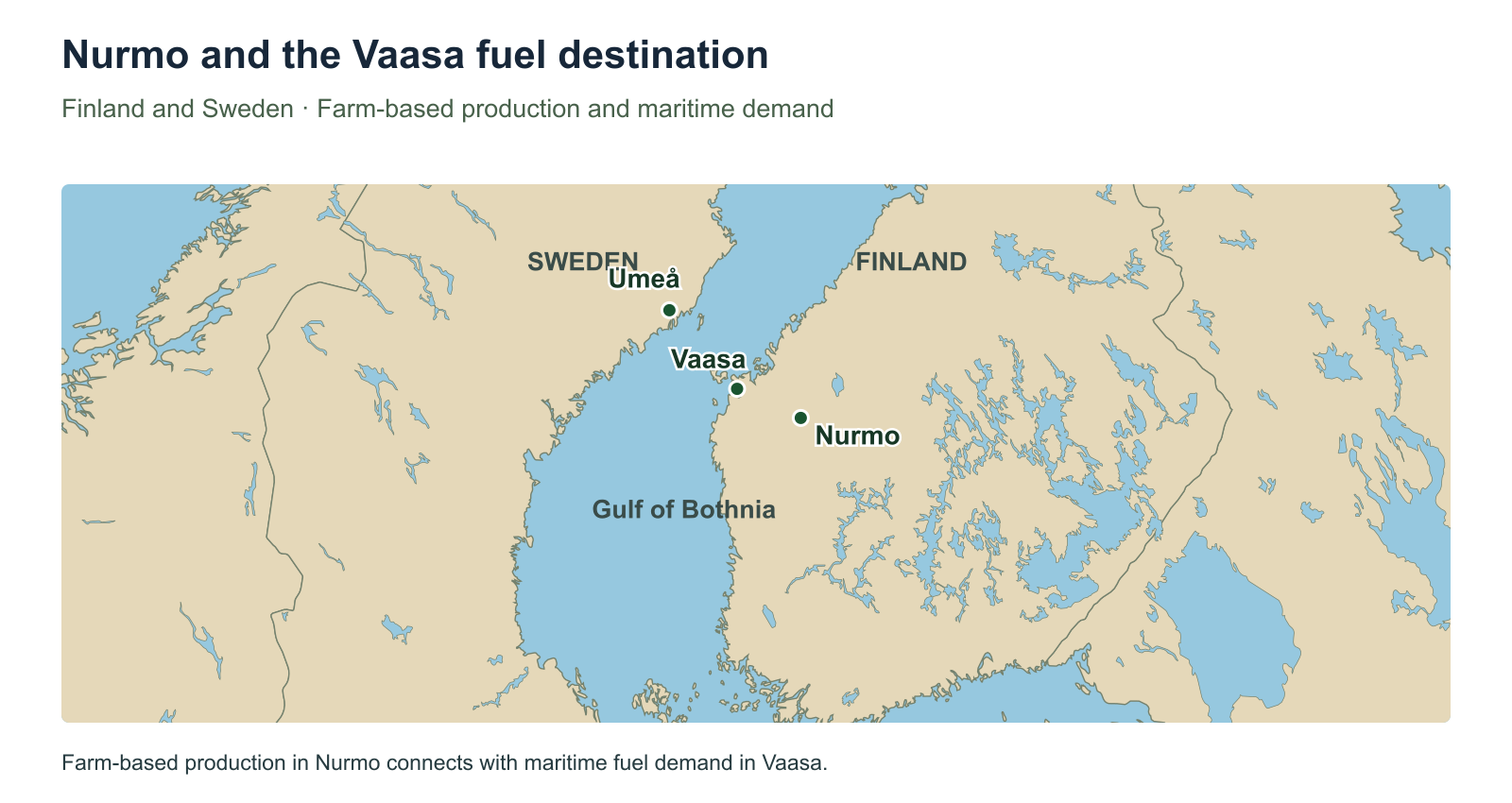
Wasaline belongs to Stena Line. St1 Biokraft combines fuel production and distribution; Suomen Lantakaasu, its joint venture with dairy group Valio, is the majority owner of Nurmon Bioenergia, alongside minority shareholder Atria. This brings a dairy collection network and a food processor into the production structure. Their participation helps explain the local resource base, while individual farm contracts and the proportion of each substrate remain undisclosed.
Nurmo received its first dairy-manure load in April and was inaugurated in August 2026. The August account reported raw-biogas production and planned liquefaction during autumn. Its original design is 100 GWh of liquefied fuel and 240,000 tonnes of inputs annually; expansion to 360,000 tonnes was under planning. Verified current liquid-fuel output remains an open point. The ferry contract equals 42% of the original energy design, a comparison of scale; actual plant allocation remains to be confirmed.
At the plant, manure and food-industry residuals pass through reception and hygienisation before digestion. The April description identifies three 9,500-cubic-metre digesters. Upgrading concentrates methane, and liquefaction prepares it for tanker delivery and bunkering. The disclosed delivery chain uses road transport; a dedicated Nurmo–Vaasa pipeline is outside the documented arrangement. Digestate is intended to become four fertiliser products, with nitrogen and phosphorus concentrations adapted to farm needs.
Our Analysis: Two transport systems determine the delivered margin
The short journey to Vaasa matters most after the gas has been concentrated into a transportable fuel. Upstream, wet manure carries considerable water, and farm collection must be considered together with fertiliser return. A profitable port delivery can therefore coexist with an expensive agricultural round trip. Collection density, storage and the timing of crop nutrient demand determine whether the local relationship creates a durable cost advantage.
The biological and nutrient balances reinforce that connection. Different food residuals can change methane yield and loading; wet tonnes alone give an incomplete measure of usable organic matter. Digestion also changes nitrogen availability, so the fertiliser service depends on application methods and timing. European agronomic guidance identifies ammonia losses after spreading as a material management issue. Actual substrate composition, seasonal deliveries and nutrient analyses would show whether the four-product strategy fits receiving farms.
The two-year fuel commitment offers a defined sales window from 2028, while the plant and its agricultural relationships have longer lives. Contract pricing, flexibility and remedies for missed deliveries remain undisclosed. The next persuasive evidence is sustained saleable liquid-gas output, followed by a documented allocation to Wasaline and farm logistics that work through the full year. Those results would establish how much of the announced local advantage reaches the delivered fuel price.
Wasaline and St1 Biokraft, 22 October 2026 · Nurmo first intake, April 2026 · Nurmo inauguration, August 2026 · Digestate nutrient management, EU CAP Network
United States: Placer County backs Cabin Creek biochar with a loan
Forest treatment supplies the rationale; product markets will determine the commercial result.
Placer County, California, authorised agreements for up to USD6 million of loans to Sierra Nevada Biochar LLC, announcing the decision on 20 October. The proposed Cabin Creek facility is near Truckee at the Eastern Regional Landfill and transfer-station complex. The county describes reimbursement against paid receipts, a 10% interest rate and a five-year term. A separate ground-lease decision remains ahead.
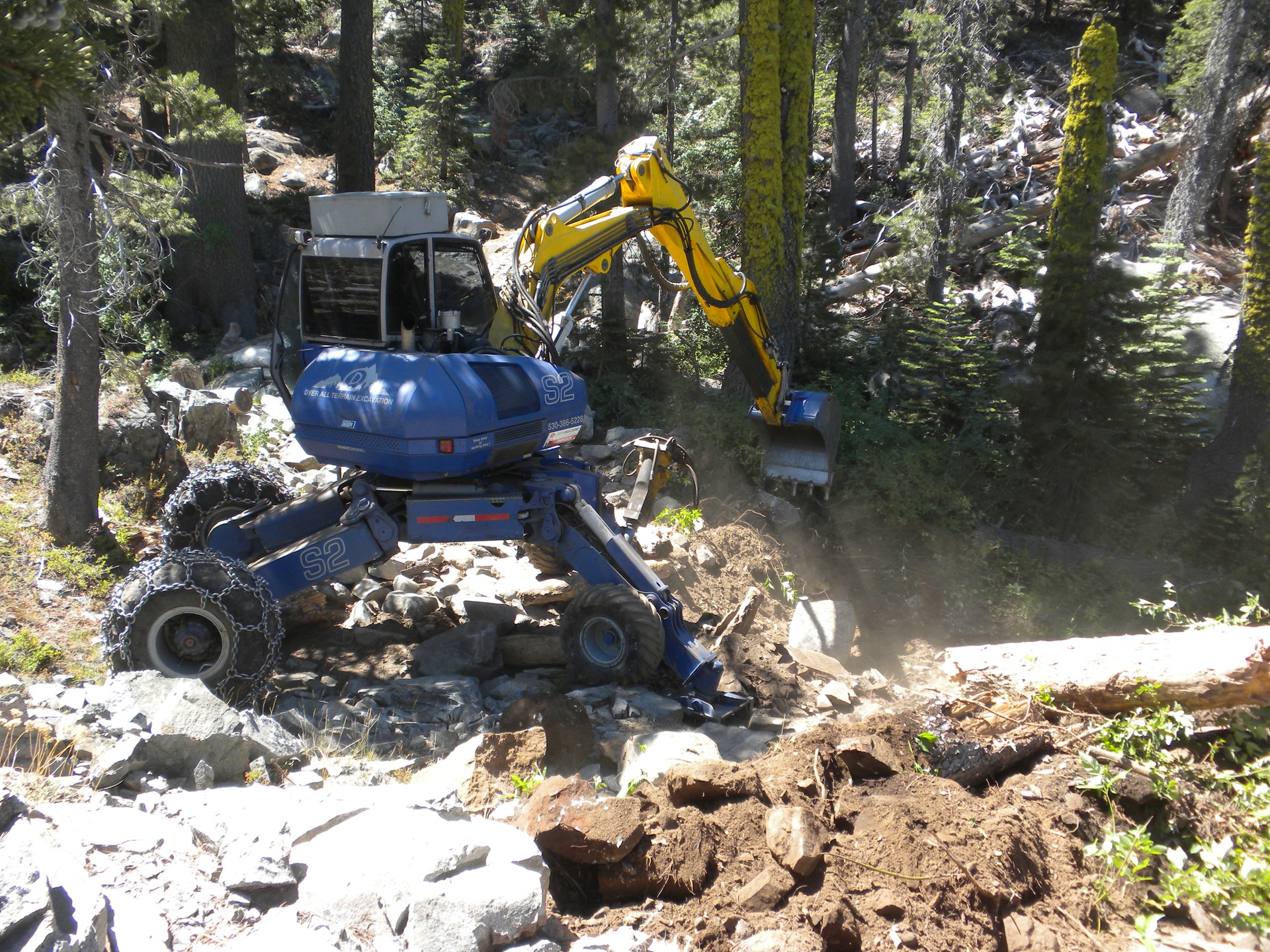

Sierra Nevada Biochar is the project company receiving the county support. Biochar Now supplies the technology and additional financing, according to the announcement. The county’s project history describes Biochar Now’s first installation outside Denver in 2011. That operating background gives the proposal a technology antecedent; the new California installation still requires its own construction and performance evidence.
Cabin Creek’s earlier biomass-power proposal dates to a 2008 feasibility study and a 2013 environmental review. The revived development starts with biochar, produced by heating shredded woody material in modular vacuum-assisted pyrolysis kilns. California’s September 2026 approval describes ten-cubic-yard modules. The county places the first processing phase at about 13,000 bone-dry tons annually and estimates around 25,000 bone-dry tons in the existing material stream. Larger regional resource estimates describe a different boundary and require separate collection agreements.
The setting is the Truckee area, where the Middle Truckee River Watershed Forest Partnership reports active forest-treatment projects, including Cabin Creek and Big Chief. These programmes explain a plausible source of material and a fire-risk-management purpose. The waste-site location provides a handling context. Public records reviewed here leave the biochar buyers, product specifications and contracted end uses unconfirmed; the location itself establishes neither landfill use nor a Lake Tahoe water-treatment application.
Our Analysis: A local residue outlet needs specific products
A reliable outlet for low-value woody material could improve the economics of nearby forest work. Its value depends on the fraction that contractors can actually recover, the condition of access roads, moisture and preparation costs, and the timing of authorised treatments. Existing material at a transfer station offers a different procurement starting point from biomass dispersed across a thirty-mile radius. Combining those estimates would exaggerate what is ready for delivery.
Water quality is a defensible research direction, with its commercial relevance still to be demonstrated. A stormwater filter needs a defined contaminant, hydraulic loading and replacement interval. An agricultural amendment needs soil, dose and nutrient-loss evidence. Pyrolysis conditions and feedstock affect the resulting material, and a char suitable for compost can require further processing for a filtration application. A 2026 experimental study of cactus-derived biochar in slow groundwater filtration illustrates how narrowly a result depends on material and test conditions; its results cannot establish performance for Cabin Creek wood char.
The strongest location-specific interpretation is therefore a forest-residue outlet serving the Truckee setting, with product testing determining any additional water-management value. The next evidence should identify a buyer, application specification and achievable netback after processing and delivery. Separately, reimbursement financing requires working cash before county payment. Combining confirmed product sales with a seasonal collection schedule would reveal whether the environmental purpose supports a viable operating business.
County loan decision, 20 October 2026 · County project history and resource estimates · California environmental decision, September 2026 · Middle Truckee forest projects · Material-specific filtration experiment, 21 October 2026
Singapore appoints biomethane aggregators for a new import market
Energy suppliers link regional organic resources to industrial and data-centre demand.
Sembcorp and Keppel announced on 23 October that they had been appointed under Singapore’s biomethane regulatory sandbox. Sembcorp Utilities reports an allocation of up to 7.18 trillion British thermal units annually, described as approximately 120 MW of electricity-generation capacity. Keppel reports a 120 MW allocation for fifteen years within the wider 300 MW initiative, with supplies expected to begin by the end of 2028. Appointment establishes a market-development role; delivered fuel and operating supply chains remain ahead.
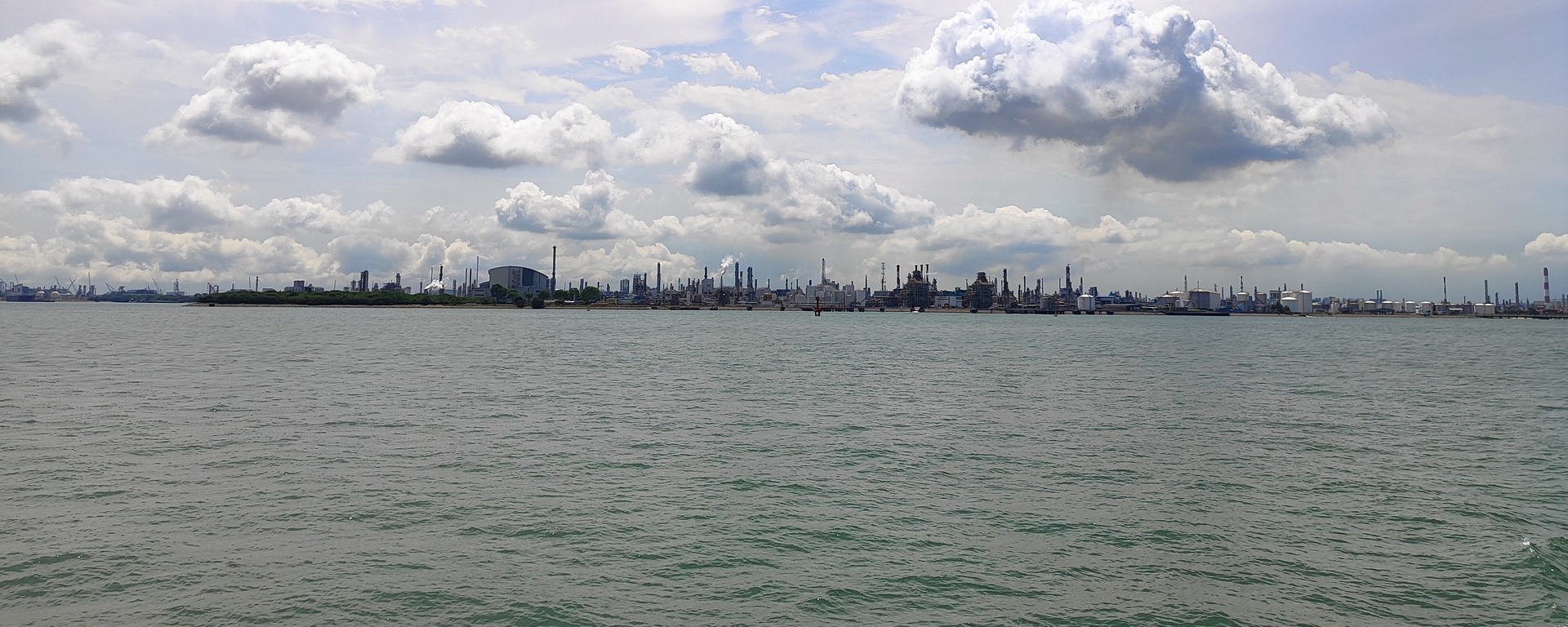

Both companies have energy infrastructure and customers in Singapore. Keppel expects imported biomethane to join its gas portfolio for combined-cycle power plants on Jurong Island and other users. Sembcorp connects its appointment to data-centre demand, including the requirement for more than half the power at newly allocated facilities to come from green sources. The published allocations describe different units: annual gas energy and equivalent power capacity. Feedstock tonnage would require an explicit conversion and operating balance.
Singapore’s Ministry of Trade and Industry had outlined the sandbox in March 2026, emphasising compatibility with existing infrastructure. A separate 14 October agreement between the Maritime and Port Authority, CMA CGM and Singapore LNG explores liquefied biomethane for shipping. That earlier memorandum is a related development, with its own counterparties and exploratory stage. The power and marine initiatives could create overlapping demand for regional gas supplies.
Organic residues and agricultural wastes are the stated resource categories. The announcements reviewed here leave producing plants, substrate mixes, sourcing countries and transport routes unspecified. They also leave individual purchase prices and contracted plant volumes open. Those details will determine which agricultural or industrial waste systems can serve the market economically.
Our Analysis: Aggregation moves the constraint upstream
Large energy buyers can consolidate demand and manage fuel delivery through established infrastructure. The upstream resource remains distributed among farms, processors and waste holders. A credible regional portfolio would have to connect those small physical systems to a standardised fuel specification, reliable accounting and a delivery calendar. The aggregator’s balance sheet may help organise that interface, while local operating evidence establishes the dependable volume.
The competition is broader than gas procurement. A processor may already use its residues for heat; a farm may value nutrients and local waste-management services. An export project needs to cover those opportunity costs alongside collection, upgrading, transport and certification. A high-value power customer can support investment, but the delivered premium must survive the complete route from substrate to electricity.
The next distinguishing evidence is a named producing portfolio with verified methane performance, traceable resource rights and a clear allocation of environmental attributes. The maritime memorandum explicitly recognises accounting when biomethane shares infrastructure with natural gas. Consistent treatment of that issue across power and shipping would improve comparability. Repeated supply contracts with operating producers would make the 2028 target more credible; dependence on a largely unbuilt portfolio would lengthen the development path.
Sembcorp appointment, 23 October 2026 · Keppel appointment and supply horizon · Singapore marine-fuel memorandum, 14 October 2026 · Singapore Ministry of Trade and Industry, March 2026
Brazil: a eucalyptus harvest supplies the corn-ethanol industry
A 150-hectare operation in Mato Grosso shows the physical chain behind industrial biomass demand.
Arefloresta reported on 23 October an ongoing harvest of 150 hectares of eucalyptus at a Ziane Florestal property near Tangará da Serra, Mato Grosso, Brazil. Cavaco Forte is carrying out the harvest, and the wood is destined for an FS Bioenergia ethanol plant. The report identifies the customer group while leaving the receiving plant, delivered tonnage and contract price unspecified. The weekly development is an actual harvest with a reported industrial destination.
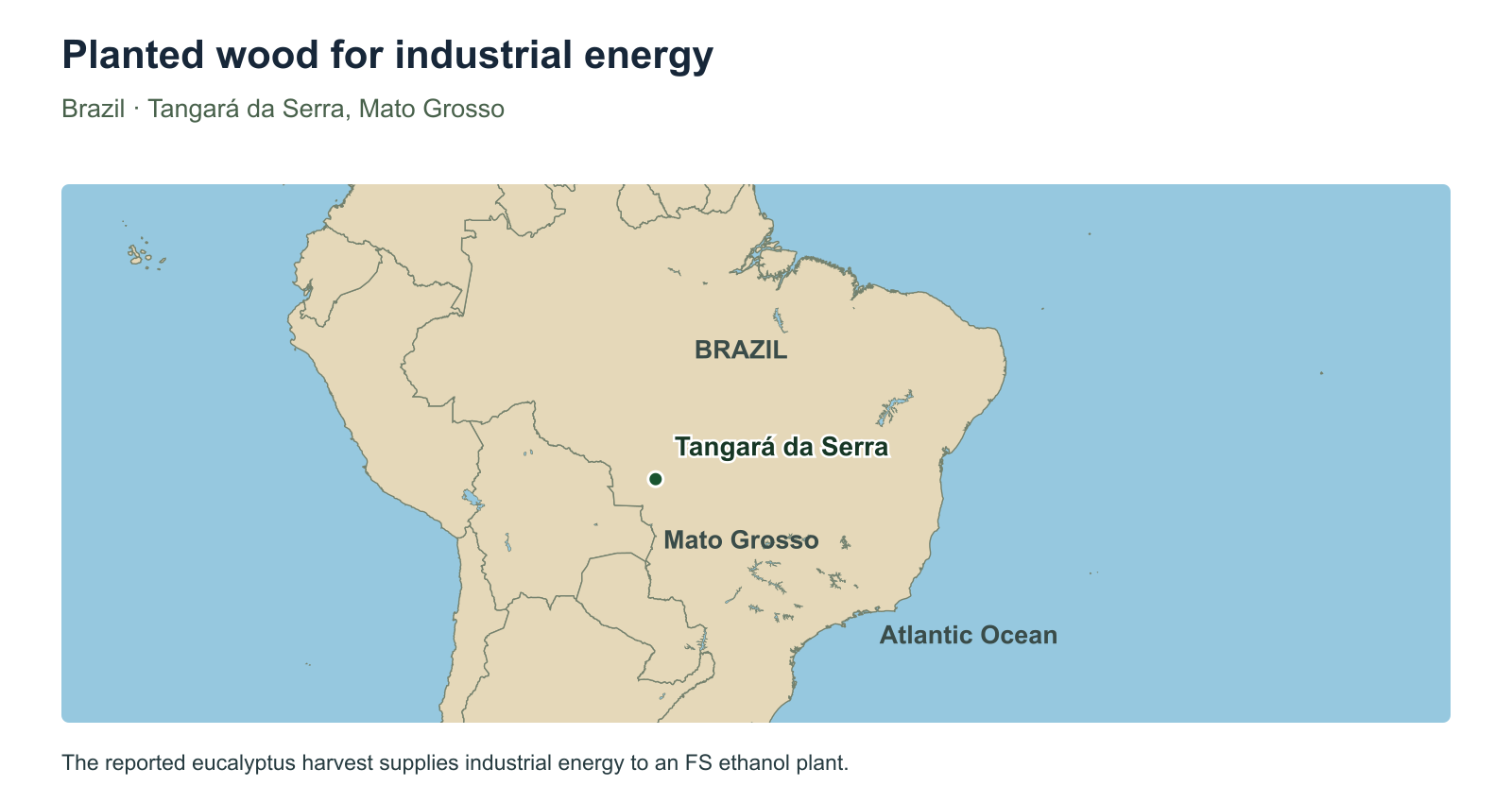
Ziane supplies seedlings and establishes and manages forests for itself and other owners. That combines nursery, plantation and harvest functions within the same supply chain. FS produces corn ethanol and animal-feed products and uses biomass for industrial energy. Its corporate description identifies planted eucalyptus as its main biomass source, alongside several agricultural and industrial residues. Wood here supplies process energy; corn remains the ethanol raw material.
The distinction matters in a region where grain production and industrial processing develop together. Dryers, crushers and ethanol plants can compete for wood and other boiler fuels. A plantation supplies a resource grown over several years, whereas an ethanol plant consumes energy throughout its operating schedule. The field report gives evidence of one link between those two calendars. Its 150-hectare area provides no direct measure of annual renewable supply without harvest age, yield, moisture and replacement information.
The disclosed chain has identifiable actors at three stages: plantation management, harvesting and industrial consumption. This is useful evidence for evaluating planted biomass as an industrial crop. Continuous procurement still depends on the sequence of stands reaching harvest and the cost of delivering usable energy to the particular plant.
Our Analysis: The next rotation starts during this harvest
Harvest converts years of biological growth into current revenue. Sustaining the industrial relationship requires the next cohorts to be established or regenerating while that revenue is realised. Nursery integration could help coordinate planting material and replacement schedules. Its value depends on survival, local growth and the owner’s choice between replanting and coppice management after cutting. Those stand-level details remain to be established for this operation.
The useful economic comparison is delivered usable heat across alternative fuels. Fresh wood carries water; seasoning can improve its energy value per transported tonne while tying up space and working capital. A shorter haul may offset a higher standing-wood price, and a lower-cost residue may introduce handling or quality constraints. Site-specific moisture, bulk density and boiler acceptance therefore matter as much as hectares. The published area alone supports no conclusion about which source is cheapest.
For landowners, an energy plantation competes with other land uses over a multi-year period. Payment timing, harvest responsibility and future purchase terms affect that choice. The next informative evidence would be a dated re-establishment programme and repeat supply commitments with measurable quality terms. Those would show whether today’s harvest belongs to a renewing industrial supply system or a single sale. Either outcome carries a different implication for the next wave of ethanol-plant demand.
Arefloresta field report, 23 October 2026 · FS energy and biomass context · FS industrial activities and locations
Kenya: Terraton reports first credits from EcoFix biochar
A nut-processing site moves from production to issuance, with several kinds of commercial agreement.
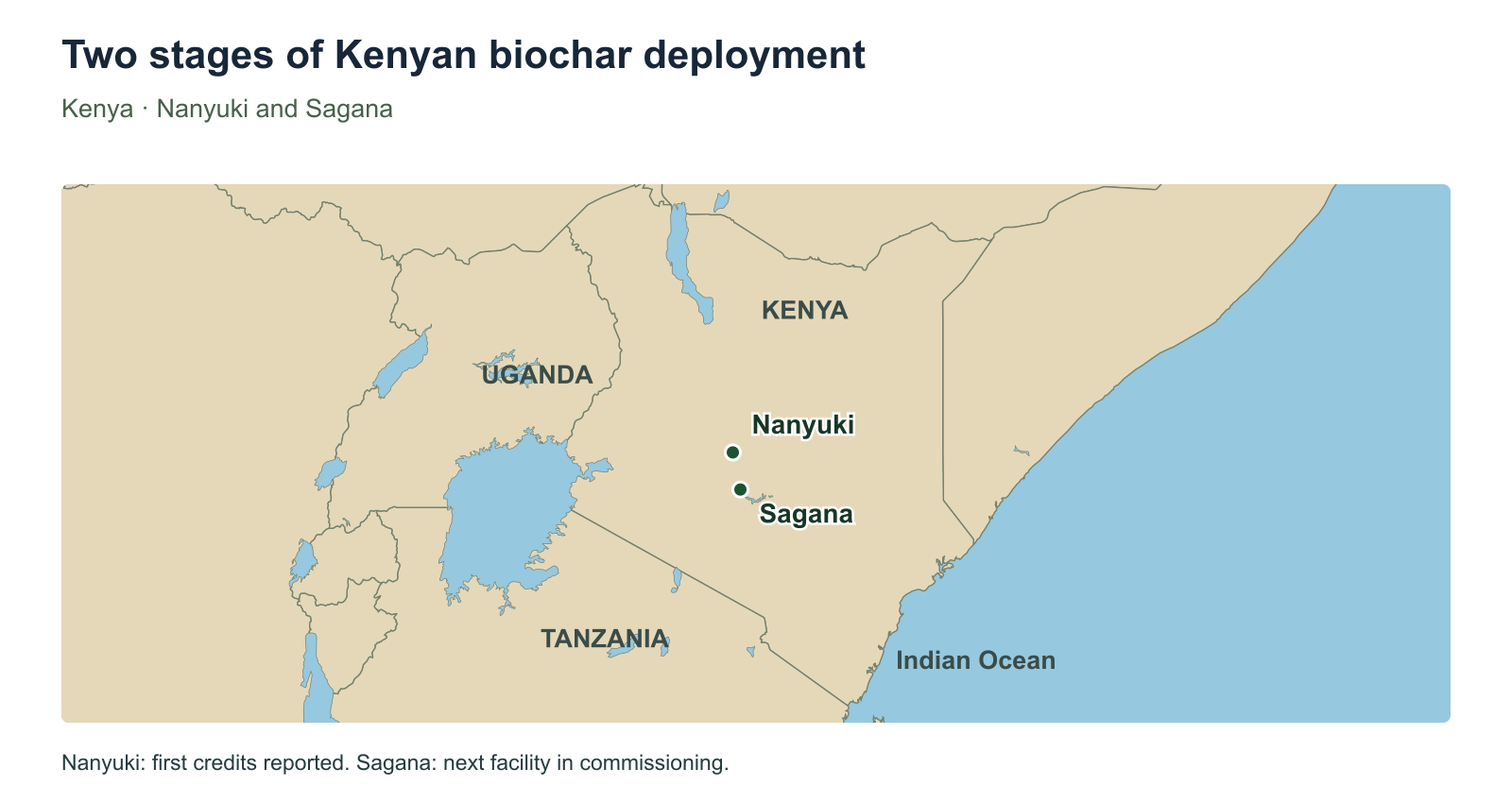
Terraton announced on 20 October its first Isometric-issued carbon-removal credits from EcoFix, a nut processor in Nanyuki, Kenya. The company reports an August 2025 investment decision, biochar production from May 2026 and first credits in October. Nut shells already handled by the processor feed the facility; the char is used as a compost ingredient. The sequence distinguishes physical production from the later verification and issuance milestone.
Biochar production uses pyrolysis: heating biomass with restricted oxygen leaves a carbon-rich solid. Moisture, particle size and operating conditions influence energy consumption and char properties. Terraton designs and finances installations with agricultural processors and supplies equipment, operating systems and data collection. Its announcement identifies Offstream’s digital monitoring system and Isometric’s certification process. The public registry is the appropriate place to check individual certificates and retirement. Terraton attributes issuance to Isometric and includes a statement from its partnerships manager. Individual certificate details remain to be checked against the registry.
The release combines purchase commitments, reserved volumes and marketing rights in a headline of up to 97,240 tonnes. Those categories provide different levels of revenue certainty. It also reports USD1.5 million of debt financing from HSBC Ventures. Future facilities, including a second Kenyan site at Sagana, sit at different development stages. The underlying contracts and the share of cash available to each installation remain undisclosed.
Compost creates a physical destination for the char alongside the carbon product. The local agronomic outcome depends on the receiving soil, compost formulation, application rate and the char’s properties. A general claim about correcting soil acidity requires those conditions to be established at each destination. The more transferable strength is the integration with an existing processor; yield, residual competition and soil response remain local variables.
Our Analysis: Concentrated residues shorten one part of deployment
A nut processor has already performed an expensive part of biomass aggregation: bringing the crop to a defined industrial site. A biochar unit can then work with a concentrated residual stream. That physical arrangement reduces the need for a separate dispersed collection system. The economic advantage still depends on the existing use and value of the shells, the processing season and any energy required to prepare them.
The fourteen-month interval between the reported investment decision and first issuance shows why construction finance and carbon revenue operate on different clocks. Equipment can produce char before a certificate is available for sale or delivery. A portfolio using reserved purchases or marketing arrangements needs enough working capital to bridge that interval, with the actual payment terms determining the size of the bridge. Headline tonnes across several contractual categories give an incomplete picture of that liquidity.
Subsequent issuances, documented physical sales and operating results at the next site will test whether the model repeats. Faster commissioning would be useful, while consistent net removals and viable farm-facing products would establish the stronger case. Standard equipment can make that comparison easier without making the feedstock or agronomic conditions identical.
Terraton project and agreements, 20 October 2026 · Isometric public registry
PurposeEnergy starts an industrial biogas facility in Ohio, United States
Treatment of Danone’s yogurt residuals links renewable heat with local wastewater capacity.
PurposeEnergy announced on 19 October 2026 that its industrial food-waste and wastewater facility in Minster, Ohio, United States, is operating and increasing production. The investment exceeds USD40 million. Dedicated pipes connect Danone’s largest US yogurt factory to the treatment facility and return biogas to a boiler for factory process heat. PurposeEnergy also identifies other regional food and beverage producers as potential feedstock sources. The immediate milestone is commissioning and ramp-up; the planned spring 2027 grand opening is a later event.
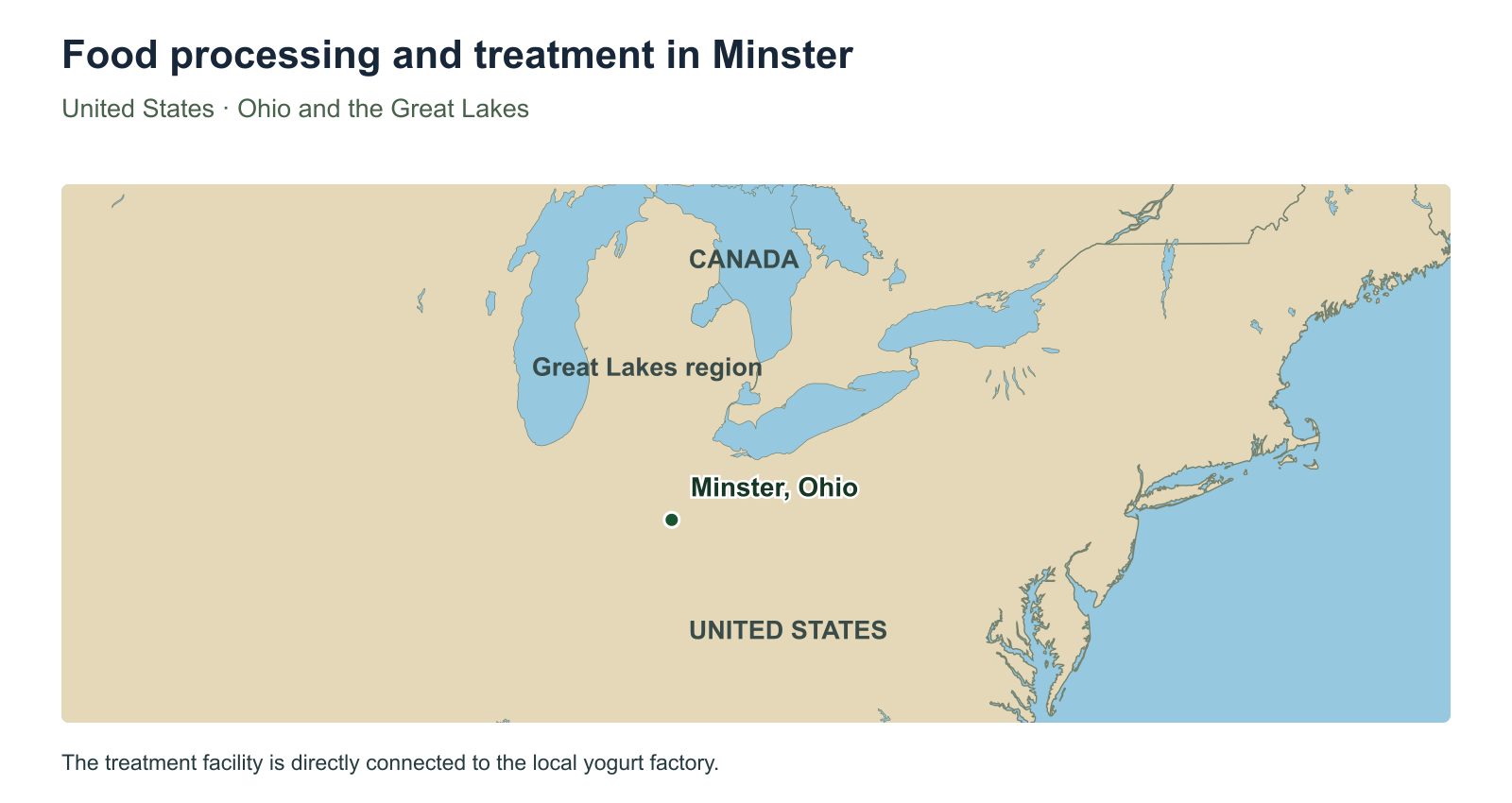
PurposeEnergy, a Quinbrook portfolio company, finances, builds, owns and operates this type of infrastructure. Danone is the anchor industrial partner, while the Village of Minster operates the municipal wastewater system receiving the treated effluent. The project is located in the Route 66 Industrial Park. Local reporting in September 2025 described the expected benefit of deferring municipal treatment expansion and quoted village officials. That reporting offers a separate local perspective, while the officials and project participants have an interest in the development’s success.
Anaerobic digestion uses microorganisms to convert biodegradable material into gas in the absence of oxygen. Here, high-strength food residuals and wastewater enter a treatment chain intended to recover energy and reduce the burden on downstream municipal treatment. The design allows up to 250,000 US gallons per day, and the company expects about 50,000 MMBtu of annual biogas at full operation. Both figures describe intended capacity. The release’s statement that the plant is operational and ramping establishes a narrower achieved status than continuous full-capacity performance.
The local constraint concerns both liquid flow and pollutant loading. Minster’s municipal webpage gives a 1.75 million gallon daily capacity and a 2019 average flow of 1.36 million gallons; that historical comparison supplies background only. Danone’s October 2025 discharge permit also sets concentration and loading conditions and a staged daily-flow allowance. Its current applicability requires checking later amendments. The separate PurposeEnergy permit and achieved effluent quality remain necessary to quantify how much production growth this arrangement can accommodate. The 2023 draft public notice is an earlier permitting document.
Our Analysis: Treatment capacity can support industrial growth
The dedicated connection creates a joint production system: yogurt output generates organic loads, treatment recovers energy, and the factory uses the gas as process heat. The economic benefit can therefore include both fuel substitution and additional room within the wider wastewater system. The second benefit depends on actual discharge conditions and treatment performance, which are more informative than a headline daily liquid capacity.
An operating balance should connect factory shifts, organic concentration, peak flows and useful boiler demand. Added food residuals may improve utilisation between production peaks, provided reception and digestion can accommodate their composition. Their value is determined by the extra useful energy and any intake revenue after preparation, treatment and residual management. A high-energy input can also change biological loading faster than its liquid volume suggests.
The 2025 municipal account describes a potential public-infrastructure benefit, while the October 2026 release reports commissioning. Measurements during ramp-up will establish how these expectations interact: sustained effluent quality, gas available to the boiler and reduced load on municipal treatment. Strong performance on all three would make the model relevant to other food-industry towns with constrained treatment infrastructure. Its replication would then depend on the local factory and utility balance, including their respective responsibilities for downtime.
PurposeEnergy commissioning announcement, 19 October 2026 · PurposeEnergy Minster project · Village of Minster wastewater department · The Daily Standard, local infrastructure context, 27 September 2025
Delorean gains a waste acceptance licence in Adelaide, Australia
The SA1 project can begin receiving material while construction and biological commissioning advance.
Delorean Corporation reported on 20 October 2026 that its wholly owned SA1 bioenergy project at Edinburgh Parks, Adelaide, Australia, had secured an operational licence. According to the announcement, the licence allows initial acceptance of packaged organic waste while construction, reported at 90%, continues. Biological commissioning and gas injection remain later steps. This is a material permission to advance the operating sequence, with sustained biomethane production still to be demonstrated.

The project sits within Delorean’s Australian development portfolio and is intended to process commercial and industrial organic waste. Its stated design is 70,000 tonnes annually, with expected renewable gas production of 210 terajoules and liquid biogenic carbon dioxide output of 6,000 tonnes per year. The company also identifies biofertiliser and environmental certificates among its prospective outputs. These figures and revenue routes describe the intended business. Actual product quality, eligible volumes, certification and sales will depend on operating performance and the applicable arrangements.
The technology relies on anaerobic digestion, followed by preparation of the gas for its intended market. Packaged residuals first require separation of usable organic material from packaging and other rejected fractions. This creates an important distinction between gross tonnes accepted at the site and the material reaching digestion. Incoming composition and the recovery achieved during preparation affect biological loading, gas yield and the amount of residue requiring management. The announcement gives the scale of the proposed system; the detailed material balance remains to be established from site data.
The South Australian regulatory setting is particularly relevant at this transition. The company’s announcement is the source for the licence milestone. The underlying EPA licence and its detailed conditions remain to be verified. Waste categories, storage limits, odour controls, discharge obligations and conditions governing commissioning therefore remain open verification items. A statement that waste can be accepted supports the reported milestone, while any advice about a particular material or operating envelope requires the underlying conditions.
Our Analysis: Gross waste tonnes conceal the useful feedstock
The operating licence creates a practical opportunity to connect incoming waste records with the commissioning feed schedule. A packaged tonne divides into digestible organics, water and rejected material. That separation determines gas potential, preparation costs and the quantity that needs another destination. A gate fee measured on gross weight and a gas forecast measured on usable organic matter describe two different sides of the margin.
The design implies 3 GJ of renewable gas per tonne of annual gross intake, calculated from 210 TJ and 70,000 tonnes. This is a design ratio, with the actual mix and recoverable fraction still to be demonstrated. Sampling incoming loads and tracking the separated streams would show whether changing supplier composition moves the operating balance. Variability can affect reactor loading even when the weighbridge total stays stable.
Commissioning also sequences the prospective products. Reliable raw gas comes before consistent upgraded gas, and carbon-dioxide recovery adds its own quality and customer requirements. Biofertiliser needs an acceptable composition and outlet. These connected revenue streams should be evaluated against the point at which each can actually be delivered. The next meaningful evidence is successful biological commissioning and measured product quality within the licence conditions. That would support comparisons with other Australian food-waste projects using their own intake data.
Delorean ASX announcement, 20 October 2026 · Delorean announcement page · Bioenergy Insight report
BEC Perspective
Biomass markets are becoming more closely connected to buyers with specific delivery obligations. Wasaline’s fuel contract and Singapore’s aggregator appointments make future demand visible. The harvest in Mato Grosso shows an existing agricultural system responding to industrial heat demand. Terraton’s first reported credit issuance adds a different kind of delivery: a verified environmental product created after the physical material has been processed. These developments share a tension between the regularity buyers require and the variable schedules of biological resources.
The source of that variability differs by project. A food factory produces residuals within an industrial timetable, giving PurposeEnergy an anchor flow that can be matched to treatment and heat use. Manure arrives from multiple farms, with water and nutrients moving through the same regional system. Forest-treatment residues follow authorised operations and access conditions. Planted eucalyptus follows years of growth before harvest. Each case requires a different way to organise continuity, even when the final buyer asks for a standard quantity of energy.
Concentration changes the economics. EcoFix already handles the nut crop at a processor, so its shells begin closer to the conversion equipment. PurposeEnergy’s dedicated pipes similarly connect the residual generator and the user of the resulting gas. At Cabin Creek, an existing material-handling site provides an initial collection point, while the wider forest resource still depends on contractors and treatment schedules. The important distinction is how much collection and preparation has already occurred before the biomass enters the new business.
Contracts can make those systems investable when their terms fit the physical cycle. A fifteen-year market appointment in Singapore supports a different planning horizon from a two-year ferry agreement starting in 2028. A plantation owner faces establishment and rotation decisions that extend beyond an individual harvest sale. A carbon project can face several months between producing char and receiving certificates. Contract duration, payment timing and flexibility determine which party carries those mismatches. The public announcements reveal useful pieces of the structure; detailed risk allocation remains a matter for the actual agreements.
Co-products can strengthen the local case when they solve a documented problem. Nurmo’s fertiliser strategy could connect energy production with farm nutrient needs. The value of that service depends on analysis, storage, application timing and the receiving land. Biochar used in compost has a different specification from biochar intended for water filtration. A facility can therefore have several potential product markets, each requiring its own evidence. Physical sales, carbon certificates and public support should remain separate when assessing the durability of the revenue model.
For growers and residue holders, these developments raise the value of understanding alternative outlets and the conditions attached to long commitments. For industrial buyers, they increase the importance of the resource system behind an energy specification. Investors gain a more informative comparison by following measured output, repeat purchases and renewal of the underlying crop or collection system. The strongest signals in the coming months will be those that connect these layers: fuel actually delivered, replacement plantations established, treatment performance sustained and environmental products verified within a clearly defined boundary.
Persistent Developments
France, 2015–2026: perennial crops need durable outlets
France Miscanthus’s historical series records 4,032 hectares in 2015 and 5,039 in 2017. Its agronomic guidance describes plantations lasting at least fifteen years. These earlier figures establish a commercial antecedent; a current national acreage estimate remains to be verified. The continuing issue is the relationship between a long-lived crop and markets for bedding, mulch or heat, each with different preparation and delivery requirements.
This week’s eucalyptus harvest in Brazil provides a useful comparison: both systems require renewal decisions before an individual industrial sale can establish continuity. For French growers, a new purchase commitment would be most informative if it disclosed the establishment period, quality requirements and treatment of years with lower output. The next milestone is therefore a dated planting or purchasing programme with current local yield and cost evidence. Repeated deliveries under such terms would support expansion; weak outlet continuity would favour retaining flexibility among existing local markets.
United Kingdom, 2015–2026: a permit revisits an inherited crop system
The Willand digestion site in Devon has a crop-and-abattoir supply history documented in a 2015 county planning report. That account describes grass, maize and fodder beet, crop storage and digestate return on delivery vehicles. The Environment Agency’s 15 October 2026 application notice concerns an existing site with a disclaimed former permit and a proposed annual input of 100,780 tonnes under Acorn Bioenergy Operations. The consultation closes on 12 November.
The enduring issue is whether the inherited relationship among local land, storage, traffic and nutrients remains suitable for the proposed intake. A crop name in an older planning document establishes history; today’s procurement needs current farm economics and equipment compatibility. The observable next steps are the permit determination and a documented substrate programme. A programme fitting the permitted envelope and current growers’ alternatives would support continuity. Material changes in feedstock or transport would require a fresh assessment of the original operating assumptions.
Permit application · Devon County Council planning context, April 2015
Australia, 2024–2027: Tasmania links residue recovery to forestry operations
Sustainable Timber Tasmania’s 2024–2025 forest-product output provides the industrial background for a September 2026 notice proposing roughly 100,000 tonnes of annual residue-harvesting services in the north, with a planned February 2027 start. The notice is an earlier procurement signal. Final tender specifications, award and present response deadline remain to be confirmed.
Its continuing relevance lies in the dependence of residue recovery on the primary forest operation. Sawlog production, treatment prescriptions, road access and contractor movements determine where material becomes available. An annual resource estimate needs a moisture basis and a recovery specification before it can be compared with an energy buyer’s requirement. The next observable milestone is publication of final contracting terms or an award identifying the operator and delivery obligations. A defined recovery calendar would support a credible supply case; movement of the start date or a narrower recoverable fraction would change the expected industrial contribution.
France, 2026–2027: biomethane investment targets existing assets
France’s move from local combined heat and power towards biomethane injection creates a refurbishment market alongside new construction. On 13 October 2026, transaction adviser De Gaulle Fleurance described a EUR10 million platform backed mainly by Épopée Gestion, alongside Enervivo and Urbeez, targeting around ten projects over three to four years. Its first planned investment is La Chapelle in Charente: 25 GWh annually, with operation scheduled for autumn 2027. Biogas production certificates and purchase agreements are central to the intended revenue model.
An existing digester carries operating history, supplier relationships and a known biological process into the conversion. The new gas outlet changes the value of production and introduces upgrading, connection and gas-quality obligations. The useful comparison is therefore the incremental cost and risk of conversion against the remaining value of the existing heat-and-power arrangement. La Chapelle’s connection, equipment delivery and operating timetable provide observable milestones; subsequent portfolio investments will show how readily that conversion model can be repeated.
Singapore, 2025–2028: shared infrastructure needs traceable gas attributes
Singapore’s biomethane sandbox developed from an earlier proposal process into the aggregator appointments announced this week. Alongside it, the Maritime and Port Authority, CMA CGM and Singapore LNG signed a memorandum on 14 October 2026 to explore a liquefied-biomethane marine-fuel pathway. The memorandum explicitly includes certification and the accounting of environmental attributes when gas shares infrastructure with natural gas.
This is a continuing market-design question because power generation and shipping can seek value from the same regional resource base. A common physical network can lower handling costs, while credible attribute allocation must identify which buyer receives the environmental claim. The next observable advances are published implementation arrangements and named supply routes with verified production. Those would make commercial offers comparable across users. Incomplete accounting or dependence on prospective producers would prolong the development phase. The separate power and maritime initiatives should retain their own contracts, stages and claimed benefits as implementation progresses.
MPA, CMA CGM and SLNG memorandum, 14 October 2026 · Keppel appointment and supply horizon
Outlook
Through 12 November: Willand’s environmental consultation
The Environment Agency consultation provides a dated next step for Acorn’s Devon site. The decision and subsequent operating conditions will show which intake and storage assumptions can proceed. A clear permitted envelope would allow the procurement programme to advance; additional information requests could extend the sequence. The confirmation to watch is the regulator’s published determination, followed by an operator programme matching those conditions.
Next 30–90 days: separate inauguration from sustained output
Nurmo’s autumn liquefaction plan, Delorean’s biological commissioning and PurposeEnergy’s ramp-up create observable operating tests. Public production records or operator updates should identify saleable gas, accepted feedstocks and product quality over a defined period. Stable performance would strengthen the link between announced design and recurring revenue. A delay or a restricted initial mix would change the timing and usable capacity. These are monitoring windows, with exact reporting dates still undisclosed.
First quarter of 2027: follow financing into named project obligations
The European Commission expects Innovation Fund grant-agreement preparation to progress into early 2027. The relevant next evidence is project-level scope and executed support, particularly where biomass, renewable fuels or materials create a defined resource requirement. Aggregate awards provide market context; named beneficiaries, amounts and implementation obligations establish the practical consequence. Cabin Creek’s separate lease and financing implementation are another observable decision, with a public decision date still to be announced.
Next 6–12 months: test renewal and repeatability
For the Mato Grosso plantation chain, documented re-establishment or subsequent harvest cohorts would show continuity beyond the reported 150 hectares. For Terraton, later issuances and performance at the next facility would test replication after the first reported credits. The confirming evidence is physical output and renewal of the resource base. Singapore’s end-2028 supply horizon remains longer: named operating suppliers and delivery agreements during development would strengthen confidence in that timetable.
European Commission: selected projects and grant preparation
Evidence reviewed on 25 October 2026. This review closes at 14:48 CET. Later Sunday developments remain outside this review.
Read the preceding edition · Explore feedstock and supply-chain analysis · BEC services · Discuss a project