
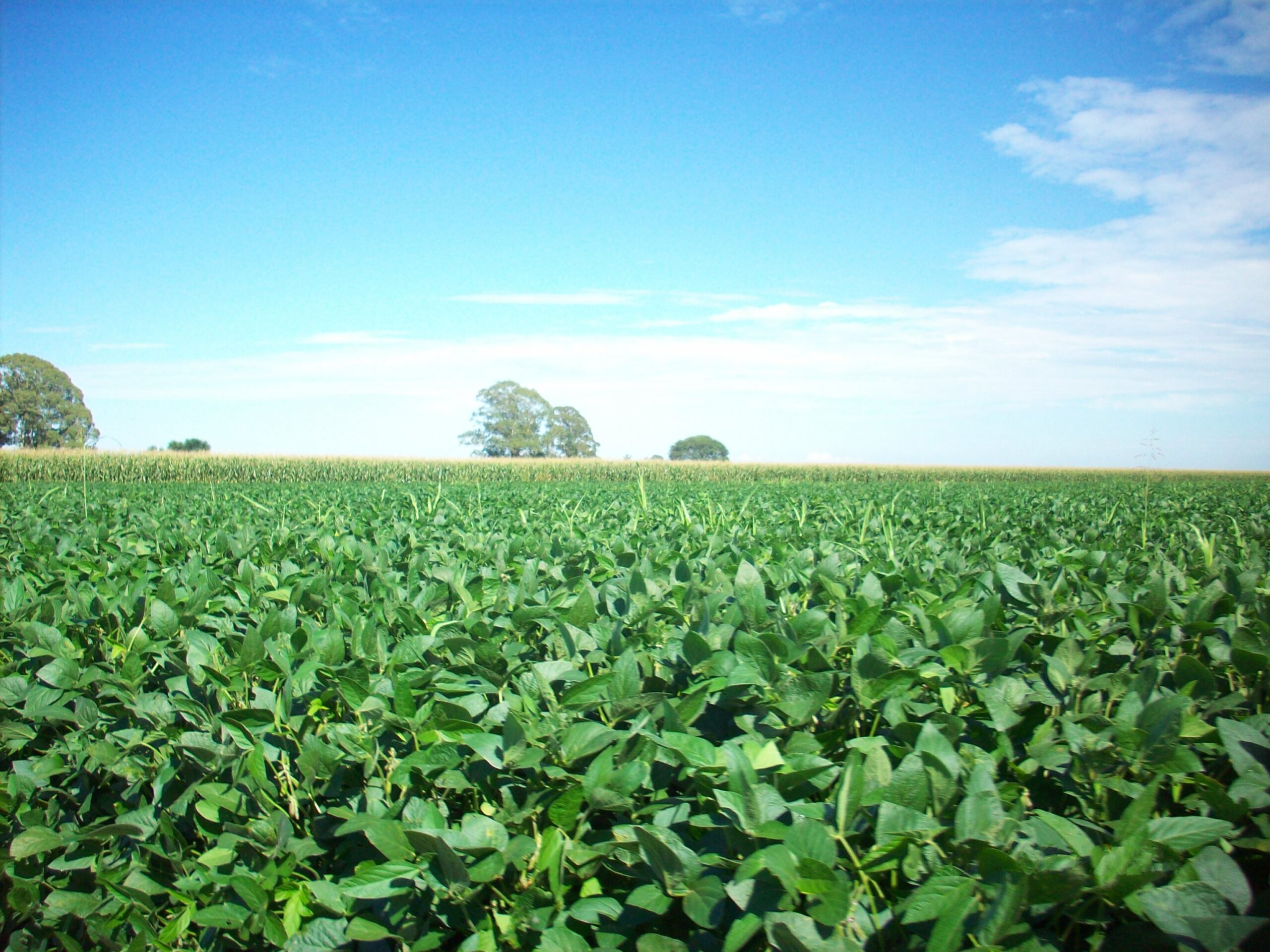
Argentina has the crushing capacity, growers and export infrastructure to develop large supplies of lower-carbon oils. The next investment decision depends on which crops qualify, how reliably they yield and what the buyer will recognise in their carbon records.
In San Lorenzo, Santa Fe, Argentina, a proposed biorefinery has taken a substantial commercial step. Santa Fe Bio, the YPF–Essential Energy venture, has signed a long-term agreement with TOTSA TotalEnergies Trading for most of its planned output. The project envisages more than US$400 million of investment and around 170,000 tonnes a year of sustainable aviation fuel and renewable diesel combined, with commissioning planned for late 2029. Engineering and financing remain part of its development. 1
The surrounding industrial base is considerable: Argentina crushed 42.4 million tonnes of soybeans and produced 8.3 million tonnes of soybean oil in 2025. Santa Fe accounted for 90% of soybean crushing. Those flows already serve established buyers. A new biofuel project must identify the portion available at an acceptable price, with the right origin, quality and documentation. 2
Existing biodiesel capacity shows why market access deserves early scrutiny. In its August forecast, USDA’s Foreign Agricultural Service put Argentina’s 2026 biodiesel output at 1.195 billion litres against 4.38 billion litres of capacity: 27.3% utilisation. These figures concern conventional biodiesel. A SAF investment needs its own conversion assets and qualifying supply, alongside an enforceable sales arrangement. 16
1. The destination determines which oil has value
Oil can follow different routes: conversion to biodiesel, hydrotreatment to renewable diesel, or production of sustainable aviation fuel (SAF) through an approved aviation pathway. Each route has its own conversion yield, processing emissions and market requirements.
Carbon intensity (CI) expresses greenhouse-gas emissions per unit of product or energy. For fuels, it is commonly reported in grams of carbon-dioxide equivalent per megajoule. A useful commercial specification identifies both the accepted feedstock and the method used to calculate that figure.
| Destination or programme | Consequence for an Argentine supplier |
|---|---|
| European aviation | ReFuelEU excludes conventional food/feed-crop fuels, including conventional soy-derived fuel, from its minimum SAF shares. Certain intermediate crops qualify through Annex IX when the specified growing-season, land-demand and soil-organic-matter conditions are met. Traceability and lifecycle-emissions savings must also be certified. 3 |
| European road fuels | The Renewable Energy Directive applies sustainability and emissions criteria, alongside national implementation and crop-fuel limits. Feedstock classification, customs treatment and the buyer’s specification require separate checks. Parliament’s July 2026 objection to a proposed high land-use-change-risk classification for soybean concerns the RED framework; aviation retains its separate feedstock exclusions. 18 4 |
| United States | The federal Renewable Fuel Standard requires a qualifying pathway and registration. California’s Low Carbon Fuel Standard uses approved lifecycle CI pathways. The federal 45Z tax credit has a separate origin restriction: for fuel produced after 2025, feedstocks must originate in the US, Canada or Mexico. Argentine-grown crops fall outside that incentive. US trade remedies also materially constrain imports of Argentine biodiesel; oil, SAF and renewable diesel require their own product-specific customs assessment. 19 5 |
| Argentina’s domestic market | Law 27,640 regulates biodiesel and bioethanol through authorisation, quality and blending arrangements. Resolution 79/2026 facilitates voluntary ethanol blends up to 15%, alongside the 12% mandate. The regulated market currently requires a buyer-specific commercial case for remunerating lower CI. 16, 17 6 |
For international aviation, the Carbon Offsetting and Reduction Scheme for International Aviation (CORSIA) requires certification to support eligible fuel-emissions reductions. Its rules and those of ReFuelEU require distinct assessments. Physical fuel sales, mandate compliance and tax incentives are separate commercial decisions. 7
2. An additional harvest changes oil output and the nitrogen balance
Intermediate oilseeds attract industrial interest because they can produce another harvest within an existing farming calendar. Corteva and bp’s Etlas venture has announced a global target of one million tonnes of feedstock annually by the mid-2030s. Its model includes crops grown between main harvests. An Argentine supply programme would need to establish its own agronomic and commercial case. 8
USDA reports approximately 200,000 ha of canola, carinata and camelina combined in 2025/26, with canola accounting for the largest share. That is evidence of an existing cultivation base. The certified share, annual oil deliveries and availability to a particular buyer still require verification. 16
A winter crop uses water, nutrients and time. Its effect on the following crop belongs in the assessment. In BEC’s illustrative Argentine model, adding carinata between maize and soybean raises annual recovered oil from 0.281 to 0.686 tonnes per physical hectare in the central scenario. This includes an assumed 10% reduction in the subsequent soybean yield.

The central scenario improves agricultural margin by US$139/ha/year; the dry scenario reduces it by US$96. Both use planning prices. The model also raises the operational footprint of the combined oils from 618 to 1,136 kg CO₂e per tonne of recovered oil. Additional nitrogen and field operations explain much of that increase. Higher oil output therefore creates a specific agronomic task: maintain the additional harvest while controlling its emissions and cost.
Field research supports this attention to nutrient supply. Bonansea and colleagues studied carinata nitrogen-use efficiency across seven on-farm experiments in Uruguay. The results connect soil nitrogen supply, crop uptake and utilisation. A related Swedish assessment of intermediate camelina calculated renewable-diesel emissions of 27 g CO₂e/MJ, falling to 15 when modelled soil-carbon effects were included. Those values illustrate the importance of the accounting boundary; transferring them to Argentina requires local inventories. 9, 10
3. Precision farming must account for oil, inputs and field records
Soil sampling, yield maps and water-balance information can divide a supply basin into management zones. Fertiliser rates and timing can then follow the crop response in each zone. In soybean, the investigation includes biological nitrogen fixation and phosphorus or sulphur constraints; in carinata and other brassicas, mineral nitrogen supply can be a major emissions source.

The arithmetic is straightforward: emissions allocated to oil ÷ recovered oil. A 10% reduction in emissions with unchanged oil output lowers this intensity by 10%. If oil output falls by 20% at the same time, intensity rises by 12.5%. These sensitivities describe the arithmetic; field responses require trials.
Connected equipment and farm software are useful when they reconcile actual applications, fuel use, harvest weights and laboratory results. A parcel identifier should follow the crop through storage and extraction. Oil content, moisture, losses and extraction recovery belong beside the yield map. Satellite observations help check crop cover and timing; invoices, calibrated application logs and delivery records substantiate the quantities. Soil N₂O requires the prescribed calculation method or accepted measurements.
For European or US buyers using actual-value pathways, the programme should collect data in the required format from the first season. Where a scheme prescribes defaults or restricts recognition of farm practices, the same records still support cost control and procurement. Their financial value depends on the approved methodology and contract. 3–5
4. Biochar and microbiology need a local response curve
Biochar can serve as a soil amendment and a carrier for microorganisms. Its feedstock, production temperature, porosity, pH and contaminant profile influence those functions. Shabir and colleagues demonstrate how biochar properties affect rhizobial survival; carrier performance is one step towards a field product. 11
A 2025 meta-analysis by Ross and Emery combined 56 studies and 356 observations. Benefits from adding inocula to biochar varied with inoculum source and experimental setting; commercially available inocula showed much more limited effects than locally sourced or research-grade materials. 12
A credible Argentine programme would compare the existing rotation with targeted amendments across contrasting soils, measuring recovered oil, nutrient inputs and the next crop’s performance. No-till belongs in the baseline wherever it is already practised. Soil-carbon changes need repeated, comparable sampling. Biochar quality certification, eligibility for a fuel-CI calculation and ownership of any carbon-removal claim each require their own evidence.
Nutrient balances also protect the productive asset. Sastre and colleagues’ Spanish rye study linked soil nitrogen balance to lifecycle assessment, showing why apparent input savings must be assessed alongside soil nutrient depletion. 15
5. A large agricultural area becomes a smaller annual oil supply
A feedstock basin is the farming and logistics area serving an industrial buyer. Its annual supply depends on qualifying hectares, farmer participation, crop frequency and recovered oil yield. BEC’s 100,000-hectare example makes the distinction tangible.
Assume half the area meets the intended market conditions, 60% of that area participates, and carinata is harvested once every two years. The result is 15,000 harvested hectares annually. At the central model yield of 0.866 t of recovered oil per crop hectare, that delivers approximately 13,000 t of carinata oil per year. All three area assumptions require verification in a real project.

Seed availability, establishment dates, machinery capacity and storage must support that annual programme. Contracts should allocate responsibility for weather shortfalls, quality, traceability and price adjustment. Meal outlets also influence crushing economics. Fuel output then requires a separate conversion balance covering hydrogen, processing losses and the refinery’s product mix.
6. Financing must cover the crop seasons as well as the plant
President Javier Milei’s administration has extended the application window for Argentina’s large-investment incentive regime, RIGI, by a year from July 2026. Its statutory stability provisions can support qualifying investments, subject to admission and project-specific conditions. INDEC reported monthly inflation of 1.9% in September 2026. Financing plans still need explicit assumptions for local cost escalation, exchange rates and working capital. 13, 14
The reform discussed in USDA’s August report proposed higher blending mandates and wider market competition. These remain legislative scenarios in the investment case. Existing operators, incoming refiners and growers need terms that remain workable under both the current framework and a possible reform. 16
The 2027 presidential cycle falls within the development period of plants targeting operation later in the decade. Investment cases should test continuity and changes in taxation, trade rules and financing conditions. Crop contracts operate on shorter calendars: farmers need seed, working capital and a reason to stay with the programme through a difficult season.
Even a modest data-and-agronomy programme needs an agreed source of payment. An illustrative extra US$25 per harvested hectare, at 0.866 t oil/ha, requires US$29/t oil, or US$0.78/GJ of oil, before allowing for yield gains or input savings. An offtake premium, processing benefit or operational saving must cover that cost; a prospective carbon value remains a sensitivity until its rules and buyer are established.
For Argentina, an actionable expansion plan combines a crop-zone map, multi-season field evidence, an auditable oil inventory and purchasing terms that finance participation. These are the practical foundations of feedstock basin development. BEC’s supply-chain studies connect those quantities and costs to the intended industrial demand.
Calculation boundaries and assumptions
The figures reuse the BEC Argentine scenario workbook dated 17 October 2026. They are illustrative calculations, separate from the design or performance of any named company. The two-year comparison is maize/soybean versus maize/carinata–soybean; results are annualised per physical hectare. Carinata yields are 1.2, 2.2 and 2.7 t seed/ha in dry, central and favourable scenarios, at 9% moisture and respective dry-matter oil concentrations of 42%, 46% and 45%. Extraction recovery is 95% and storage loss 1%. Subsequent soybean yield penalties are 30%, 10% and 5%. Fertiliser N remains 90 kg/ha for carinata in all scenarios.
Recovered oil = harvested seed × (1 − storage loss) × (1 − moisture) × dry-matter oil fraction × extraction recovery. The central result is 2.2 × 0.99 × 0.91 × 0.46 × 0.95 = 0.866 t oil/ha. Basin output = physical area × qualifying fraction × participation × annual crop frequency × recovered oil yield. The illustrated basin has no identified parcels or contracted suppliers.
The operational inventory covers input production, field operations, direct and indirect soil emissions, drying, seed transport and oil extraction. Energy allocation uses 37 GJ/t oil and 17 GJ/t dry meal. Model factors include 6 kg CO₂e/kg manufactured N, 3.2 kg CO₂e/litre diesel and the aggregated IPCC soil-N₂O approach, with a 273 global-warming factor. Regulatory calculations require the factors and model version prescribed by the destination. Land-use change, changes in soil carbon, biochar carbon, international transport and conversion to fuel are outside the plotted boundary. Consequently, these oil results require further calculation before comparison with a fuel-CI threshold.
Margins represent agricultural revenue from selling seed and cereal less modelled crop costs, using planning prices in constant 2026 US dollars. They exclude biorefinery capital expenditure and carbon revenue. The US$25/ha programme example is an additional cost sensitivity. Its energy denominator is recovered oil at 37 GJ/t, before conversion to fuel. View the figure data and calculation provenance.
Sources and further reading
- La Capital, 8 October 2026. Santa Fe Bio–TOTSA agreement, reporting YPF’s announcement. Planned combined SAF/renewable-diesel capacity; project development continues.
- Bolsa de Cereales de Córdoba, Economic Report 466, 9 February 2026. Argentina’s 2025 crushing and oil production.
- European Commission: ReFuelEU Aviation FAQ, questions 18–21. Feedstock eligibility and certification. See also Directive (EU) 2024/1405, amending Annex IX.
- Renewable Energy Directive, consolidated text. Sustainability, lifecycle emissions and transport provisions. Commission-recognised certification schemes.
- United States: EPA Renewable Fuel Standard; California Air Resources Board, fuel-pathway applications; IRS Internal Revenue Bulletin 2026-41, feedstock-origin limitation for 45Z.
- Argentina, Law 27,640. Regulatory framework for biodiesel and bioethanol.
- ICAO: CORSIA Eligible Fuels. Sustainability certification and lifecycle-emissions methodology.
- Corteva and bp, 7 January 2026. Etlas launch and global feedstock target.
- Bonansea, S., Ernst, O. R. & Mazzilli, S. R. (2023). Baseline for Brassica carinata Components of Nitrogen-Use Efficiency in Southern South America. Agronomy 13, 412.
- Karlsson Potter, H., Abdelfattah, D. & Henryson, K. (2023). Climate Assessment of Vegetable Oil and Biodiesel from Camelina Grown as an Intermediate Crop in Cereal-Based Crop Rotations in Cold Climate Regions. Sustainability 15, 12574.
- Shabir et al. (2023). Biochar surface properties and chemical composition determine the rhizobial survival rate. Journal of Environmental Management 326, 116594.
- Ross, A. T. & Emery, S. M. (2025). Microbial inocula enhance effects of biochar amendments on crop productivity, soil health, and microbial communities: a meta-analysis. Soil Science Society of America Journal 89, e20792.
- Argentina: RIGI application-window extension, 19 February 2026; Law 27,742, Title VII, investment-regime provisions.
- INDEC, Consumer Price Index, September 2026. Released 13 October 2026.
- Sastre, C. M. et al. (2016). Improving bioenergy sustainability evaluations by using soil nitrogen balance coupled with life cycle assessment: a case study for electricity generated from rye biomass. Applied Energy 179, 847–863.
- USDA Foreign Agricultural Service, Kenneth Joseph (20 August 2026). Argentina: Biofuels Annual, AR2026-0013. Forecasts and policy assessment; Table 5 and pp. 27–28. Crop area is combined across three species; certification and contracted supply require separate verification.
- Argentina, Secretariat of Energy (27 March 2026). Resolution 79/2026. Gasoline oxygen specification and voluntary ethanol blending; mandatory blend unchanged.
- European Parliament (8 July 2026). Resolution P10_TA(2026)0252. Objection to a proposed delegated act on high ILUC-risk fuels; distinct from ReFuelEU aviation eligibility.
- US International Trade Commission (June 2023). Biodiesel from Argentina and Indonesia, Publication 5428. Review of trade-remedy orders; 2026 market implications discussed in USDA [16].