
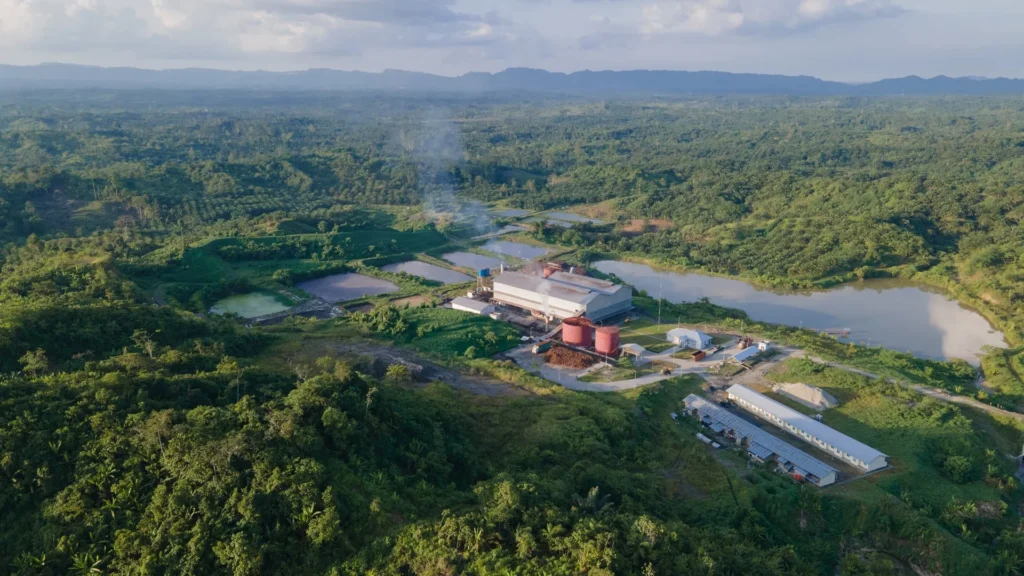
Indonesia’s Cabinet Secretariat reported on 31 March 2026 that the government intended B50 biodiesel implementation to begin on 1 July 2026. Coordinating Minister for Economic Affairs Airlangga Hartarto said Pertamina would implement the blending system and that the programme had the potential to reduce fossil-based fuel use by 4 million kilolitres. The same government article linked the measure to energy security, fuel-reserve management and budget exposure during geopolitical volatility.
B50 means diesel blended with 50% biodiesel. In Indonesia’s road-fuel programme, that biodiesel is palm-based fatty acid methyl ester, or FAME. This distinction matters because palm FAME, hydrotreated vegetable oil (HVO), renewable diesel, hydroprocessed esters and fatty acids for sustainable aviation fuel (HEFA-SAF), and used cooking oil (UCO) belong to overlapping but different markets. UCO should not be presented as a meaningful feedstock for Indonesia’s B50 road-fuel mandate; it is mainly relevant to separate renewable diesel and SAF supply chains where collection, origin verification and contamination control are the binding issues.
The implementation test sits upstream from the blending terminal. Palm oil already serves food, oleochemicals, exports and domestic biodiesel. A higher national blend can support rural income and reduce diesel-import exposure, but additional oil has to come from either a more productive existing system or a wider land footprint. That is where B50 becomes more than a fuel-standard decision. It becomes a test of agronomy, mill efficiency, traceability, land-use governance and subsidy resilience.
FAME, HVO and HEFA-SAF compete for lipids without serving the same market
Palm-based FAME is produced by transesterification and blended into road diesel. HVO and renewable diesel are hydrocarbon fuels produced by hydrotreating oils and fats. HEFA-SAF uses a related hydroprocessing family, but the aviation product must meet aviation-fuel specifications, sustainability rules and airline offtake requirements. These pathways compete for oils and fats, but they are not interchangeable products and they do not carry the same regulatory treatment.
Indonesia’s B50 decision can therefore influence global SAF economics indirectly. Even where palm oil itself is restricted by particular sustainability systems, more palm oil absorbed into domestic diesel can raise the opportunity cost of substitute vegetable oils, animal fats and waste oils. A SAF developer that assumes the lipid pool is neutral and globally available is exposed to national energy-security policy in producing countries.
The land-use question is about pressure, not a single crop label
Indonesia cannot treat the whole available landscape as future oil-palm monoculture. Native forest, peatlands, biodiversity corridors, watershed functions, rural livelihoods, food production, fire risk and landscape fragmentation all affect the carbon and social outcome of additional supply. Nor is all palm cultivation environmentally equivalent. Existing plantations with clear legality, high yields, methane control and traceable fruit are not the same as expansion into high-carbon or high-biodiversity landscapes.
The most credible supply pathway for B50 is intensification on existing planted land: replanting old palms, improving planting material, raising fresh-fruit-bunch yields, reducing mill losses, shortening harvest-to-mill time, returning nutrients where appropriate and protecting areas that should not be converted. Expansion into forests, peat or contested land would weaken the climate case and increase indirect land-use pressure on other sectors.
Smallholders make productivity a finance problem
Indonesia’s palm sector includes a substantial smallholder base as well as large estates. The exact share varies by source and definition, so a serious project file should use current official statistics rather than inherited figures. The commercial point is still clear: a mandate can create demand without automatically improving farmer productivity or income. Smallholders need land documentation, access to credit, certified seedlings, extension support, digital mapping and a bridge through the immature period after replanting.
Replanting is not a short operational adjustment. Oil palm has several immature years before a replanted block produces commercial fruit. During that period, farmer income falls while costs continue. Estates can plan block replacement and finance the cash gap more easily than independent growers. If smallholders cannot replant or improve agronomy, higher biodiesel demand may reward those already producing efficiently while weaker farms remain exposed.
| Supply lever | Metric to monitor | Why it matters for B50 |
|---|---|---|
| Replanting | Hectares replanted, seedling quality and survival | Old low-yield palms increase land pressure |
| Fresh fruit bunch yield | Tonnes per hectare by estate and smallholder system | Yield recovery reduces the oil requirement per hectare |
| Oil extraction rate | Crude palm oil recovered per tonne of fruit | Mill losses become hidden feedstock demand |
| Harvest logistics | Fruit ripeness and harvest-to-mill time | Quality affects oil recovery and processing value |
| Traceability | Mill catchment, dealer and plantation-block data | Buyers need to distinguish low-risk supply |
Precision farming can help, but it has to be agronomic
Precision agriculture in palm should not mean technology decoration. Useful tools include soil sampling, nutrient budgets, remote sensing, yield mapping, water management, pest and disease monitoring, precision fertilisation and plantation-block traceability. These tools can identify underperforming blocks, guide replanting, reduce fertiliser waste and improve yield forecasting. They can also support smallholder inclusion if mapping and advisory services are designed for growers rather than only for corporate dashboards.
Intensification has limits. Fertiliser, drainage, roads and harvesting must remain compatible with soil health, water quality and biodiversity protection. A high-yield plantation on a legally established block is a different proposition from unmanaged expansion. B50’s credibility depends on making that distinction operational.
Palm mills are decarbonisation assets as well as processing plants
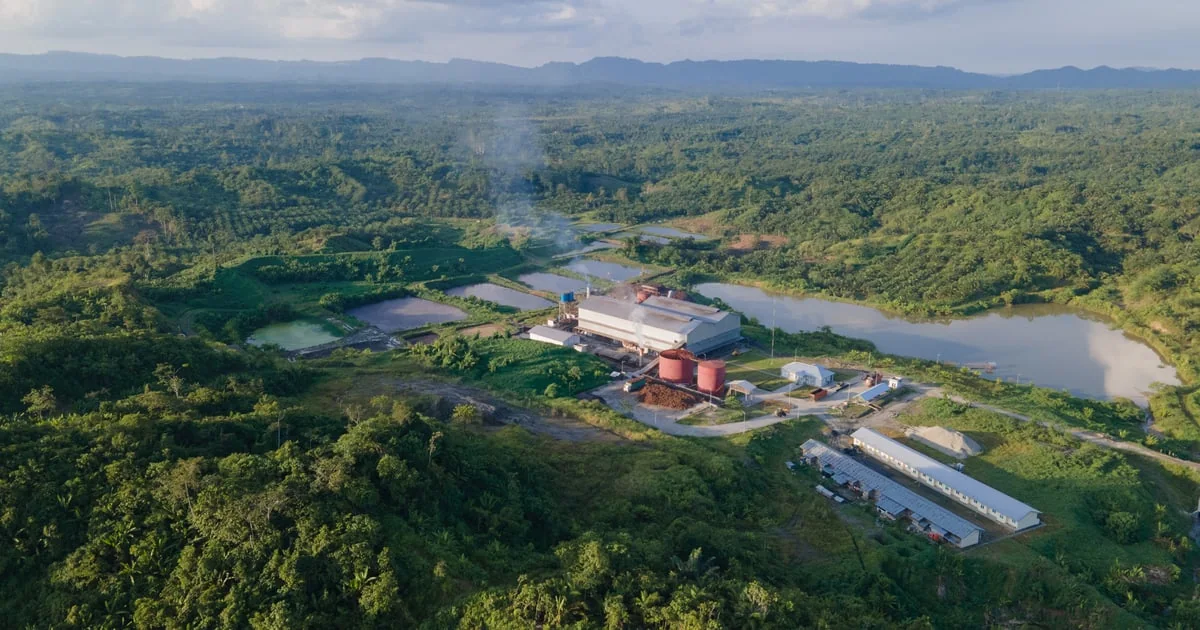
Palm-oil mill effluent is one of the clearest intervention points because untreated anaerobic ponds can emit methane. Covered lagoons or digesters can capture biogas for boilers, electricity, combined heat and power (CHP) or grid export where interconnection is feasible. Palm kernel shells and mesocarp fibre already serve process-energy roles in many mill systems. Empty fruit bunches can be returned as mulch, composted, used in nutrient recycling or considered for pyrolysis where scale, moisture and markets justify it.
Adoption remains uneven. Methane capture requires capital, maintenance, gas handling, safety procedures and an energy use or offtake route. Empty fruit bunches are bulky and wet, so transport and drying can erase value. Mill efficiency, wastewater treatment and residue use should therefore be measured project by project. The existence of commercial examples in Indonesia and Malaysia does not mean every mill is already optimised.
Biochar is a possible system component, not a universal answer
Biochar from empty fruit bunches, shells, fibre or pruning residues can be useful only where feedstock preparation, moisture, ash, process heat, application rate, soil response and carbon certification are all addressed. Pyrolysis may produce heat, electricity, bio-oil or biochar depending on design, but palm residues vary in moisture and mineral content. A credible palm biochar project needs laboratory characterisation, agronomic trials, logistics, application equipment and a recognised carbon-accounting route.
For B50, the more immediate decarbonisation opportunities are likely to be methane capture, mill energy efficiency, better residue handling and higher oil recovery. Biochar belongs in the portfolio where it solves a real soil or carbon problem at a defendable cost.
Certification narrows risk; traceability decides confidence
Indonesian Sustainable Palm Oil (ISPO) and the Roundtable on Sustainable Palm Oil (RSPO) are important governance systems, but certification does not remove the need for transaction-level evidence. Fuel buyers and international counterparties need chain-of-custody records, smallholder geolocation, land-use baselines, deforestation monitoring, satellite data and lifecycle-emissions accounting. Traceability to a mill is not the same as traceability to a plantation block.
The B50 programme will be judged by more than blend percentage. The indicators that matter are replanting progress, smallholder finance, fresh-fruit-bunch yield, oil extraction rate, methane capture, residue management, certified and traceable volumes, land-use protection and subsidy exposure. Supplied through a more productive and diversified palm landscape, B50 can reduce diesel vulnerability. Supplied through unmanaged expansion, it simply moves risk from the fuel tank to the land base.
Sources and further reading
- Cabinet Secretariat of the Republic of Indonesia, “Gov’t to Secure Energy Reserves, Implement B50, Save Billions of Rupiah”, 31 March 2026.
- Roundtable on Sustainable Palm Oil (RSPO), certification and supply-chain materials.
- IEA Bioenergy, resources on bioenergy systems, residues and emissions management.