
Castlerock Biofuels selected Millinocket, Maine, for a proposed facility using Ensyn’s rapid thermal processing technology, with project material describing a target of roughly 20 million gallons per year of renewable fuel oil. The project is important because it revives a long-running proposition in forest bioenergy: converting bulky, low-density woody biomass into a liquid intermediate that can move through industrial fuel logistics.
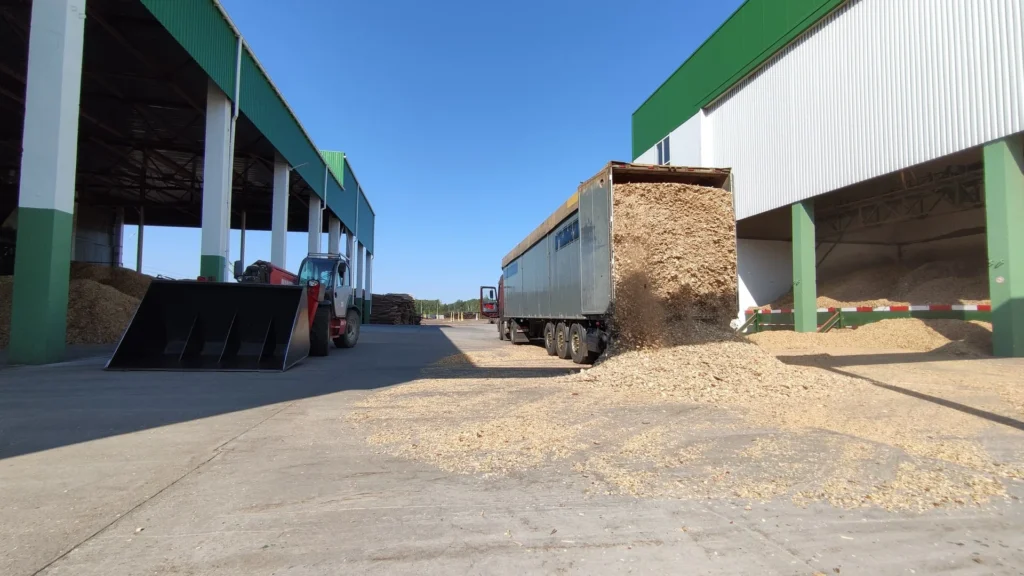
Fast pyrolysis is attractive in regions where forest residues, sawmill by-products and low-grade wood are dispersed across a large territory. Transporting raw biomass too far quickly erodes project economics because chips and residues carry moisture, air and handling cost. A regional conversion plant can concentrate that material into bio-oil, gas and char. The gas can support process heat; char may have energy or carbon uses; the liquid becomes the main commercial product.
Liquid fuel logistics solve one problem and create another
The strength of fast pyrolysis is logistical. It can convert a rural solid-feedstock problem into a liquid-handling problem closer to familiar fuel infrastructure. Renewable fuel oil can be stored, pumped and moved more easily than green wood. For a former industrial town such as Millinocket, the concept also fits local economic-development priorities: forest contractors, handling yards, rail or road logistics and industrial labour can all be part of the project case.
The challenge is that pyrolysis oil is not a drop-in petroleum product. It can be acidic, oxygenated, water-containing and unstable compared with conventional fuels. End-use markets must understand its specification, storage behaviour, blending limits and emissions profile. If the product is upgraded further into transportation fuels, the project inherits hydrogen, catalyst, yield and capital-cost questions. If it is sold as industrial renewable fuel oil, the offtake market must be large enough and durable enough to support the plant.
Forest-resource quality matters as much as nameplate capacity
A 20-million-gallon-per-year target is easier to communicate than the feedstock system behind it. Investors will need to understand how many green tonnes or dry tonnes are required, where they come from, how moisture is managed, what happens during winter, and how the project competes with pulp, pellets, biomass power, mulch and local heating markets. Forest residues are not a uniform commodity. Tops, limbs, chips, bark and low-grade roundwood behave differently in handling, storage and conversion.
The strongest fast-pyrolysis projects are therefore supply-chain projects before they are reactor projects. They require procurement contracts, quality protocols, storage design, trucking capacity and contingency supply. Regional abundance can support a thesis, but delivered tonnes at specification support debt.
Millinocket will test whether the intermediate has a bankable market
Ensyn has a long operating history compared with many advanced-biofuel technologies, which gives the project more credibility than a purely laboratory pathway. The commercial question is still project-specific. A lender or strategic investor will look for engineering definition, guaranteed performance, feedstock contracts, permits, offtake, product specification and a credible ramp-up plan.
Fast pyrolysis should not be judged only by whether it can produce oil. It should be judged by whether the oil has a stable market at a price that pays for biomass procurement, conversion, storage, transport and risk. If Castlerock can show that connection in Maine, it would strengthen the case for regional biomass-to-liquid hubs. If not, the project will illustrate the central difficulty of thermochemical biofuels: densifying biomass is valuable, but the resulting molecule still has to fit a financeable market.
Sources and further reading
- Ensyn / Castlerock, Millinocket site-selection release, January 2025
- Ensyn latest news and project information
- Ensyn articles and operating-history references