
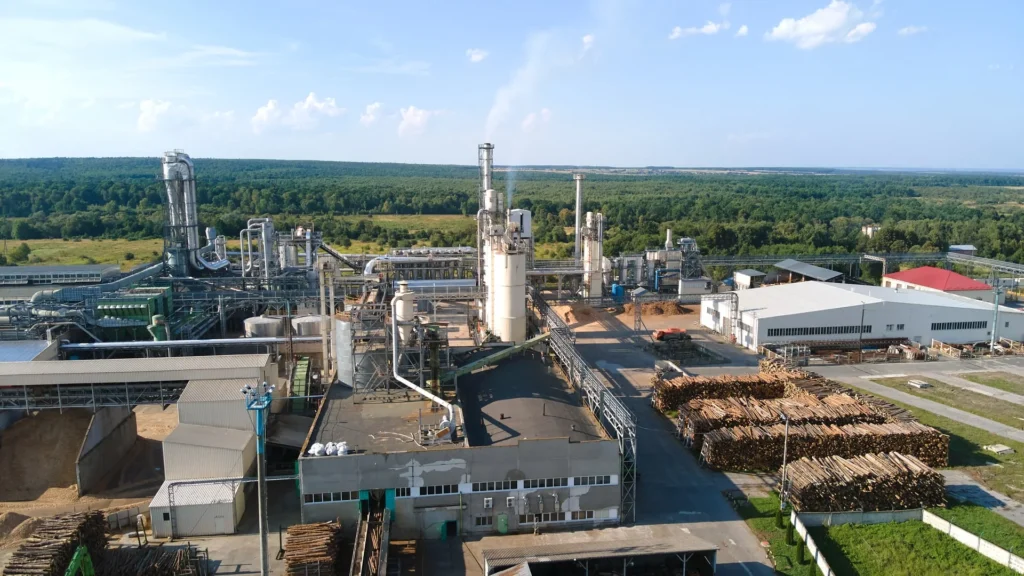
SunGas Renewables announced on 12 June 2026 that it would cease further development of Beaver Lake Biofuels in central Louisiana. Public project materials had described a large wood-fibre-to-low-carbon-methanol project combining forest biomass, gasification, methanol synthesis and storage of biogenic carbon dioxide. The cancellation matters because the concept linked several credible components, yet still had to assemble feedstock, conversion, offtake, carbon storage, policy and finance on the same timetable.
Beaver Lake should be treated as a case study, not as a blame exercise. The public figures associated with the project were planned design values, not operating results: approximately 553,000 metric tonnes per year of low-carbon methanol and roughly 1.1 million metric tonnes per year of biogenic CO2 storage. Those numbers illustrate scale. They do not prove that feedstock, offtake, carbon storage and finance had all become bankable.
The project combined several development packages
| Package | Publicly described role | Bankability question |
|---|---|---|
| Developer | SunGas Renewables led Beaver Lake | How much development capital could be justified before FID? |
| Feedstock | Forest biomass, residues and by-products in Louisiana | Were delivered-cost contracts sufficient for lenders? |
| Conversion | Gasification and downstream methanol synthesis | Who wrapped performance across interfaces? |
| Engineering | Established engineering and process partners were referenced in project materials | Were guarantees available under variable biomass quality? |
| Carbon storage | Biogenic CO2 capture and storage formed part of the climate proposition | Were permits, storage access, liability and MRV ready? |
| Markets | Low-carbon methanol and carbon-removal demand were part of the revenue case | Were commitments binding enough for project debt? |
Forest biomass availability is not the same as financeable feedstock
Louisiana has forest-products activity, sawmill residues, thinnings, bark, tops and other woody by-products. A large methanol plant cannot be financed on regional resource availability alone. It needs contracted tonnes with specifications for moisture, ash, contaminants, size, seasonal access, storage, fire management and delivered cost. Competing users matter: pulp and paper, panels, pellets, mulch, animal bedding, boilers and existing residue markets can all influence the marginal tonne.
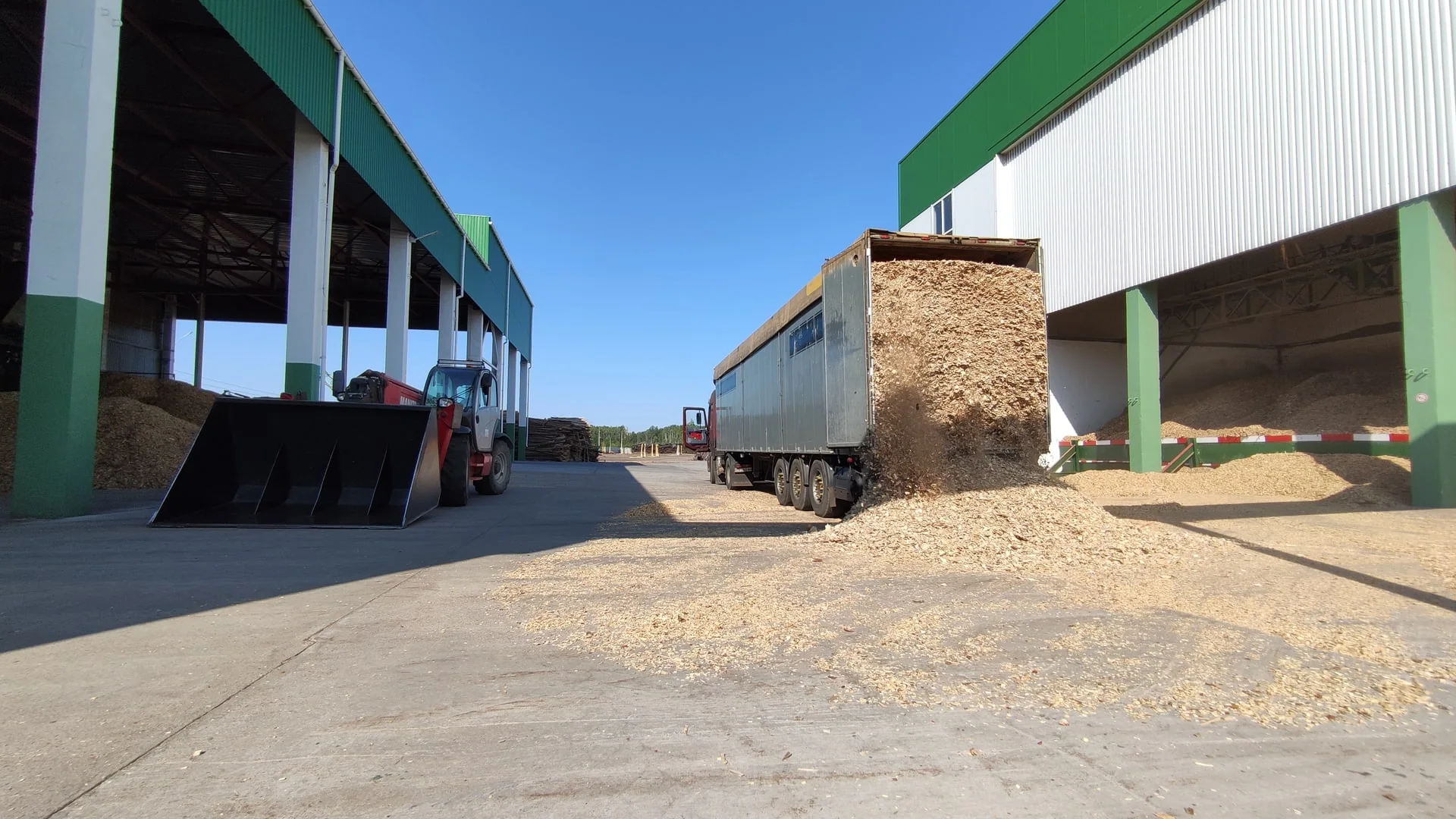
Transport radius is often the hidden constraint. Forest residues have low bulk density, variable moisture and seasonal mobilisation risk. A resource that is technically present may be too expensive, too wet, too dispersed or too contested to support base-load operation. Supplier concentration can create negotiation risk; too many small suppliers can create aggregation risk. Both affect debt sizing.
Storage adds another layer. Wet woody biomass can lose energy value, generate odour, heat biologically, create fire risk and introduce handling problems. Drying, covered storage and inventory buffers cost money. A project may need weeks of feedstock security to protect availability, yet every extra tonne stored ties up working capital and creates degradation risk. These are not secondary logistics questions; they shape the delivered cost curve.
Gasification projects are built at the interfaces
Biomass gasification, syngas cleaning and methanol synthesis each have industrial logic. The finance challenge is the integrated envelope. Feedstock preparation affects gasifier stability. Gas composition affects clean-up. Clean-up affects catalysts. Utilities, wastewater, ash handling, tar management, oxygen or air supply, compression and CO2 capture all interact. A first-of-a-kind plant may contain proven packages while still lacking a single proven package boundary.
Engineering, procurement and construction (EPC) structure becomes decisive. Lenders ask who is responsible if feedstock quality varies, if syngas clean-up underperforms, if methanol yield falls, if availability is below forecast or if CO2 capture is delayed. Single-point responsibility is valuable but expensive. Multiple package guarantees can leave gaps exactly where the project risk sits.
Availability is particularly important for methanol offtake. Buyers may accept commissioning risk for a pilot, but large maritime or chemical customers need dependable product. If a plant cannot guarantee output, the buyer may discount the fuel, cap commitment volumes or require flexibility that weakens project revenue. First-of-a-kind integration therefore affects both capital cost and commercial contract quality.
Methanol market interest differs from financeable offtake
Low-carbon methanol has real strategic demand in maritime fuels, chemicals and renewable-carbon supply chains. Shipping companies are ordering methanol-capable vessels, chemical buyers want lower-carbon inputs and policymakers are pushing non-fossil fuel options. Market interest, however, is not the same as bankable offtake. A lender needs volume, tenor, price, specification, carbon-attribute treatment, creditworthy buyers and remedies if either side fails.
Biomethanol also competes with e-methanol and conventional methanol. Premiums depend on policy, certification, fuel availability and buyer willingness to pay. If buyers are interested but not ready to sign long-tenor commitments, project finance remains difficult even when the climate narrative is strong.
Certification will decide whether buyers can use the fuel for compliance or voluntary targets. Marine-fuel customers will care about greenhouse-gas accounting, chain of custody and the treatment of biogenic carbon. Chemical customers may focus on renewable-carbon content and product specifications. Those certification requirements need to be designed into measurement, mass balance and reporting systems before the first commercial shipment.
CCS and carbon removal add value and complexity
Capturing biogenic CO2 can strengthen a biomass-methanol project because it may support lower fuel carbon intensity and carbon-removal revenue. It also introduces compression, transport, injection, pore-space rights, storage permits, monitoring, reporting and verification (MRV), long-term liability and counterparty credit. These are not minor add-ons. They can become conditions precedent to FID.
Public references to Carbon Direct, Microsoft, C2X or other parties should be described exactly according to the underlying agreement: advisory role, carbon-removal purchase, offtake, strategic collaboration or development support. A carbon-removal contract can improve revenue quality, but it should not be assumed to finance an entire project unless the document says so.
Permits and conditions precedent belong in the finance model
A project at this scale is not financed by technology selection alone. Lenders and strategic investors will look for permits, feedstock contracts, offtake, CO2 storage rights, environmental approvals, interconnection, insurance, EPC terms, contingency and evidence that policy incentives are available on the construction timetable. Each can become a condition precedent to financial close. If several remain unresolved at the same time, the project can have strong technical logic and still be unfinanceable.
Development capital is therefore a management discipline. A sponsor has to decide how much to spend on engineering before offtake is binding, how far to progress CO2 storage before policy support is clear, and whether to resize or phase the plant if feedstock contracts cannot support the original scale. These are hard decisions, but they protect capital from treating a concept as a project too early.
Development discipline is the transferable lesson
Future Beaver Lake-type projects should retire risks in a deliberate order. Feedstock contracts should be tested before resource maps are treated as supply. CO2 storage routes should move beyond concept before carbon-removal revenue is central to debt. Methanol offtake should be negotiated with price and tenor, not only market interest. EPC interfaces should be clarified before FEED costs become sunk. Policy support should be available on the project timetable rather than assumed after construction.
Abandonment criteria also matter. Developers need milestones that determine whether to continue, phase, resize, partner differently or stop. Beaver Lake’s cancellation shows that stopping can be rational when market, regulatory and financing conditions are not aligned. It does not show that biomass gasification, biomethanol or biogenic carbon storage are unworkable. It shows that integrated first-of-a-kind projects must become financeable as whole systems, not as promising components.
A staged successor could begin with a smaller feedstock basin, a narrower product contract, a clearer CO2 storage route or a phased technology envelope. The lesson is not to make ambition smaller for its own sake. It is to make each risk retire in an order that capital markets can underwrite.
Sources and further reading
- SunGas Renewables, “SunGas Announces Cessation of Beaver Lake Biofuels Project”, 12 June 2026, company announcement.
- SunGas Renewables, Beaver Lake project development materials, company-reported planned capacity and CO2 storage design.
- IEA Bioenergy, resources on biomass conversion and advanced biofuel project development.