
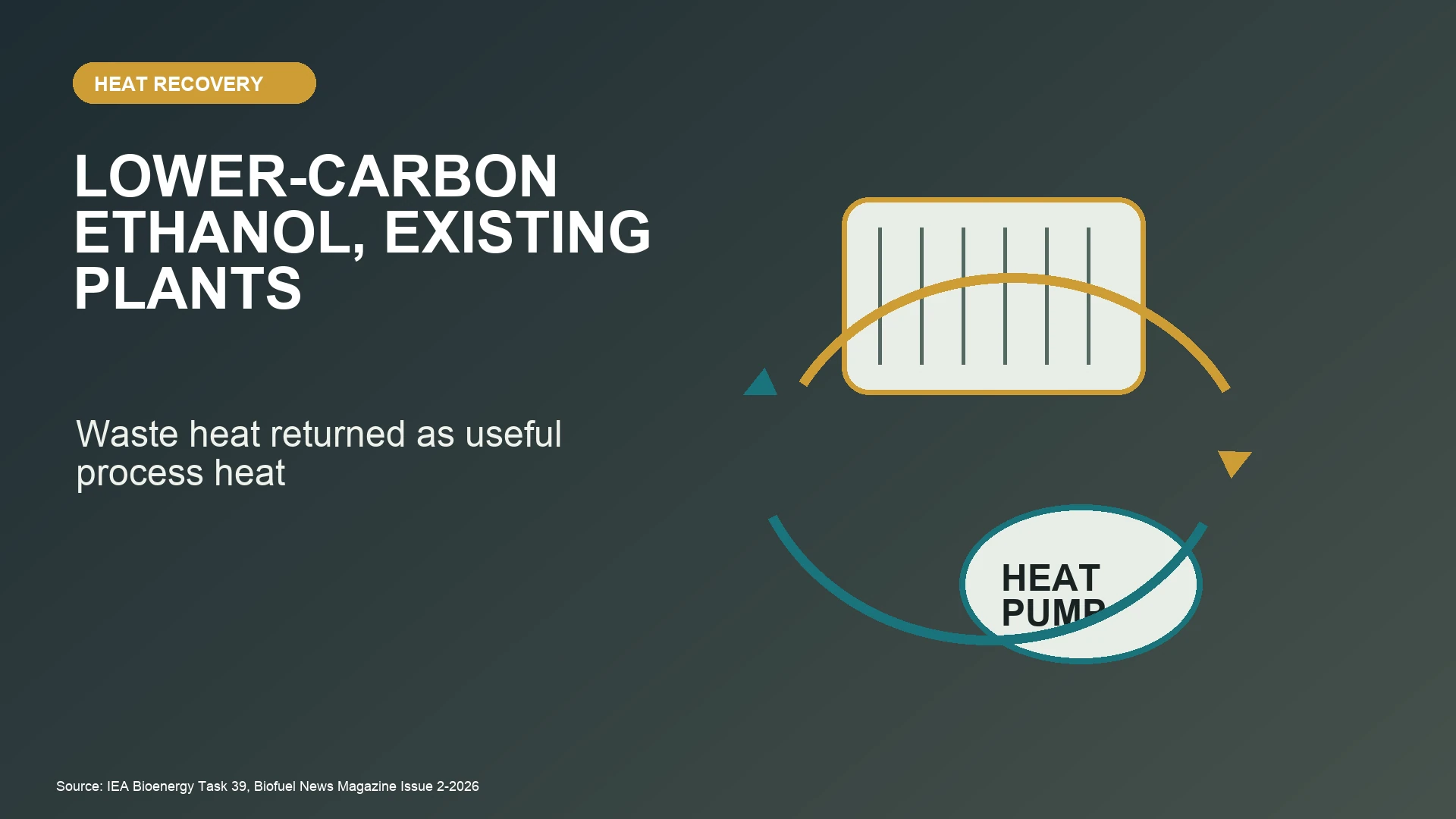
Heat Pumps Could Decarbonise Existing Ethanol Plants Faster Than New Fuel Pathways Scale
IEA Bioenergy Task 39’s June 2026 magazine highlights direct electrification of bioethanol heat. Industrial heat pumps could lower fuel carbon intensity using existing plants and infrastructure.
A retrofit opportunity inside an established industry
IEA Bioenergy Task 39’s June 2026 Biofuel News Magazine highlights the direct electrification of bioethanol production through industrial heat pumps. Ethanol plants consume substantial thermal energy for distillation, evaporation and drying.
Many of these duties occur at temperatures increasingly accessible to industrial heat pumps. Waste heat can be upgraded and returned to the process, reducing boiler fuel consumption.
Carbon intensity can change without changing the ethanol molecule
Fuel policy increasingly rewards lifecycle performance. A plant using fossil natural gas for steam can have a materially different carbon intensity from one supplied by biomass CHP, renewable electricity or heat-pump integration.
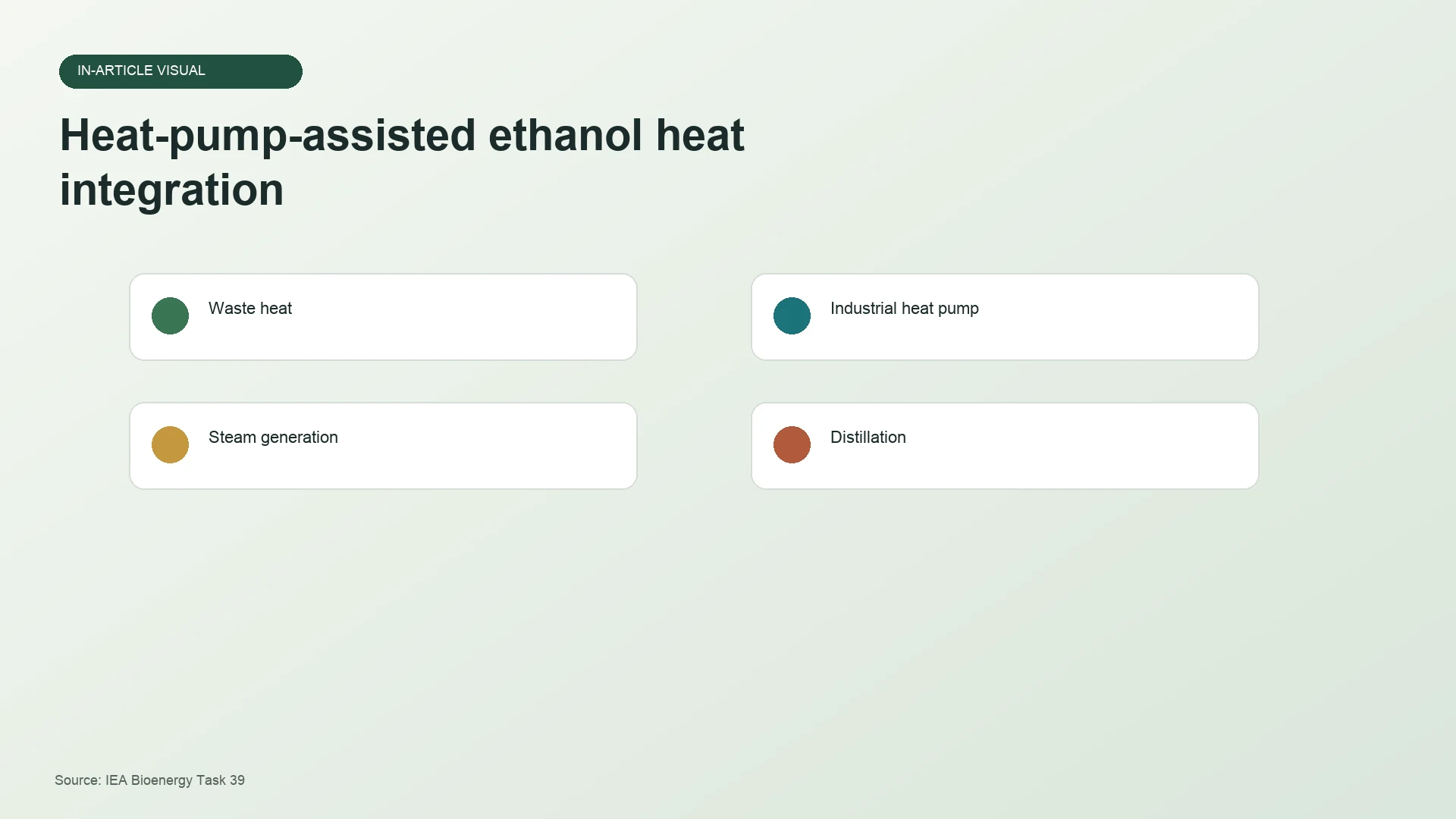
This matters for road ethanol and for Alcohol-to-Jet projects. The carbon intensity of the ethanol intermediate carries into the final SAF pathway.
Why heat pumps are strategically attractive
New conversion pathways require demonstration, permitting, supply chains and project finance. A heat-pump retrofit can use an operating plant, existing feedstock contracts and established product markets.
The project still requires detailed pinch analysis, temperature matching, compressor selection, power-market assessment and integration with steam systems.
Electricity price and grid carbon determine value
Electrification improves emissions where electricity is sufficiently low-carbon. Economic performance depends on the ratio between electricity cost, boiler-fuel cost and heat-pump coefficient of performance.
Grid congestion, demand charges and power availability can become new operating constraints. Renewable PPAs, behind-the-meter generation and flexible operation may improve performance.
Energy security has returned to project economics
Recent geopolitical disruption has raised the strategic value of domestic renewable fuels and reduced exposure to imported gas and oil. Process electrification can increase the share of ethanol value created from domestic agriculture and electricity.
Plants can also combine heat pumps with biogas, biomass boilers, CHP, thermal storage and renewable power rather than relying on a single heat source.
BEC perspective
Industrial heat integration is less visible than a new SAF plant, yet it can improve millions of litres of existing fuel production.
The strongest projects will evaluate carbon intensity and operating cost together, using hourly heat demand, electricity prices and process constraints. For ethanol producers considering ATJ markets, low-carbon heat may become a commercial requirement rather than a secondary efficiency measure.
Sources and further reading
- IEA Bioenergy Task 39, Biofuel News Magazine, Issue 2-2026, No. 71
- IEA Bioenergy, Task 39 programme and publications
- IATA, Global Feedstock Assessment for SAF Production, 2025.
Related BEC articles
- Can Raw Dairy Biogas Become a Distributed SAF Feedstock?
- Rebound Tests a More Integrated Model for European Alcohol-to-Jet SAF
Bioenergy Crops provides agronomic, feedstock and project-development advice for biomass, biofuels and renewable-carbon value chains.